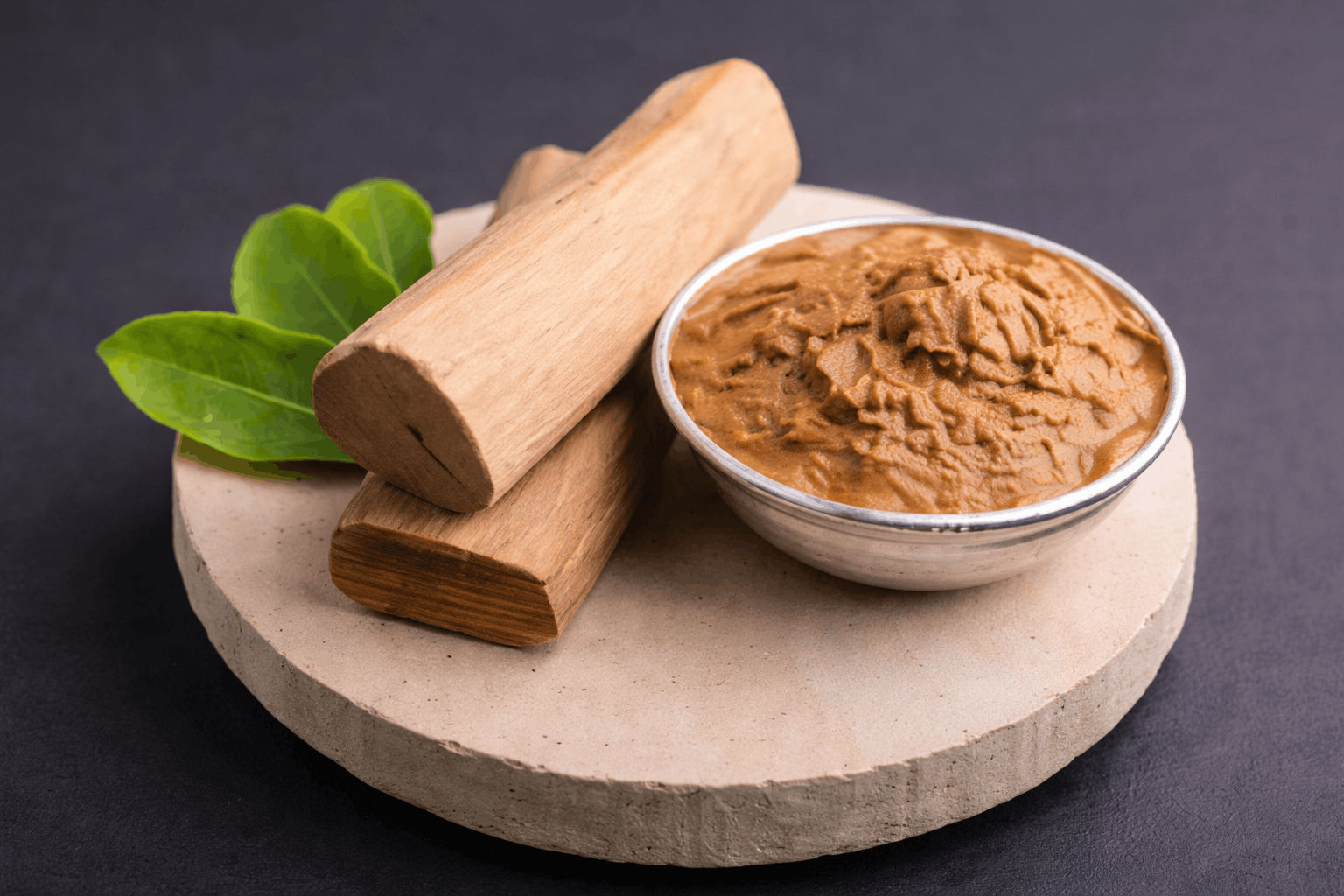
Vanilla Farming

The Premium & Profitable Spice Crop with Growing Global Demand
High Value Spice Crop Rising Global Demand Modern Agro Investment
BOTANICAL NAME
Vanilla Planifolia
HARVEST CYCLE
3 – 4 Years
SUITABLE CLIMATE
Tropical
MARKET VALUE
Premium Demand Spice
PLANTATION DENSITY
900 – 1100 Plants/Acre

About Vanilla

Vanilla farming is a highly profitable spice crop known for its rich aroma, premium value, and rising global demand. Widely used in food, perfumes, and processed products, it thrives in controlled tropical climates.
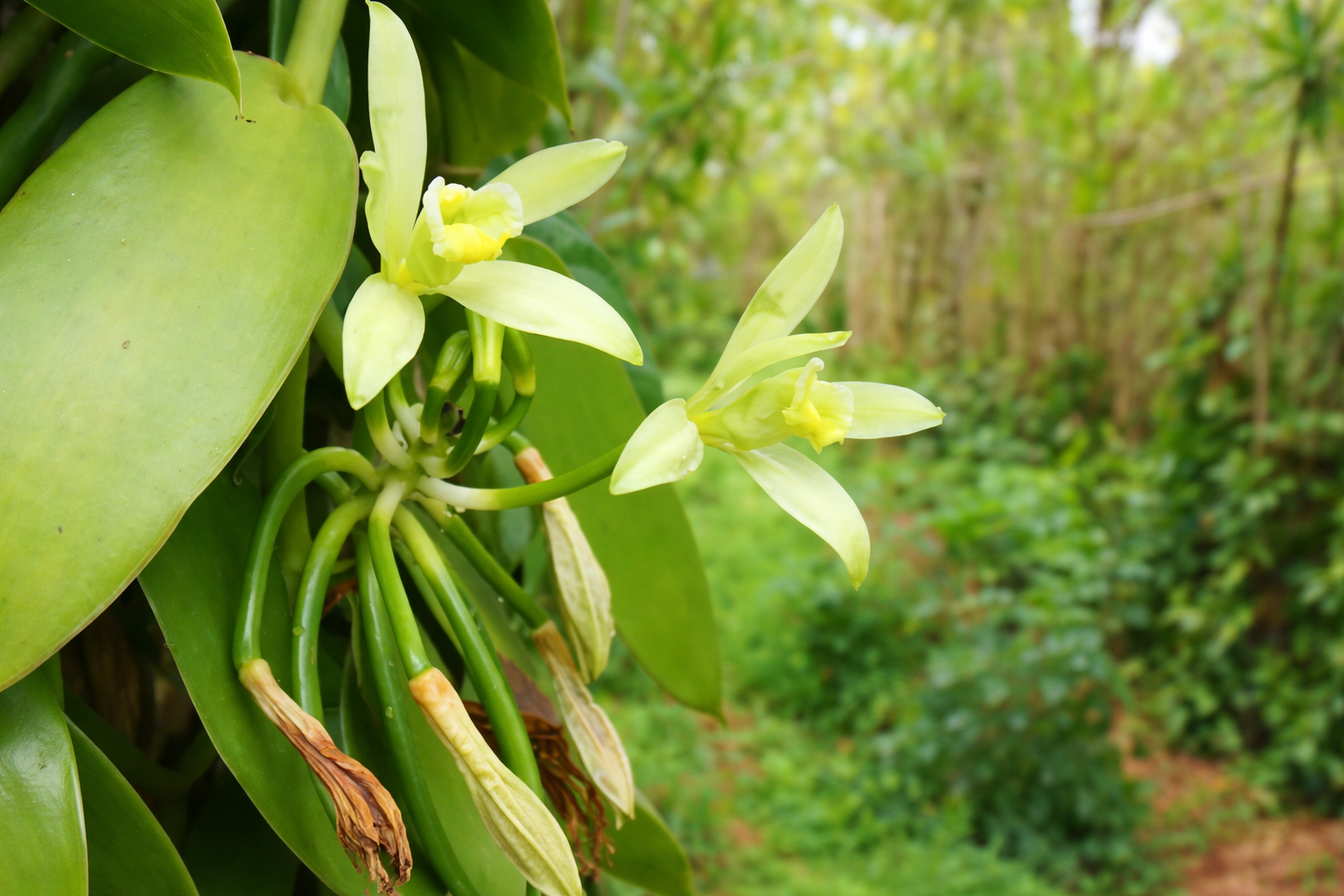
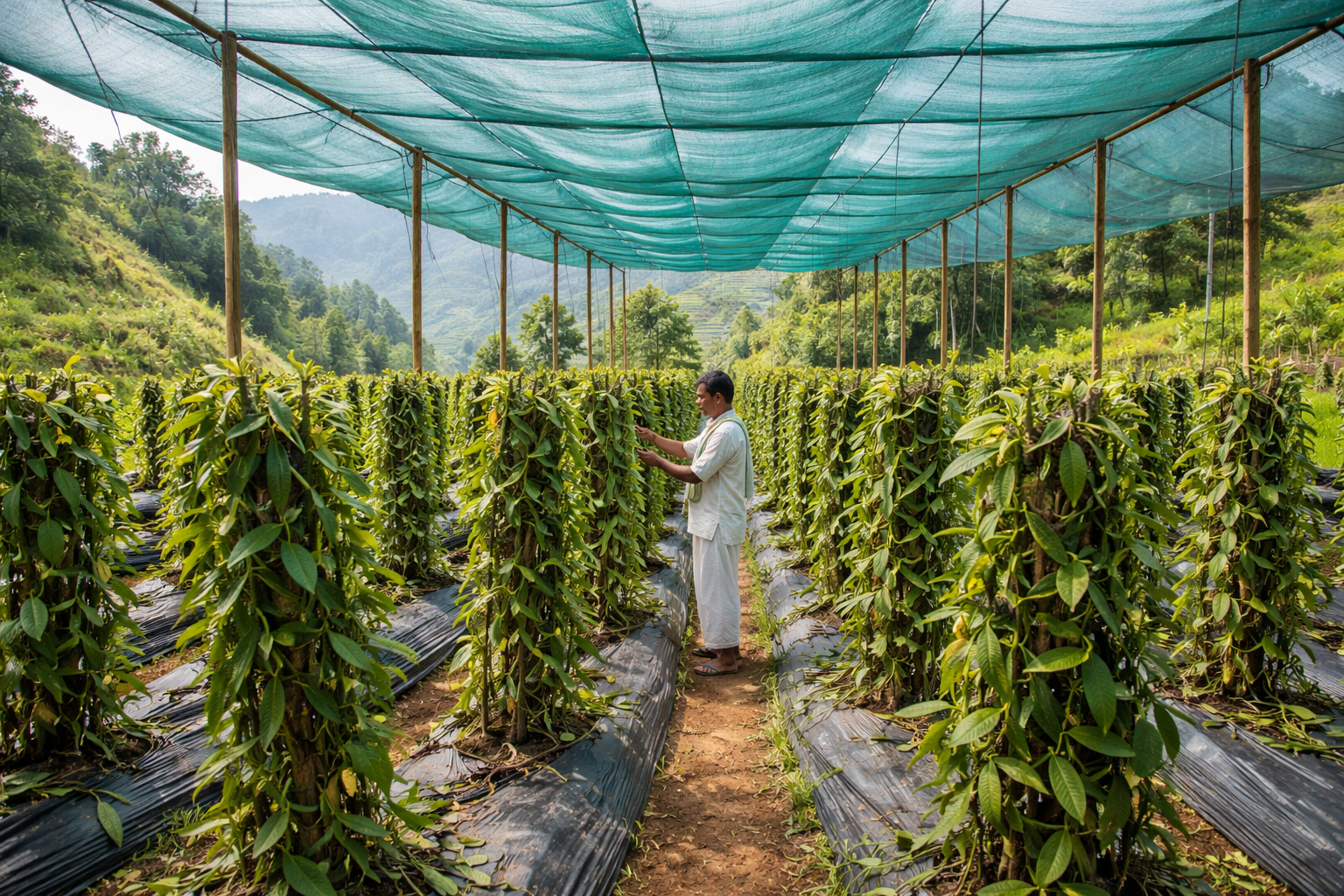
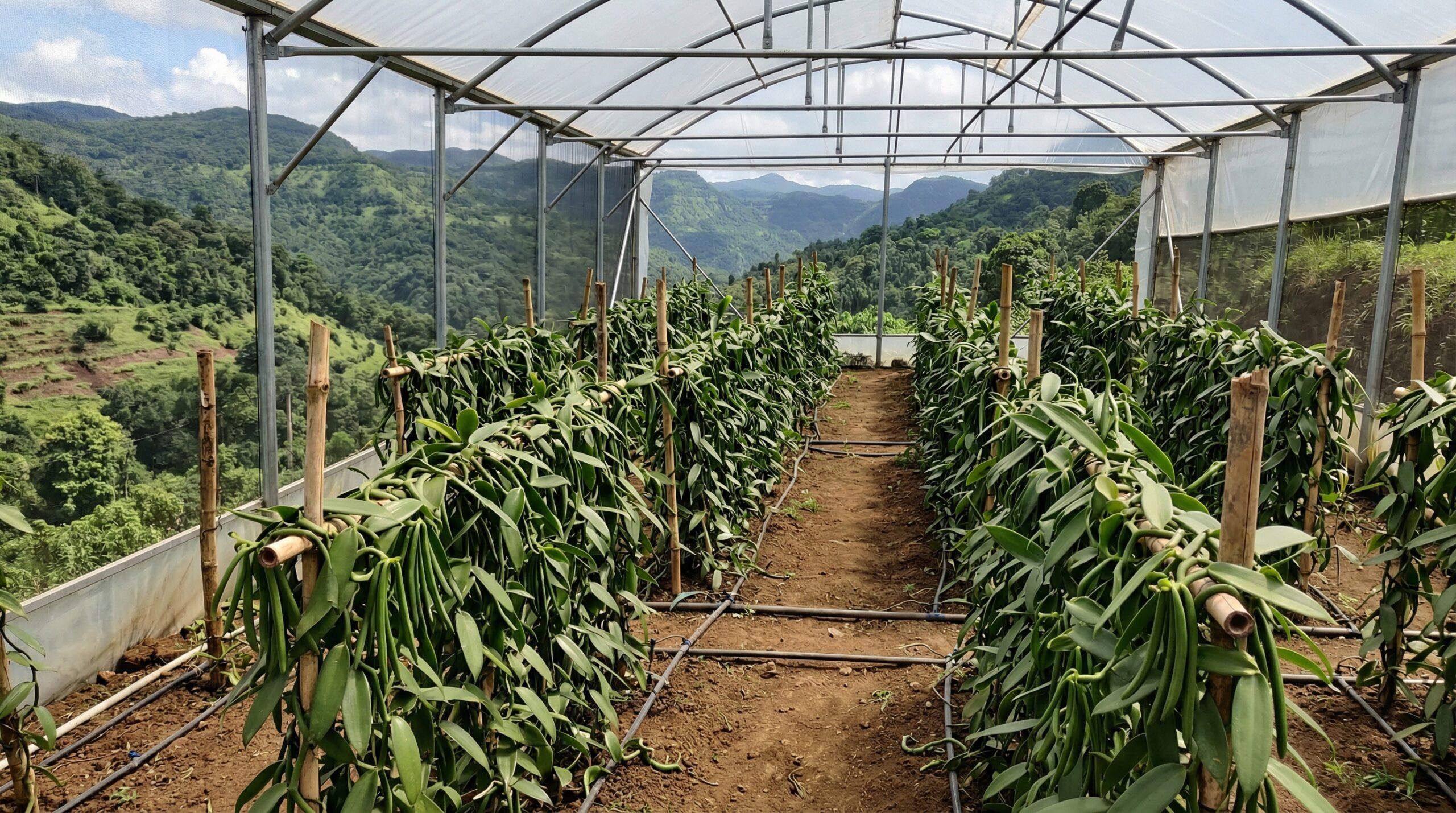
Vanilla Plantation

Premium quality beans for flavor, fragrance, and exports.
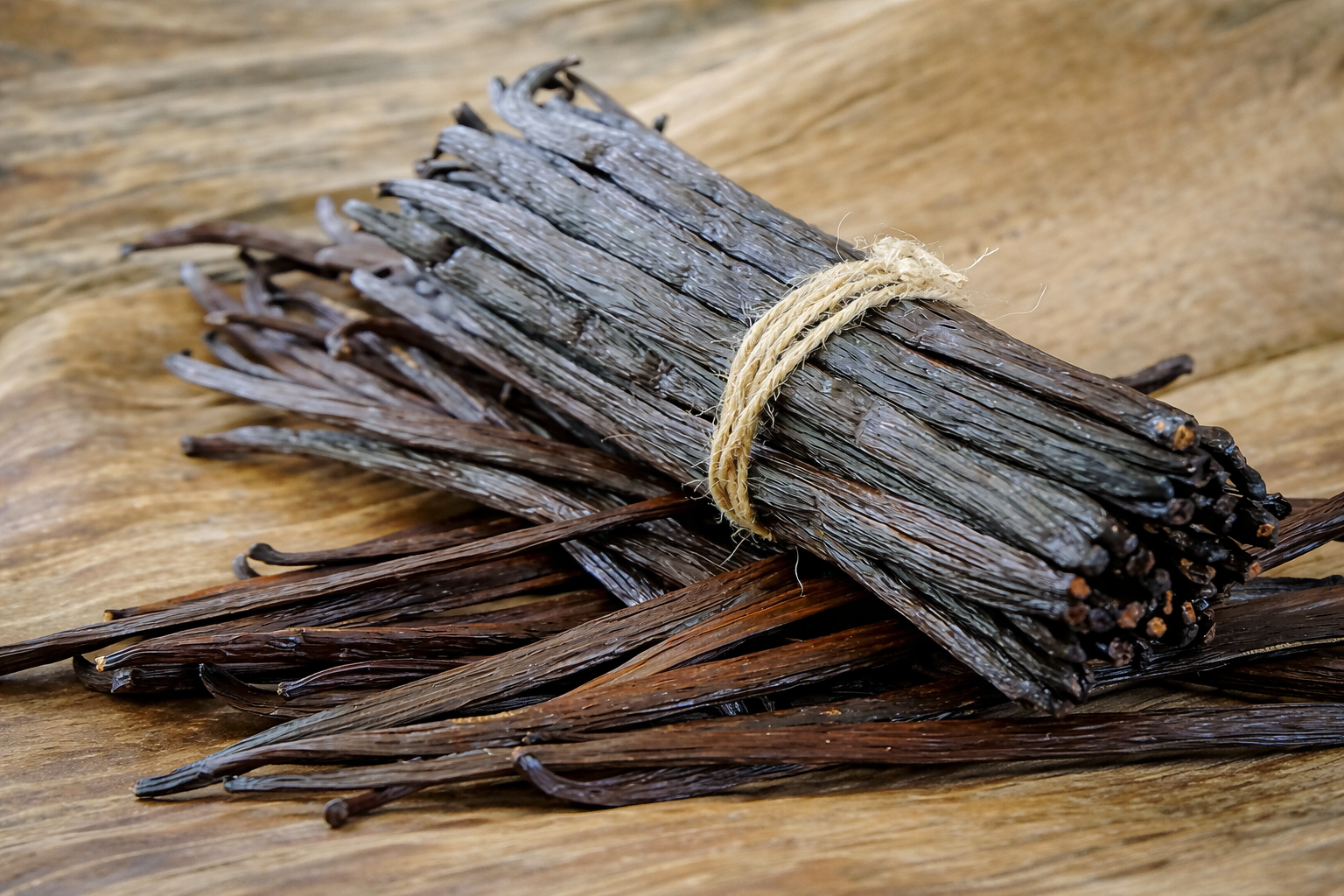
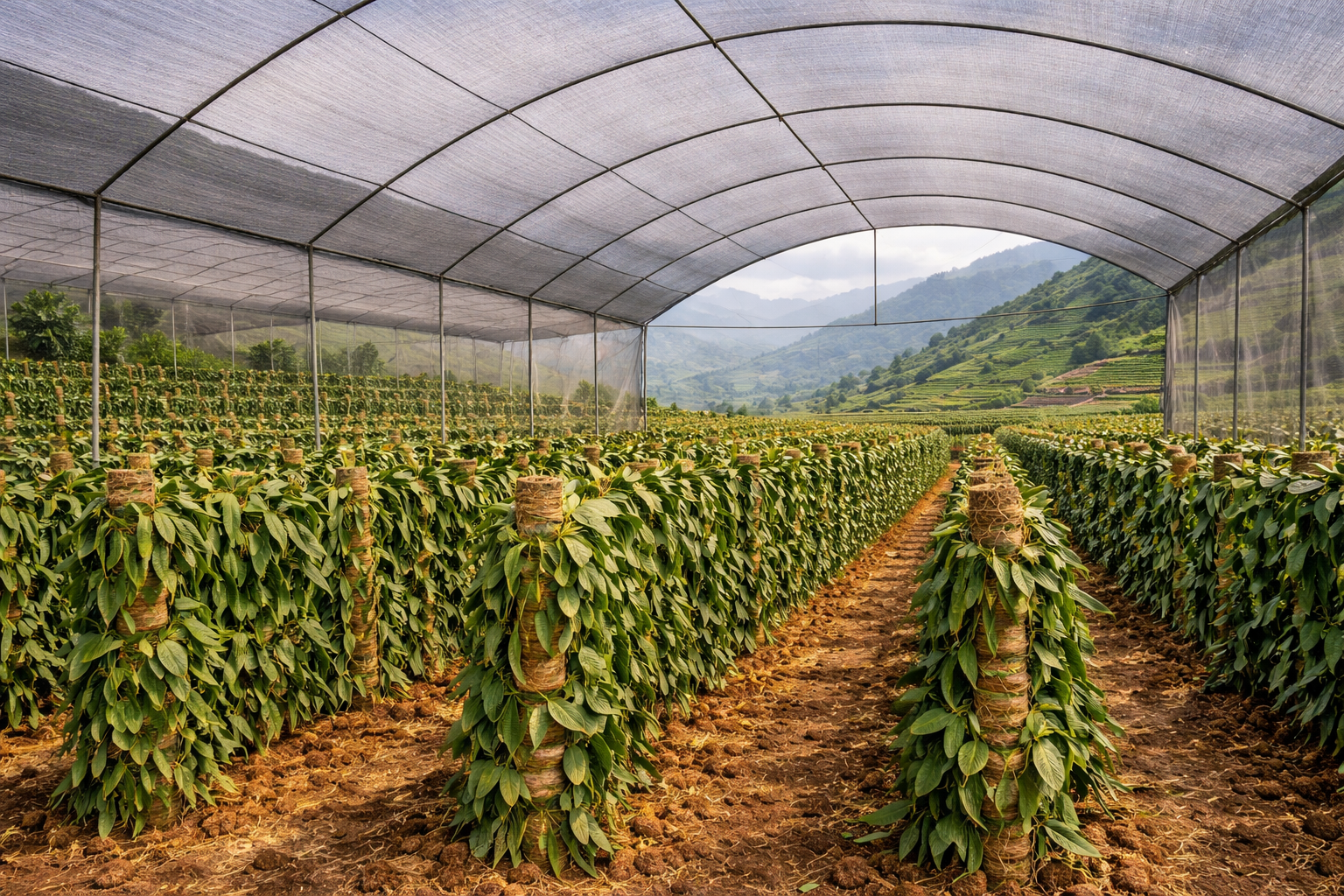
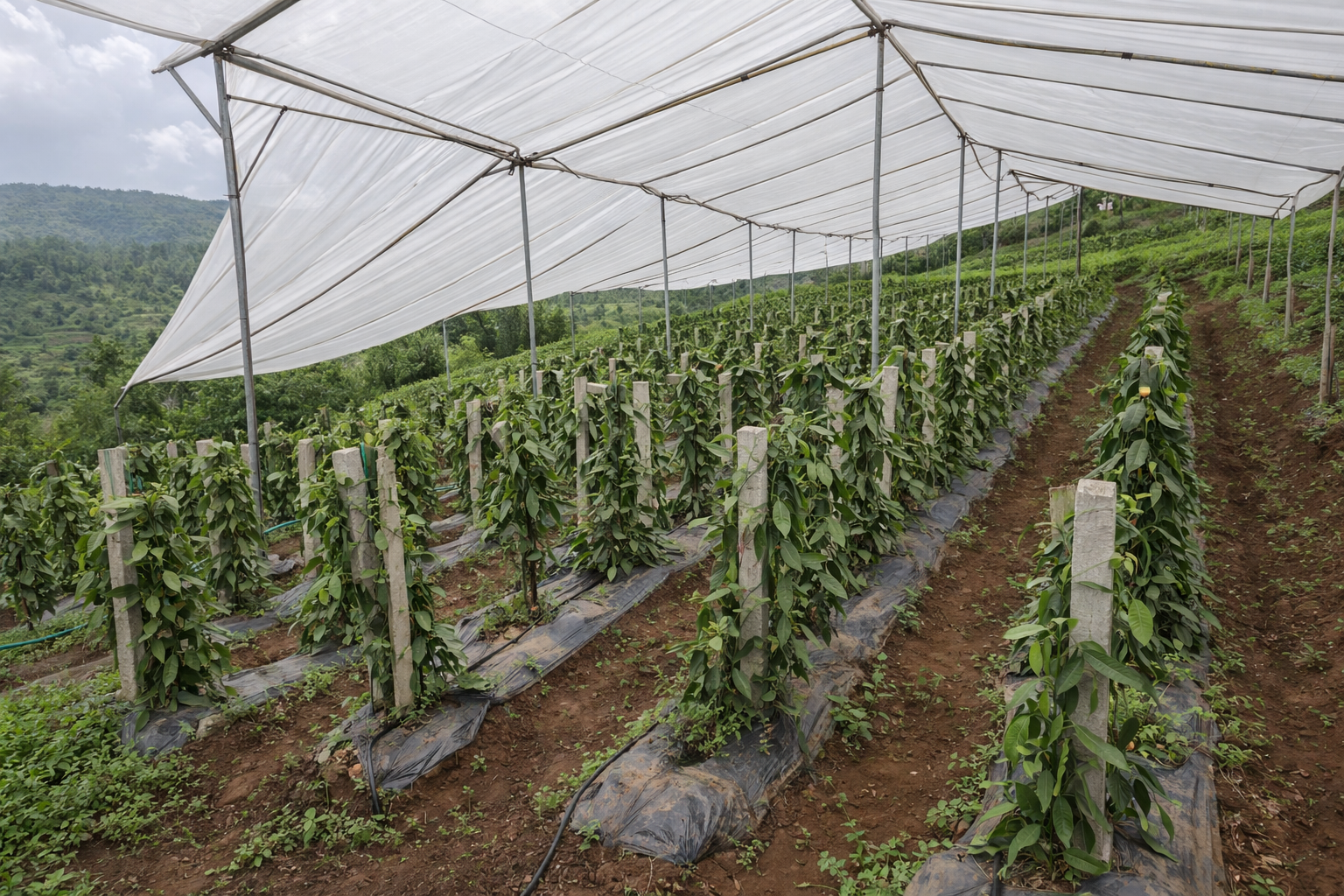
Vanilla Growth

High-demand spice in gourmet and international markets.
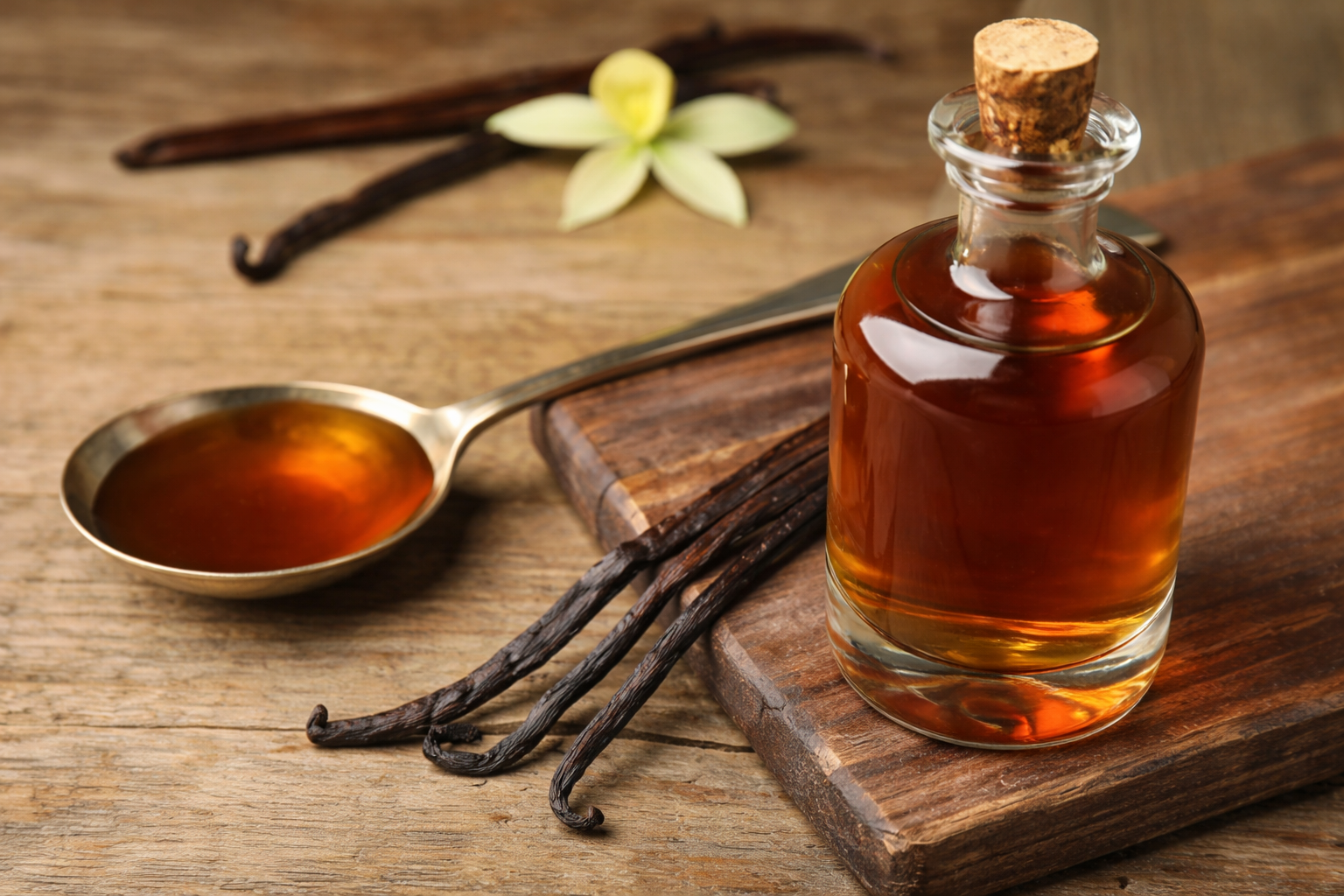
Vanilla Processing

Reliable long-term farming with premium income potential.

Vanilla Farming Requirements

Sundarban Vanilla Farming Requirements

Vanilla farming is a high-value spice crop known for its exceptional aroma, premium pricing, and strong demand in food, fragrance, and export markets, offering excellent long-term income potential.

1. Climate Requirements

Temperature: Ideal range 20°C to 32°C.

Humidity: High humidity 70–85% required.

Rainfall: 1500–3000 mm annually.

Light: Partial shade, avoid direct sunlight.

2. Soil Requirements

Type: Loose, well-drained loamy soil.

pH Level: Ideal pH 6.0 – 7.5.

Drainage: Excellent drainage is essential.

Organic Matter: Rich organic content required.

3. Land Preparation

Clearing: Remove weeds and debris.

Shade Setup: Provide shade trees or nets.

Soil Mix: Add compost and organic mulch.

Support: Install support for climbing vines.

4. Plantation & Spacing

Spacing: 2 m × 2 m standard spacing.

Density: 900–1100 plants per acre.

Season: Best during monsoon planting.

Planting Material: Healthy vine cuttings preferred.

5. Water Management

Irrigation: Light but frequent watering.

Drip System: Recommended for efficiency.

Water Quality: Clean, low salinity water.

Drainage: Avoid waterlogging at all times.

6. Nutrient Management

Organic Matter: Use compost and leaf mulch.

Fertilizers: Organic fertilizers preferred.

Micronutrients: Balanced nutrients required.

Schedule: Apply in split doses regularly.

7. Plant Care & Maintenance

Training: Train vines on support trees.

Pruning: Regular pruning improves yield.

Pollination: Manual pollination required.

Mulching: Organic mulch retains moisture.

8. Pest & Disease

Pests: Mealybugs, beetles, borers.

Diseases: Root rot, fungal infections.

Control: Integrated pest management.

Prevention: Maintain hygiene and drainage.

9. Harvesting & Post Harvest

First Yield: Starts after 3–4 years.

Full Yield: 5–6 years.

Harvest: Hand-picked at maturity stage.

Post Harvest: Curing, drying, grading process.

Plantation Development Process

1

Land Preparation

Clearing, leveling, and preparing well-drained soil with organic matter for vanilla cultivation.

2

Shade & Support Setup

Installing shade nets or trees and support structures for healthy climbing vine growth.

3

Plantation & Spacing

Proper spacing of vanilla vines ensures airflow, support growth, and long-term productivity.

4

Irrigation Setup

Drip irrigation system installed for controlled moisture and efficient water management.

5

Crop Management

Training vines, mulching, and manual pollination for consistent flowering and yield.

6

Harvest & Processing

Hand-picking mature pods followed by curing, drying, and grading for premium market value.

Plantation Gallery

Plantation Gallery

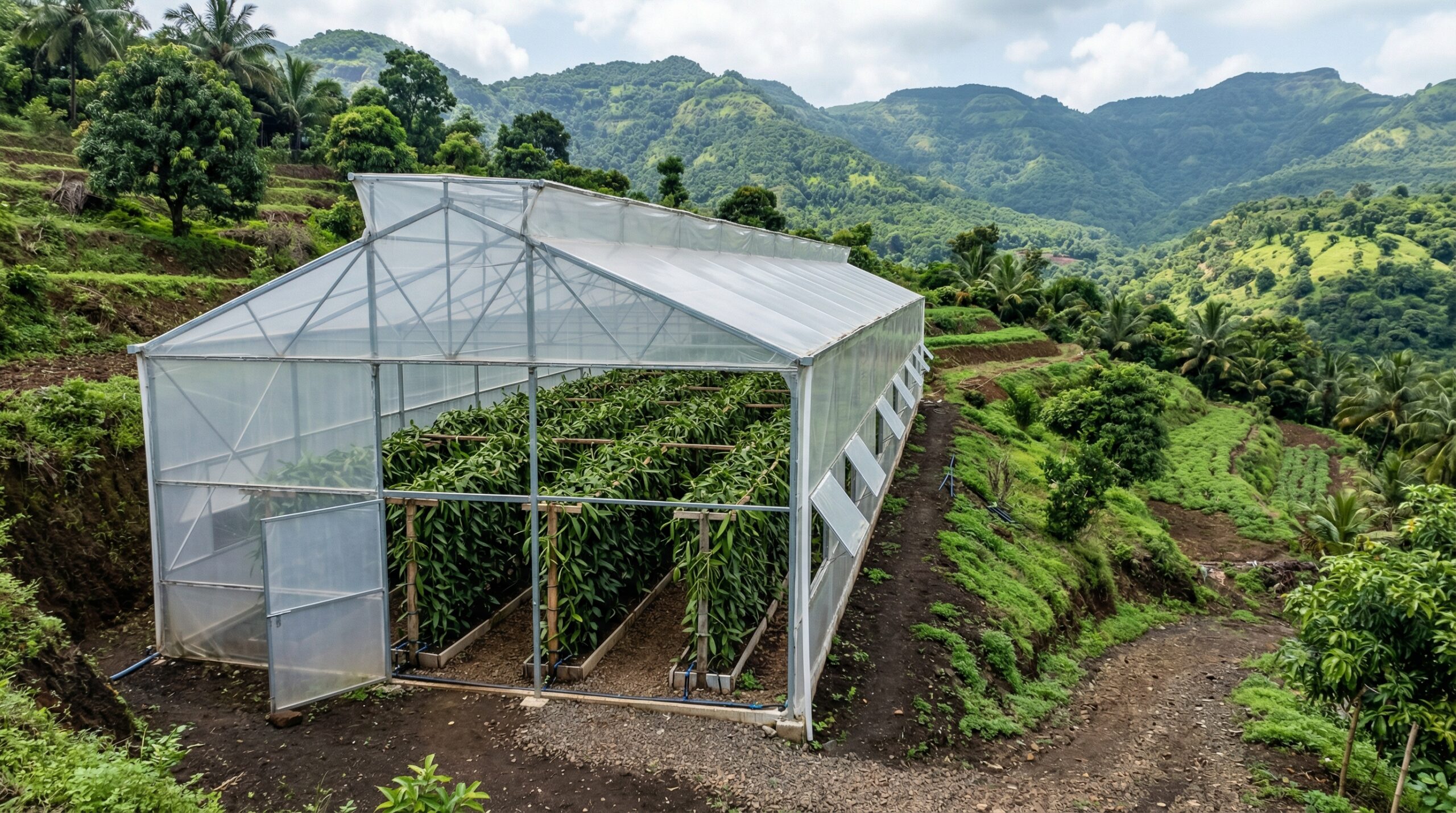
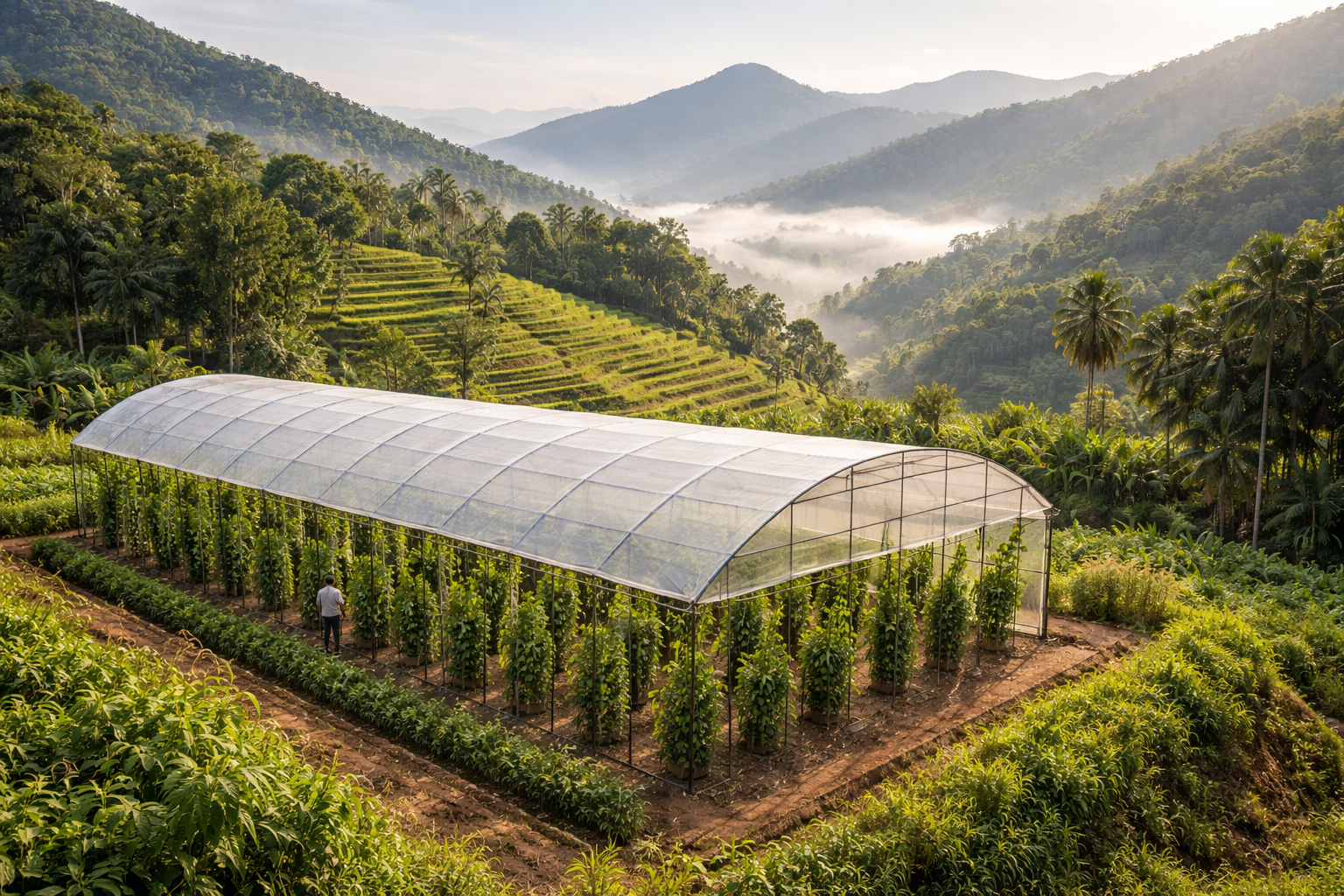
Farm Layout & Infrastructure

A scientifically planned vanilla farm focuses on shade management, support structures, and well-drained organic soil for healthy vine growth. Plants are trained on support trees or poles to encourage vertical growth and easy maintenance. Drip irrigation ensures controlled moisture levels, while mulching helps retain humidity. Proper shade, ventilation, and infrastructure are essential for consistent flowering, manual pollination, and high-quality bean production.

Value Potential

Plants per Acre
900 – 1100
Harvest Period
3 – 4 Years
Market Demand
High global demand in food & fragrance industry
High Value Crop
Premium spice with very high market price
Investment ROI Potential
₹15L – ₹30L / Acre (Estimated Range)
Vanilla farming offers extremely high returns due to its premium global pricing and demand. Plants begin yielding after 3–4 years and reach full production in 5–6 years, with proper curing significantly increasing final market value.

Explore Other Plantations
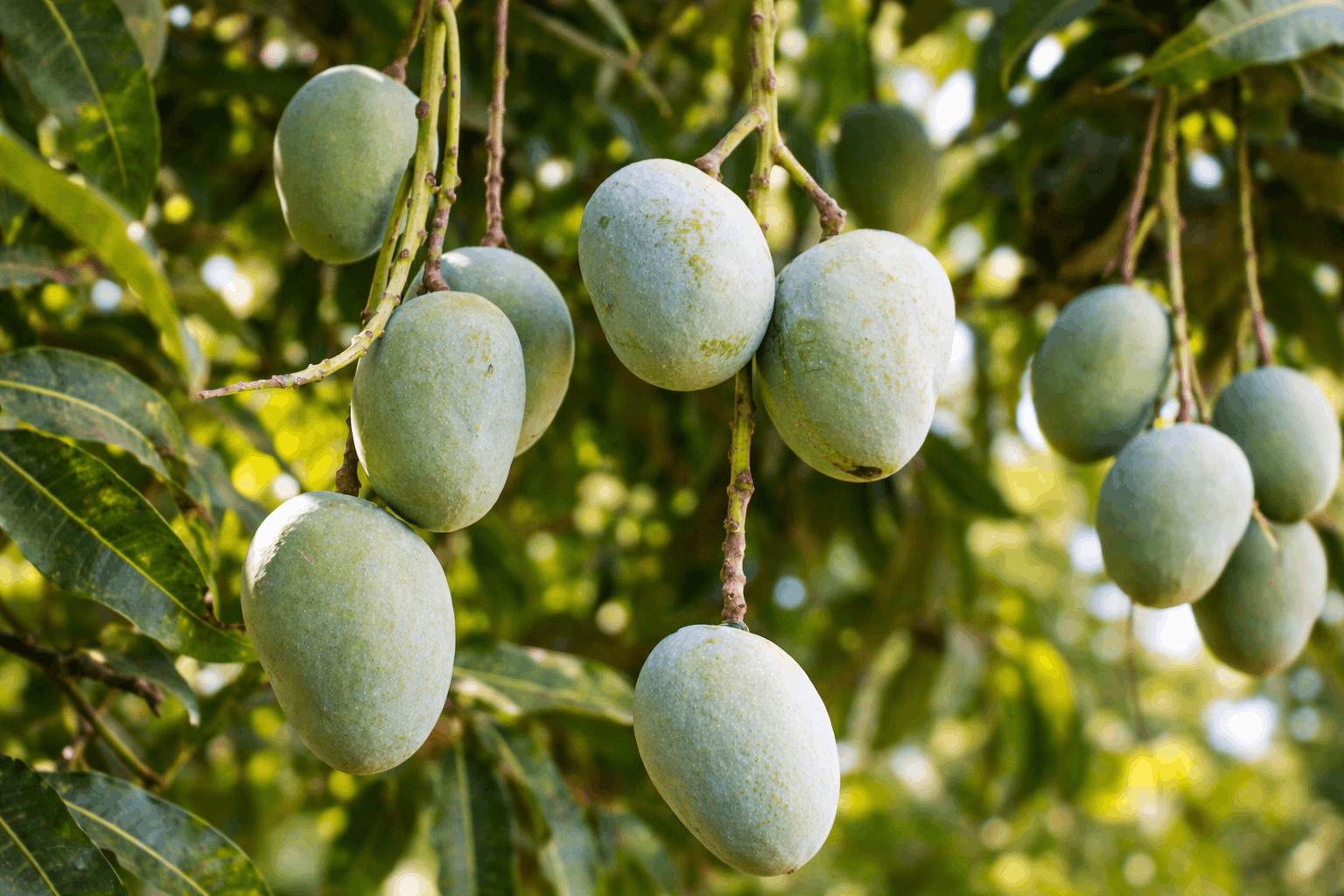
Mango Farm
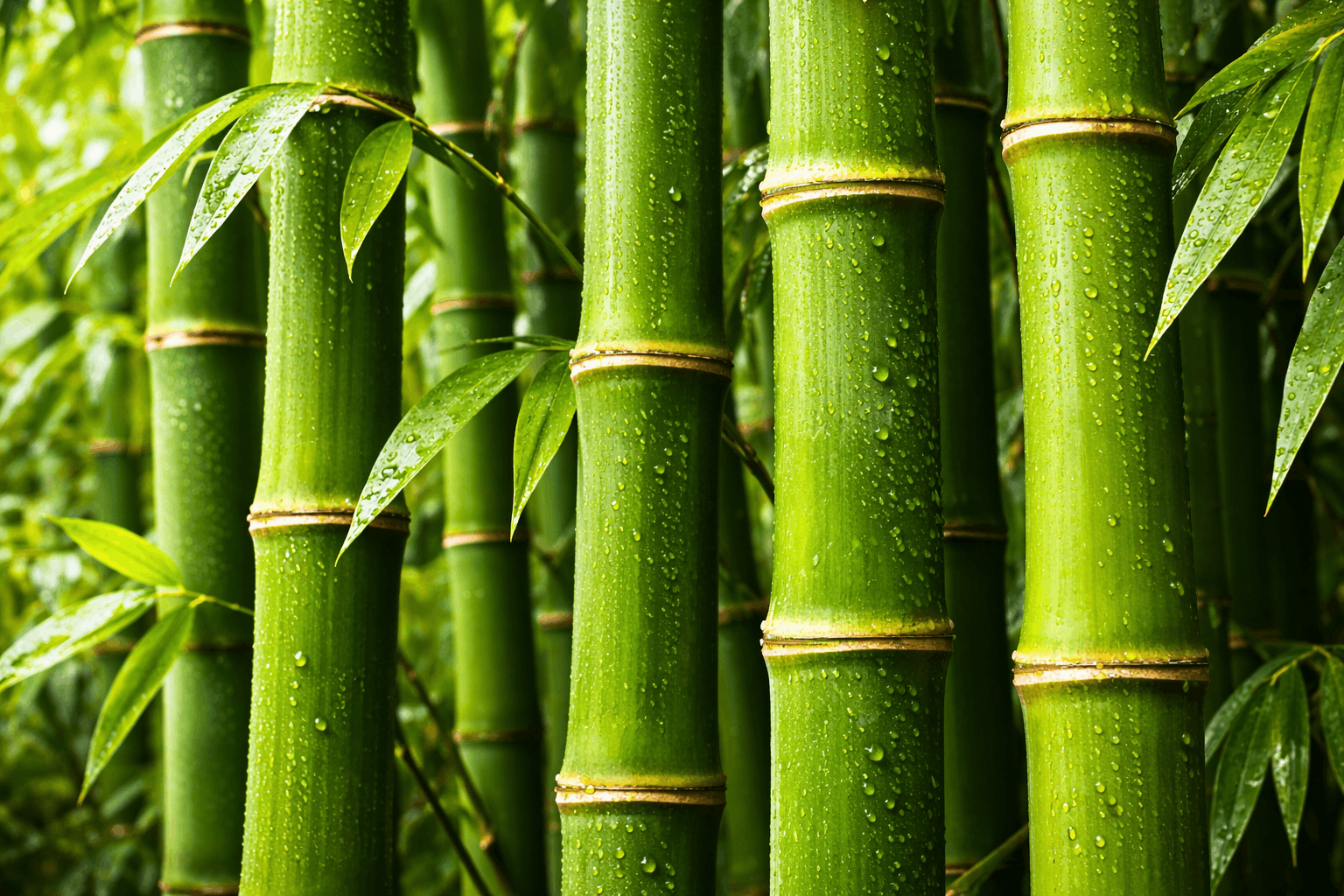
Bamboo
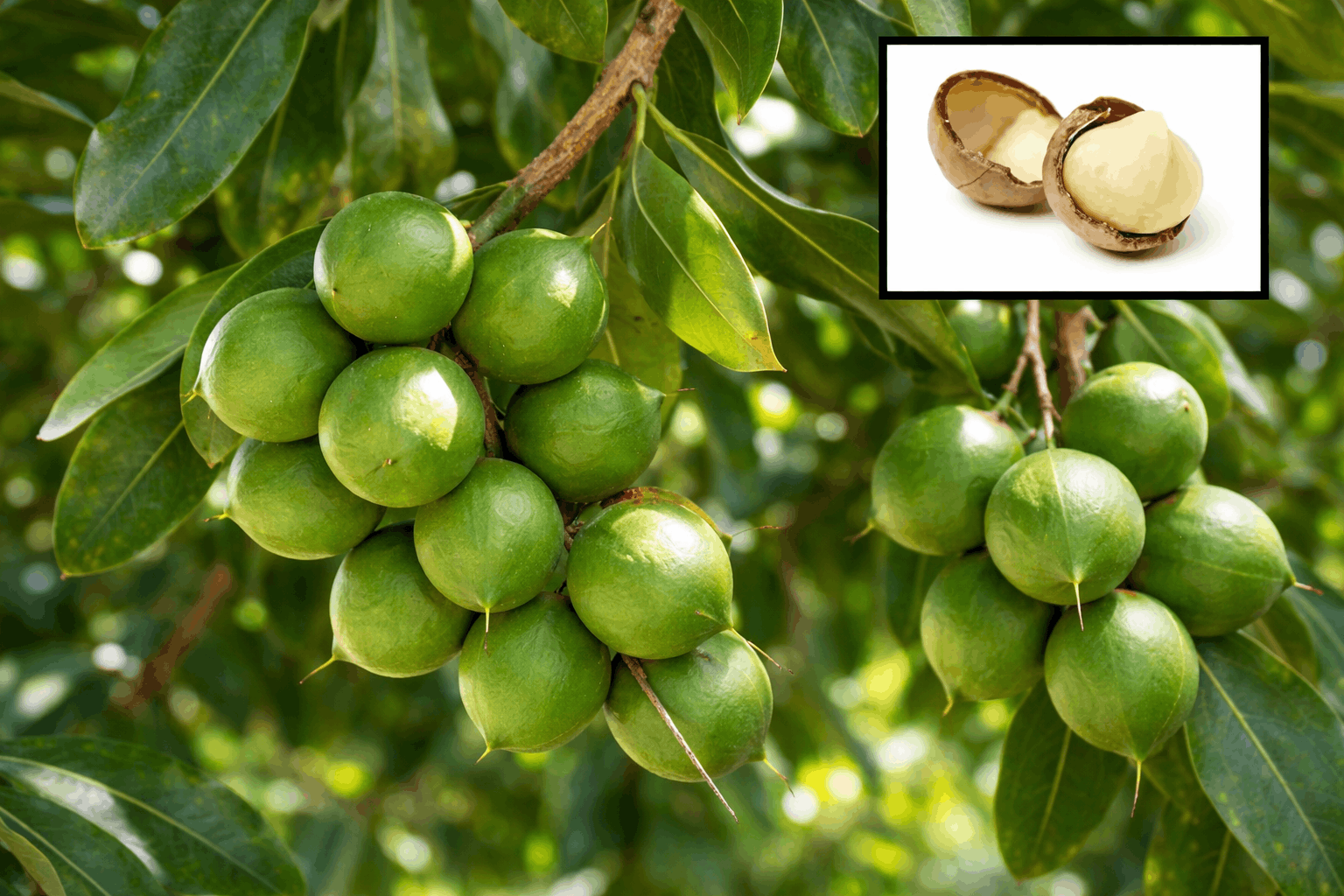
Macadamia
Sandalwood

Visit Our FarmLands

Experience the farms personally and understand the managed plantation model firsthand.

Frequently Asked Questions

What is the Vanilla cultivation cycle?
Vanilla plants start yielding from 3–4 years after planting and reach full production in 5–6 years. With proper care, plantations can remain productive for 10 to 15 years.
How many Vanilla plants can be grown per acre?
Typically, 900 to 1100 vanilla plants are grown per acre under shade-based cultivation systems. Spacing depends on support trees, climate, and management practices.
Who manages the Vanilla farm?
Professional farm management includes shade setup, support systems, drip irrigation, organic nutrition, manual pollination, pest control, and continuous monitoring for optimal vine health.
What is the expected Vanilla yield?
A mature vanilla farm can produce approximately 150 to 300 kg of cured beans per acre annually depending on climate, pollination success, and curing quality.
Can investors visit the Vanilla farm?
Yes. Visitors and investors can schedule farm visits to understand vanilla cultivation, shade management systems, curing processes, and experience premium spice farming operations.

Let’s Build Your Farm Investment

Contact Us
First
Last