Turmeric Farming
About Turmeric
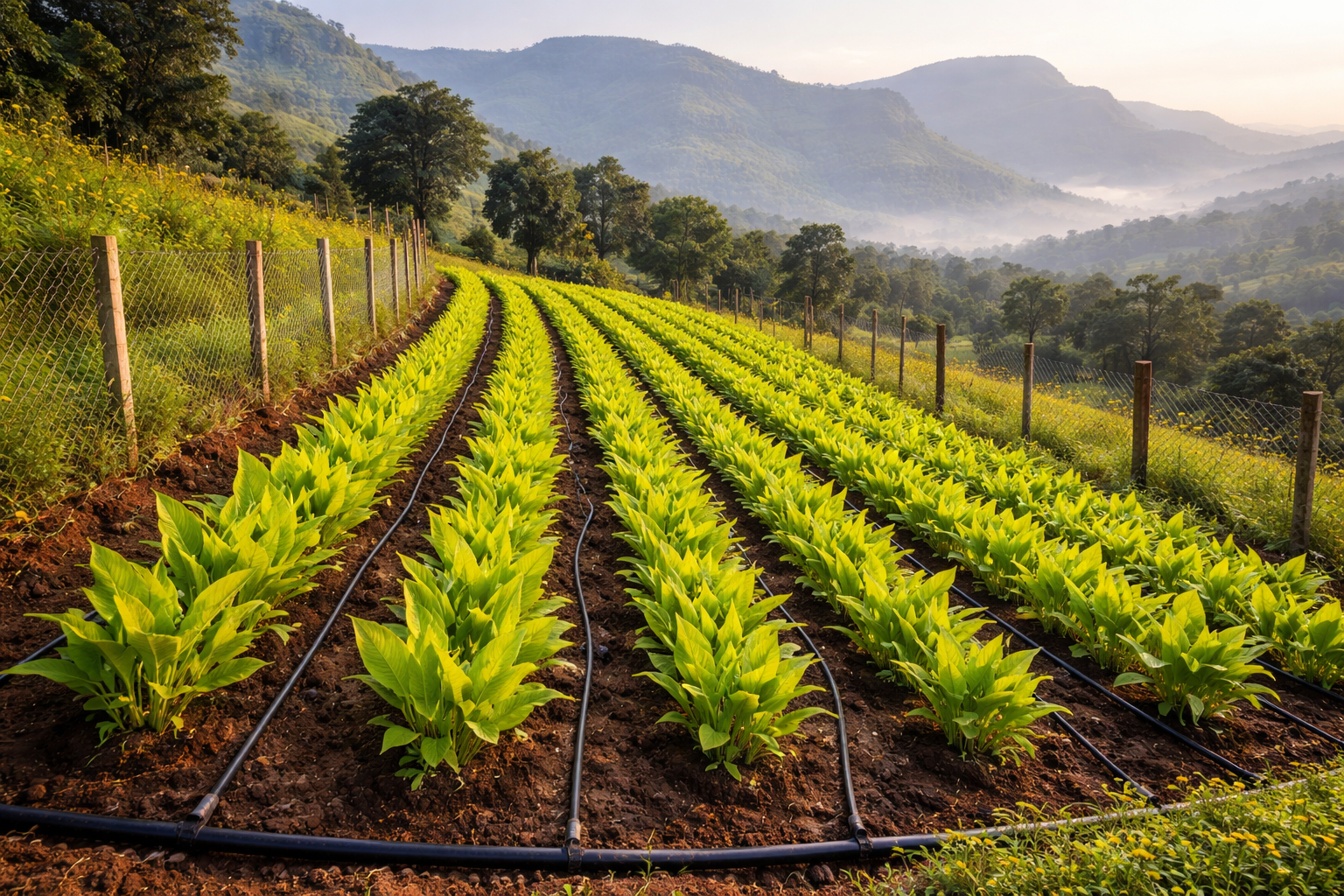
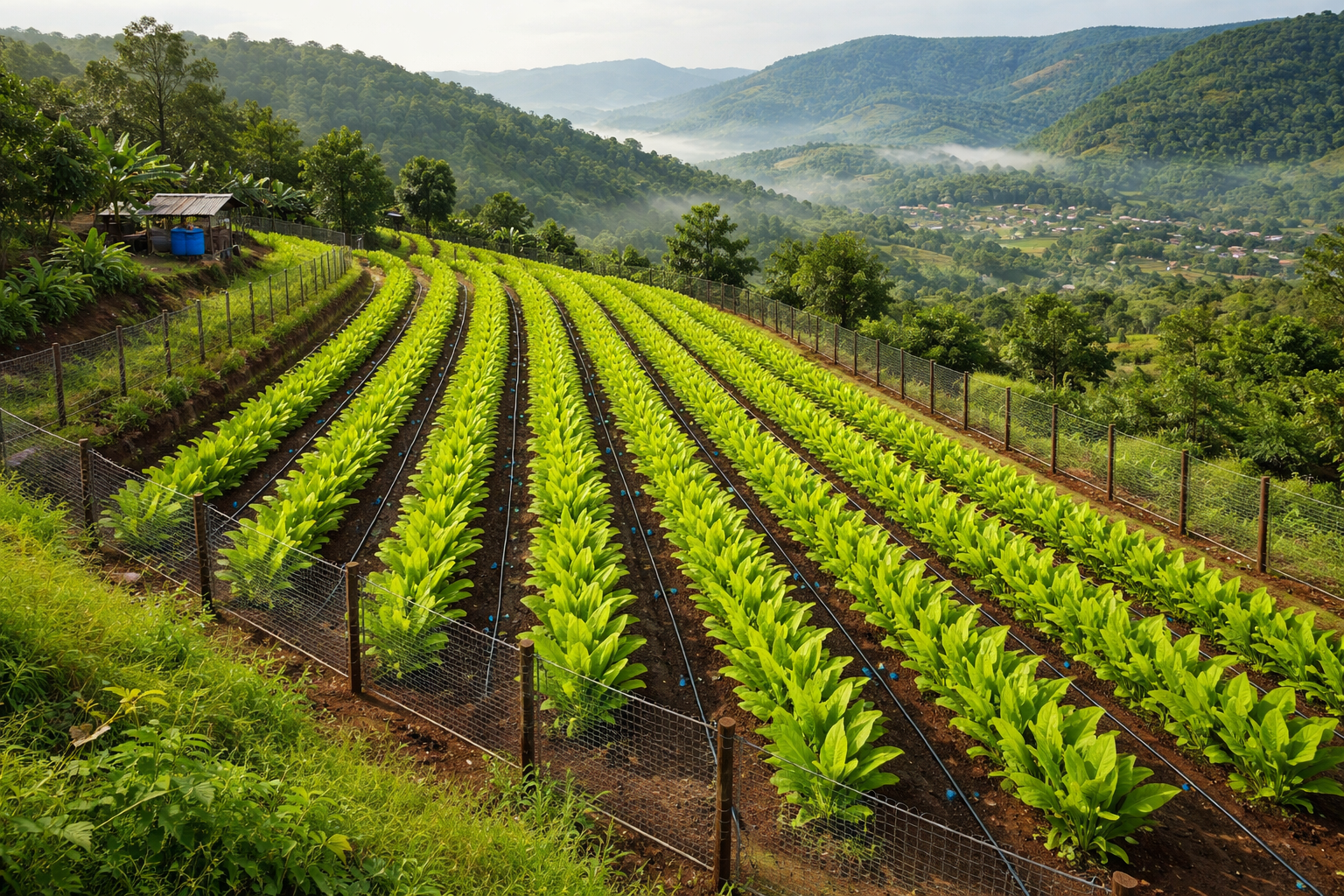
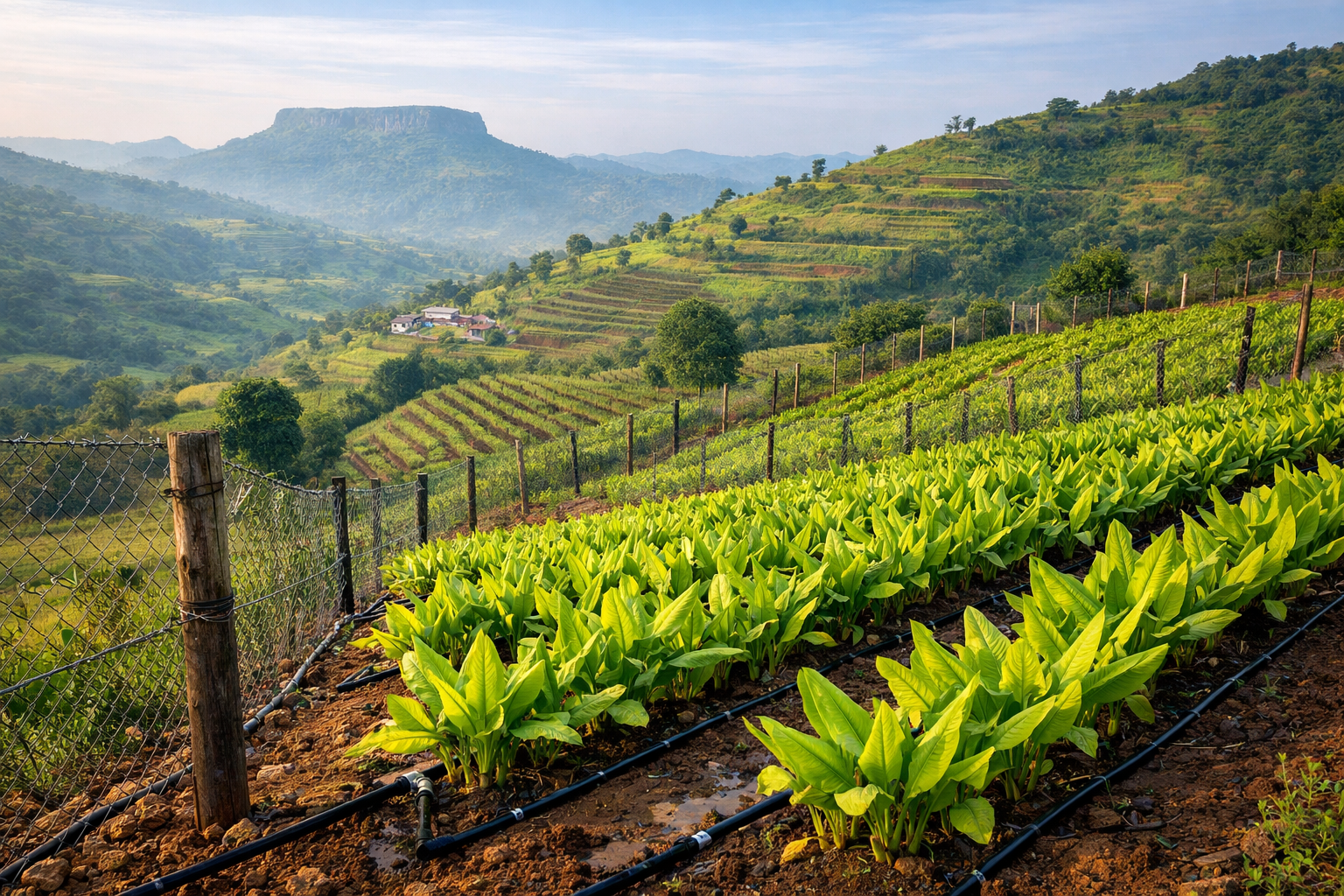
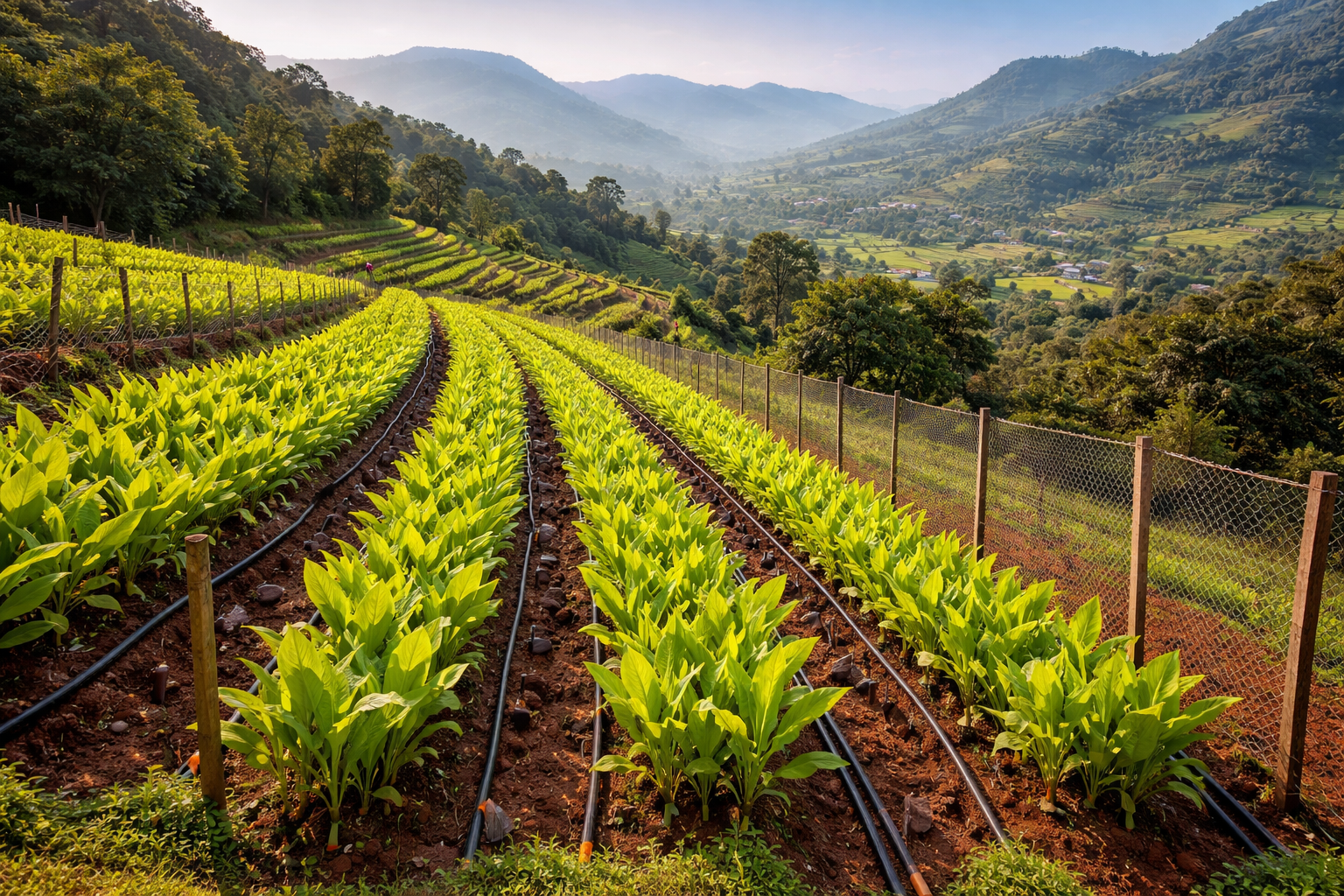
Turmeric farming is a highly profitable spice crop known for its golden color, medicinal value, and strong global demand. Widely used in food, health, and cosmetic products, it thrives in warm and humid climates.
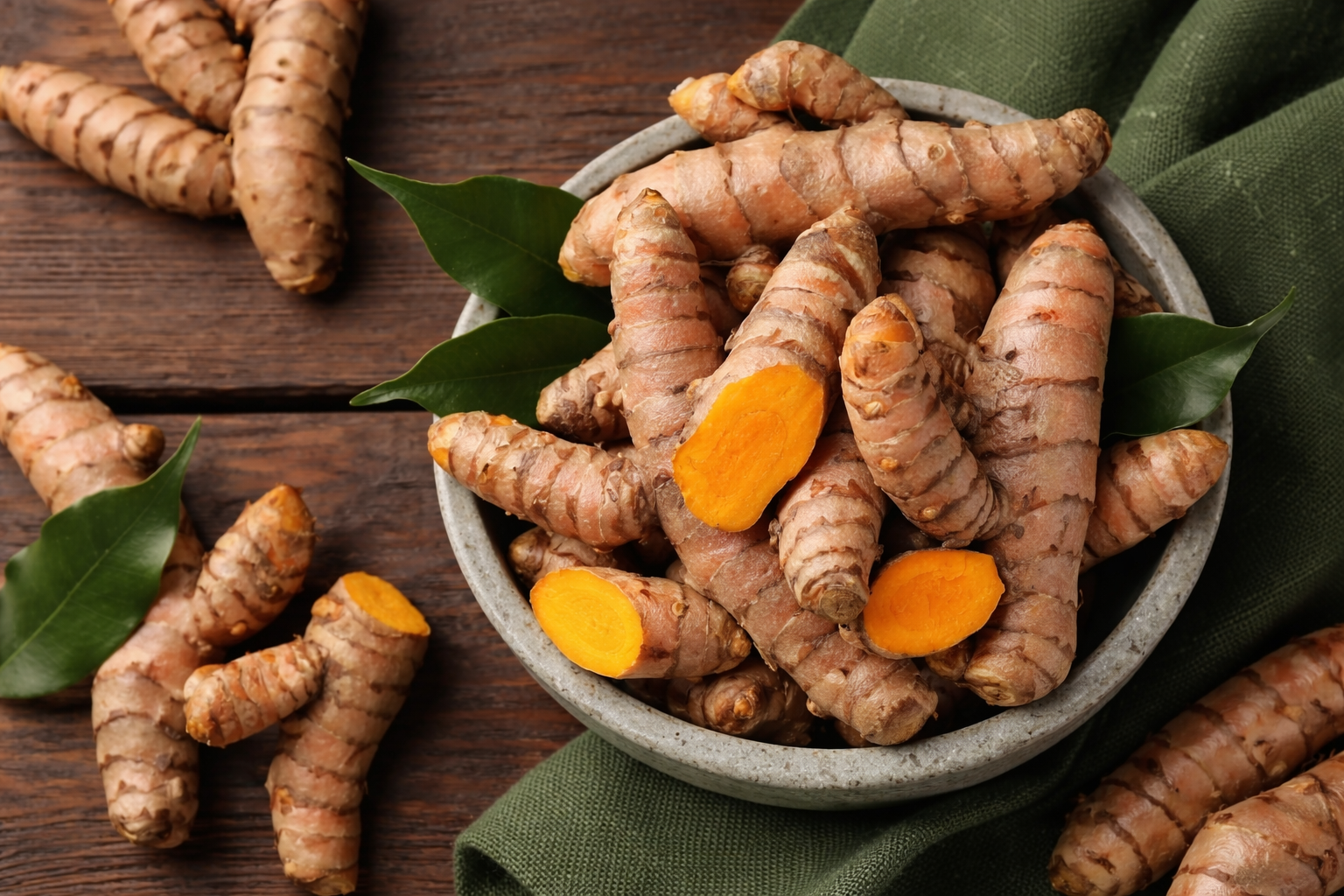
Premium quality rhizomes for spice, health, and exports.
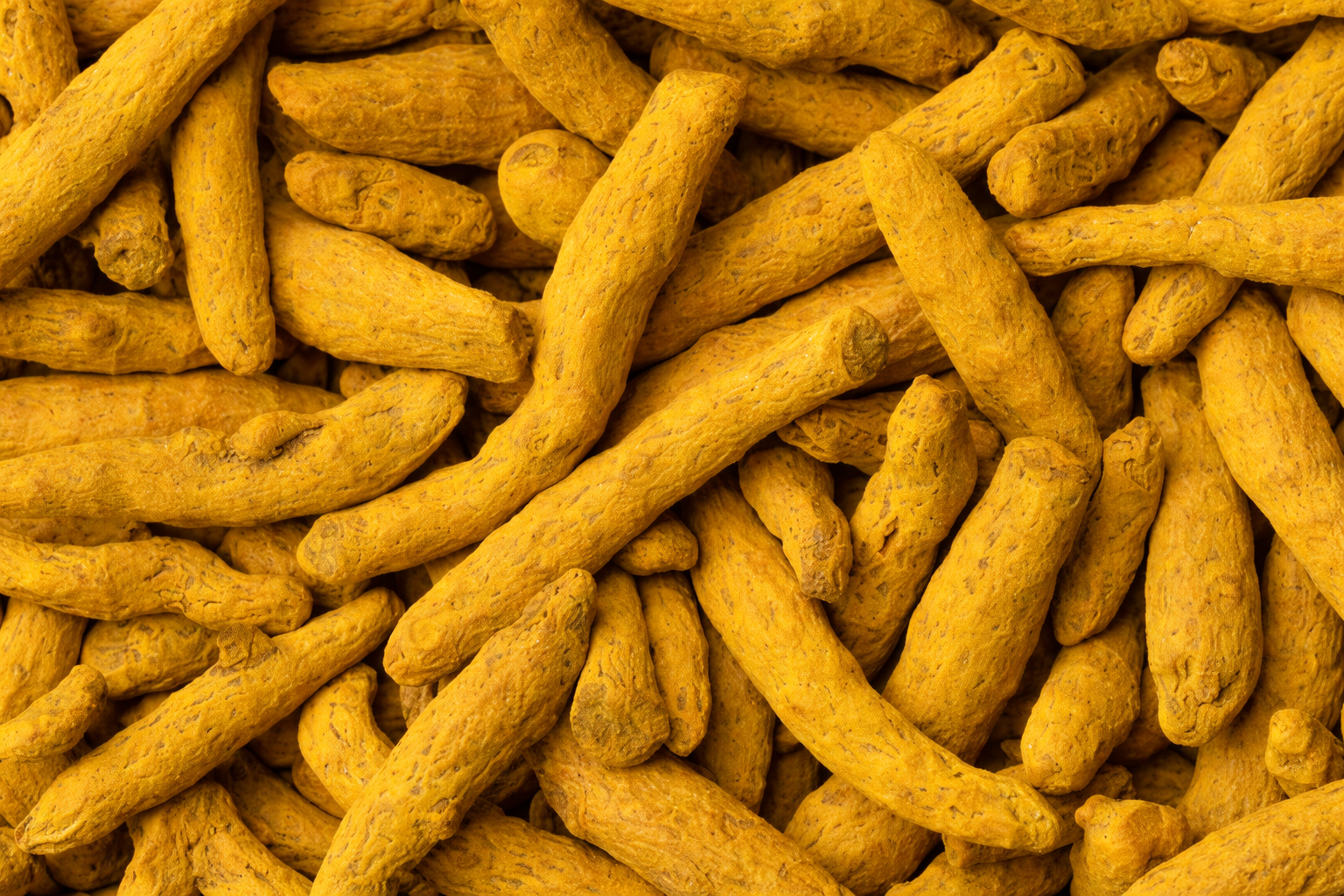
High-demand crop in food, wellness, and global markets.
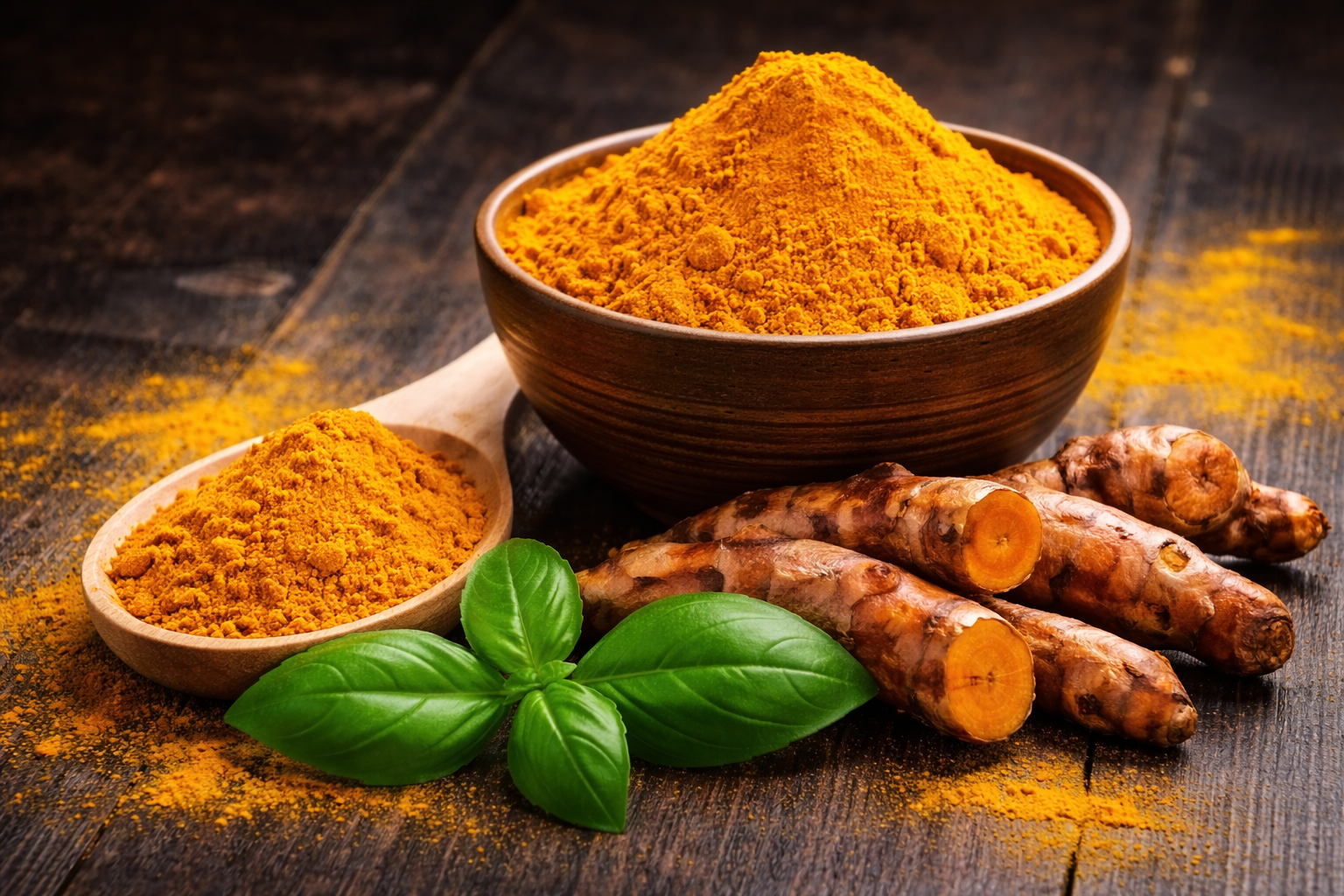
Reliable seasonal farming with strong income potential.
Sundarban Turmeric Farming Requirements
Turmeric farming is a high-demand spice crop valued for its medicinal properties, vibrant color, and strong market demand in food, health, and export industries, offering reliable seasonal income.
1. Climate Requirements
Temperature: Ideal range 20°C to 35°C.
Humidity: Moderate to high humidity preferred.
Rainfall: 1000–2000 mm annually.
Light: Partial shade to full sunlight.
2. Soil Requirements
Type: Well-drained sandy loam or loamy soil.
pH Level: Ideal pH 5.5 – 7.5.
Drainage: Good drainage is essential.
Organic Matter: Rich organic soil preferred.
3. Land Preparation
Ploughing: Deep ploughing and fine tilth.
Bed Formation: Raised beds for drainage.
Soil Mix: Add FYM or compost before planting.
Leveling: Ensure proper field leveling.
4. Plantation & Spacing
Spacing: 30 cm × 20 cm recommended.
Density: 800–1000 plants per acre.
Season: Planting during early monsoon.
Planting Material: Healthy rhizomes used.
5. Water Management
Irrigation: Regular irrigation required.
Drip System: Helps conserve water efficiently.
Water Quality: Clean and low salinity water.
Drainage: Avoid stagnant water conditions.
6. Nutrient Management
Organic Matter: Apply FYM or compost.
Fertilizers: Balanced NPK recommended.
Micronutrients: Zinc and boron beneficial.
Schedule: Apply nutrients in split doses.
7. Plant Care & Maintenance
Weeding: Regular weeding is essential.
Mulching: Helps retain soil moisture.
Earthing Up: Improves rhizome development.
Interculture: Maintain clean cultivation.
8. Pest & Disease
Pests: Shoot borer, leaf rollers.
Diseases: Leaf spot, rhizome rot.
Control: Use integrated pest management.
Prevention: Ensure field sanitation.
9. Harvesting & Post Harvest
First Harvest: Ready in 7–9 months.
Maturity: When leaves turn yellow.
Harvest: Uproot rhizomes carefully.
Post Harvest: Boiling, drying, polishing.
Plantation Development Process
Land Preparation
Ploughing, leveling, and preparing fertile soil with organic manure for turmeric cultivation.
Bed Formation Setup
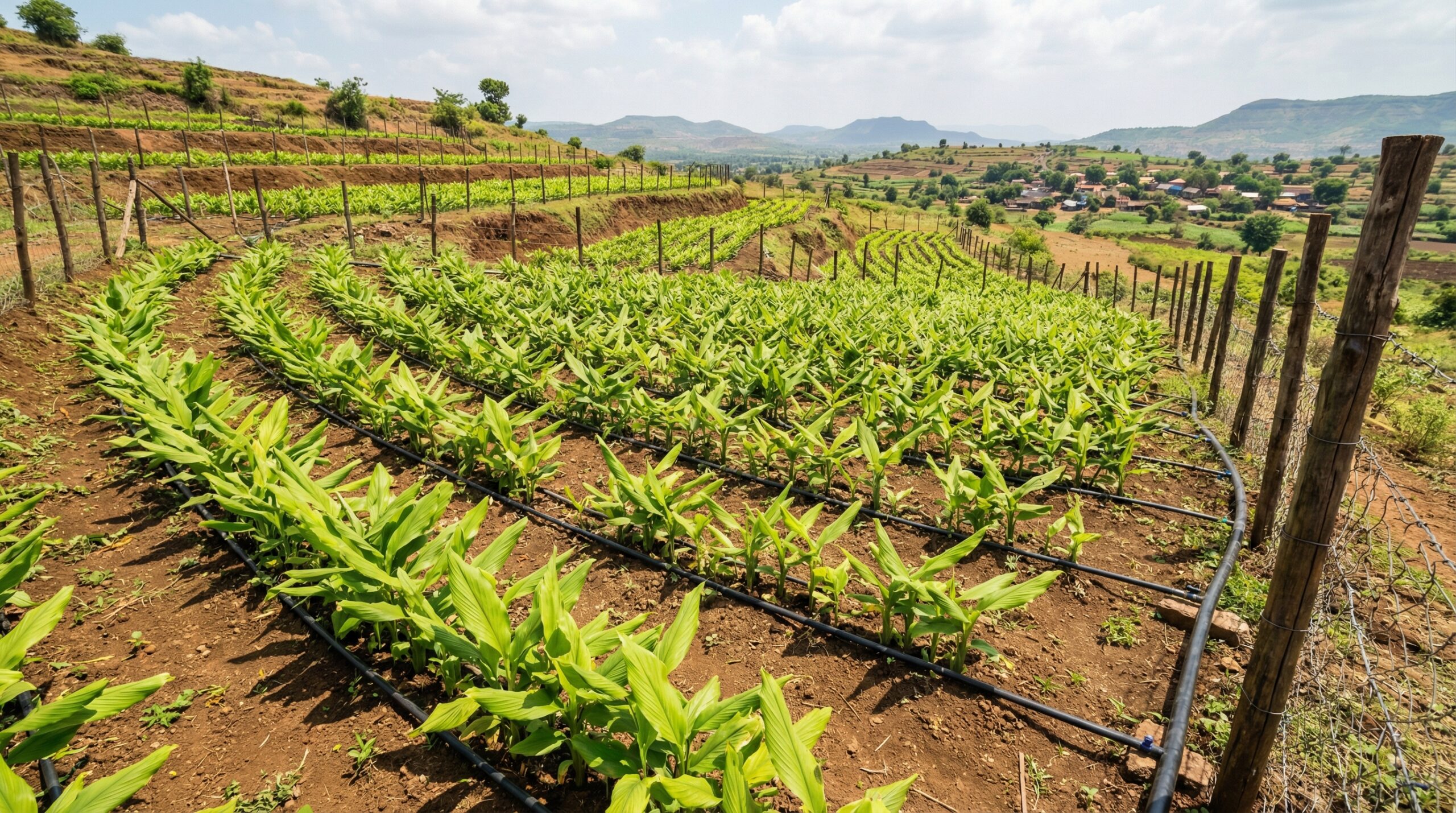
Creating raised beds or ridges to ensure proper drainage and healthy rhizome development.
Plantation & Spacing
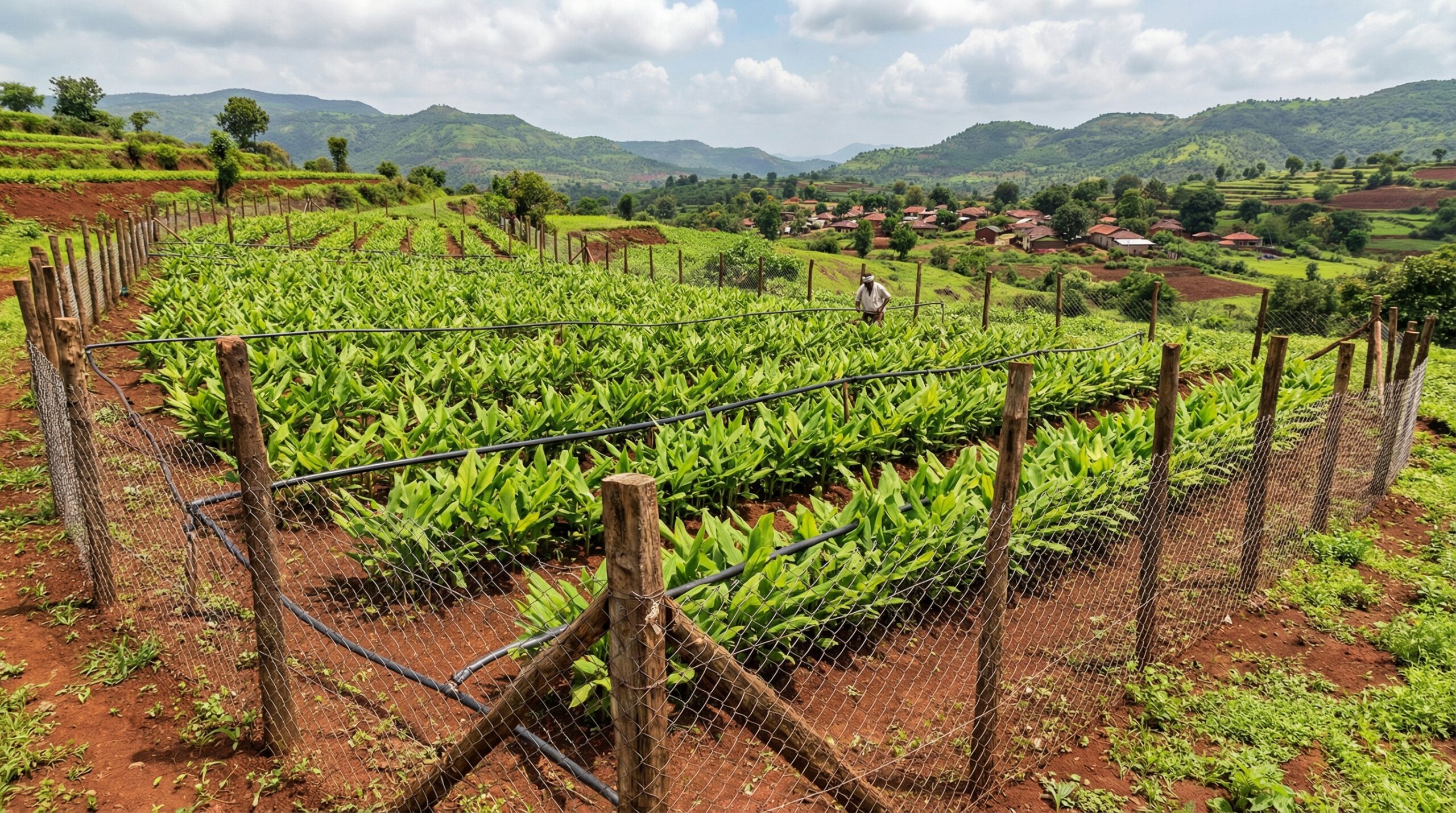
Proper spacing of turmeric rhizomes ensures airflow, root growth, and higher productivity.
Irrigation Setup
Drip irrigation system installed for uniform moisture and efficient water management.
Crop Management
Weeding, mulching, and earthing up for healthy plant growth and improved rhizome yield.
Harvest & Processing
Uprooting mature rhizomes followed by boiling, drying, and polishing for market value.
Plantation Gallery
Farm Layout & Infrastructure
Value Potential
Explore Other Plantations
Visit Our FarmLands
Experience the farms personally and understand the managed plantation model firsthand.