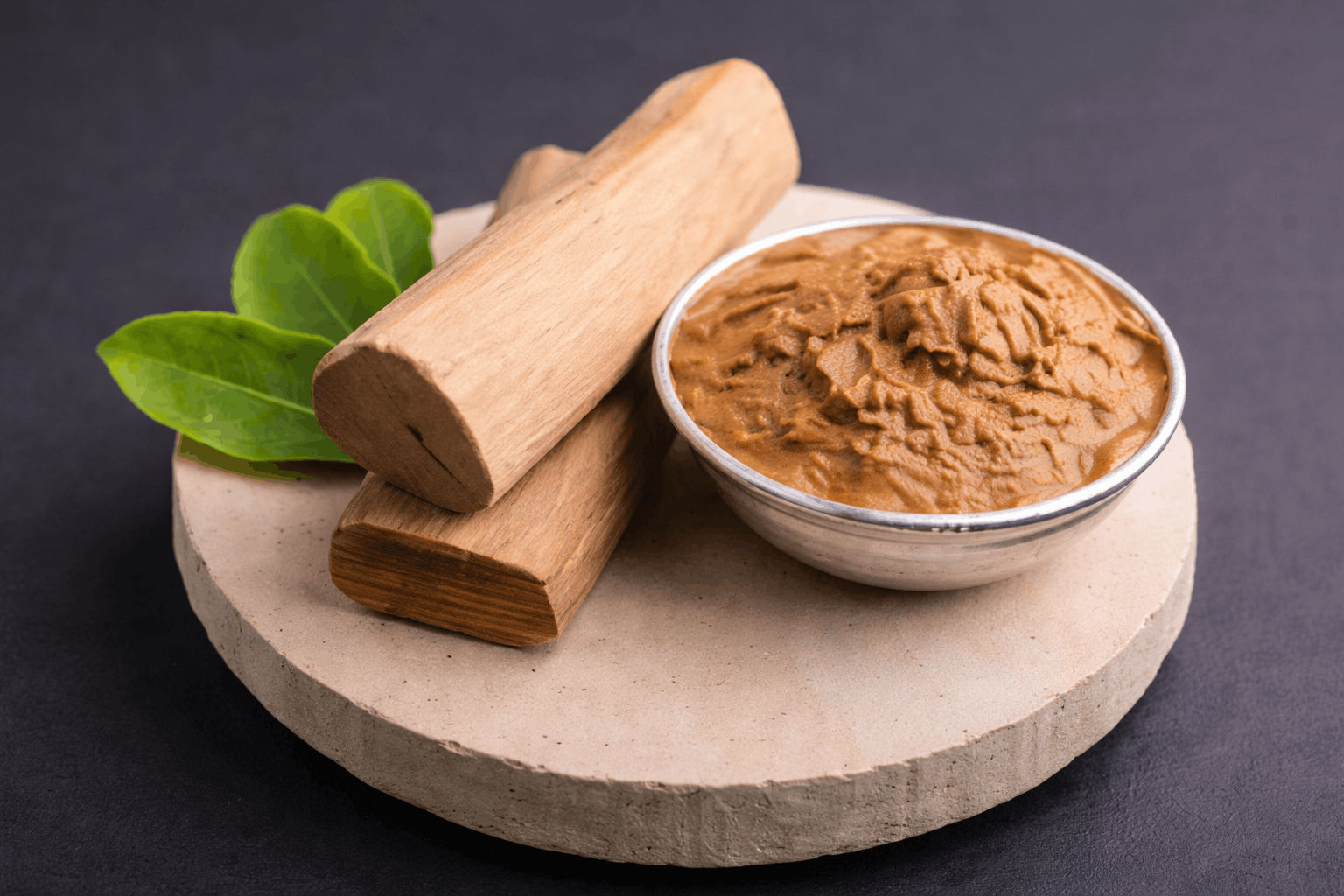
Sunflower Farming

The Golden Crop of Oil, Energy & Rising Demand
High Value Oilseed Crop Strong Market & Processing Demand Managed Agro Investment
BOTANICAL NAME
Helianthus annuus
HARVEST CYCLE
3 – 4 Months
SUITABLE CLIMATE
Warm to Moderate Climate
MARKET VALUE
Edible Oil & Food Industry
PLANTATION DENSITY
20,000 – 25,000 Plants/Acre

About Sunflower

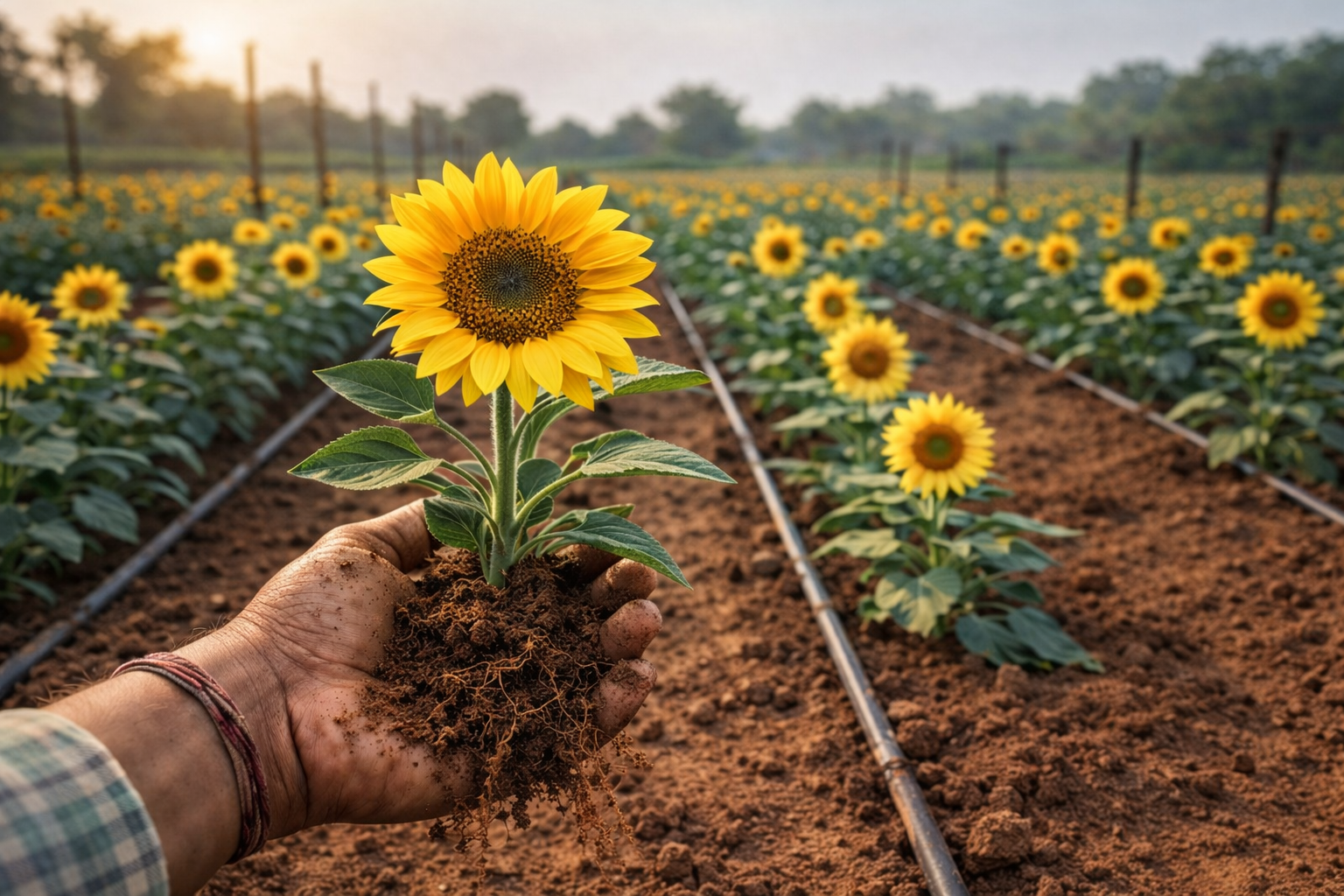
Sunflower farming is a valuable oilseed crop known for producing high-quality edible oil used in cooking and food processing. Sunflower seeds are rich in nutrients and widely used in food and health industries. The crop grows well in warm climates and offers high yield with strong market demand.
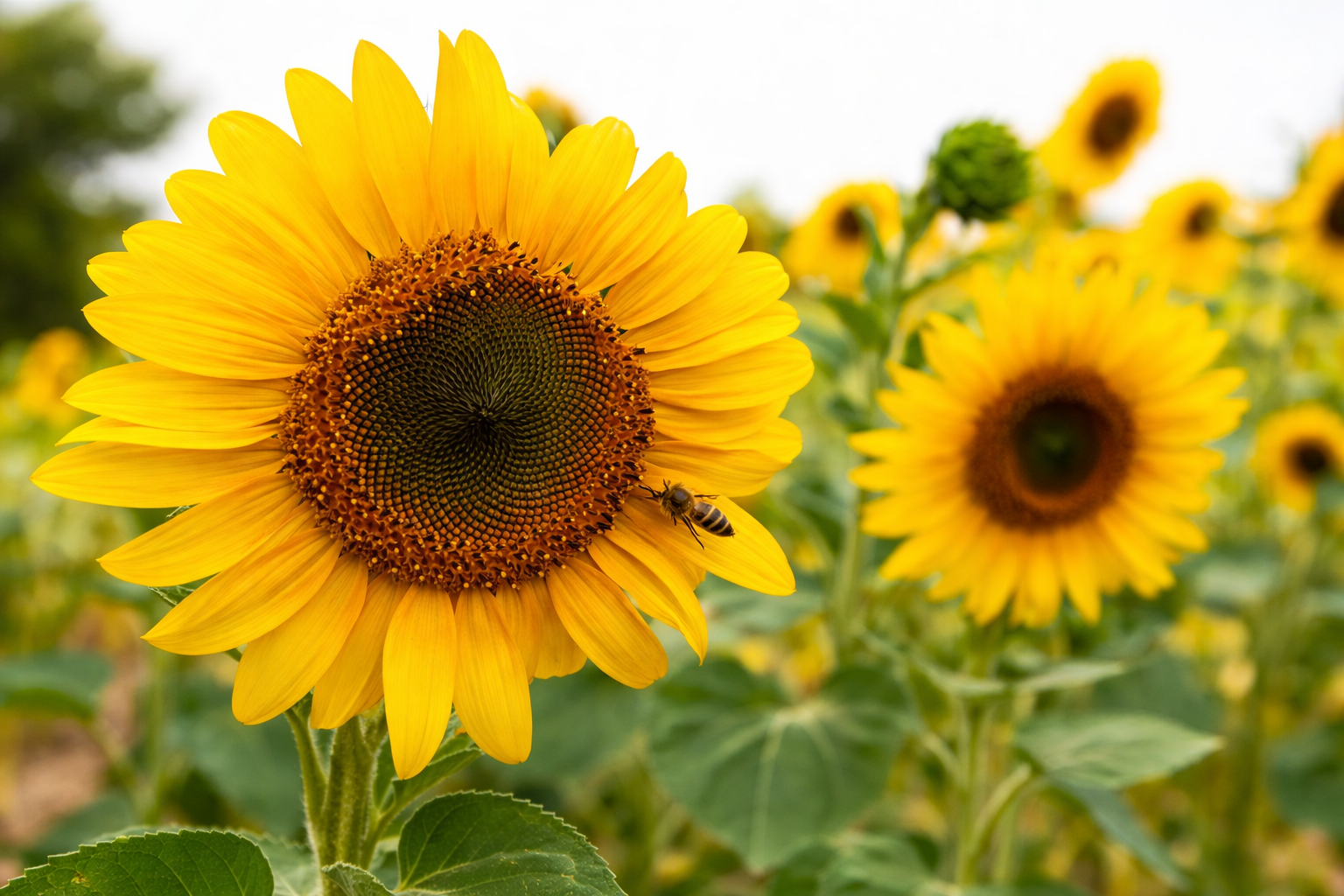
Agarwood Plantation

Premium sunflower seeds used for edible oil and nutritious food products.
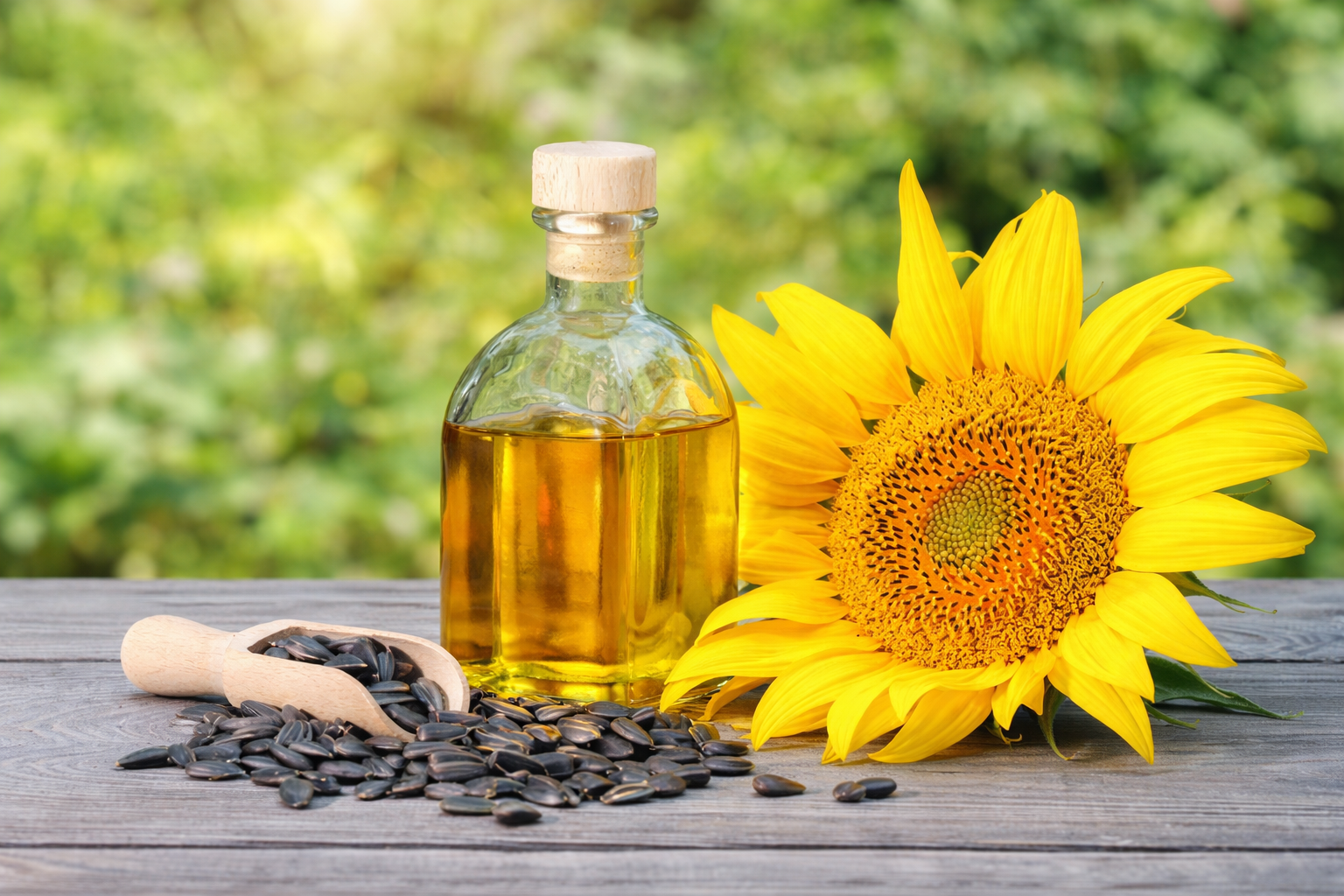
Resin Formation

High-demand crop in edible oil and food processing industries.
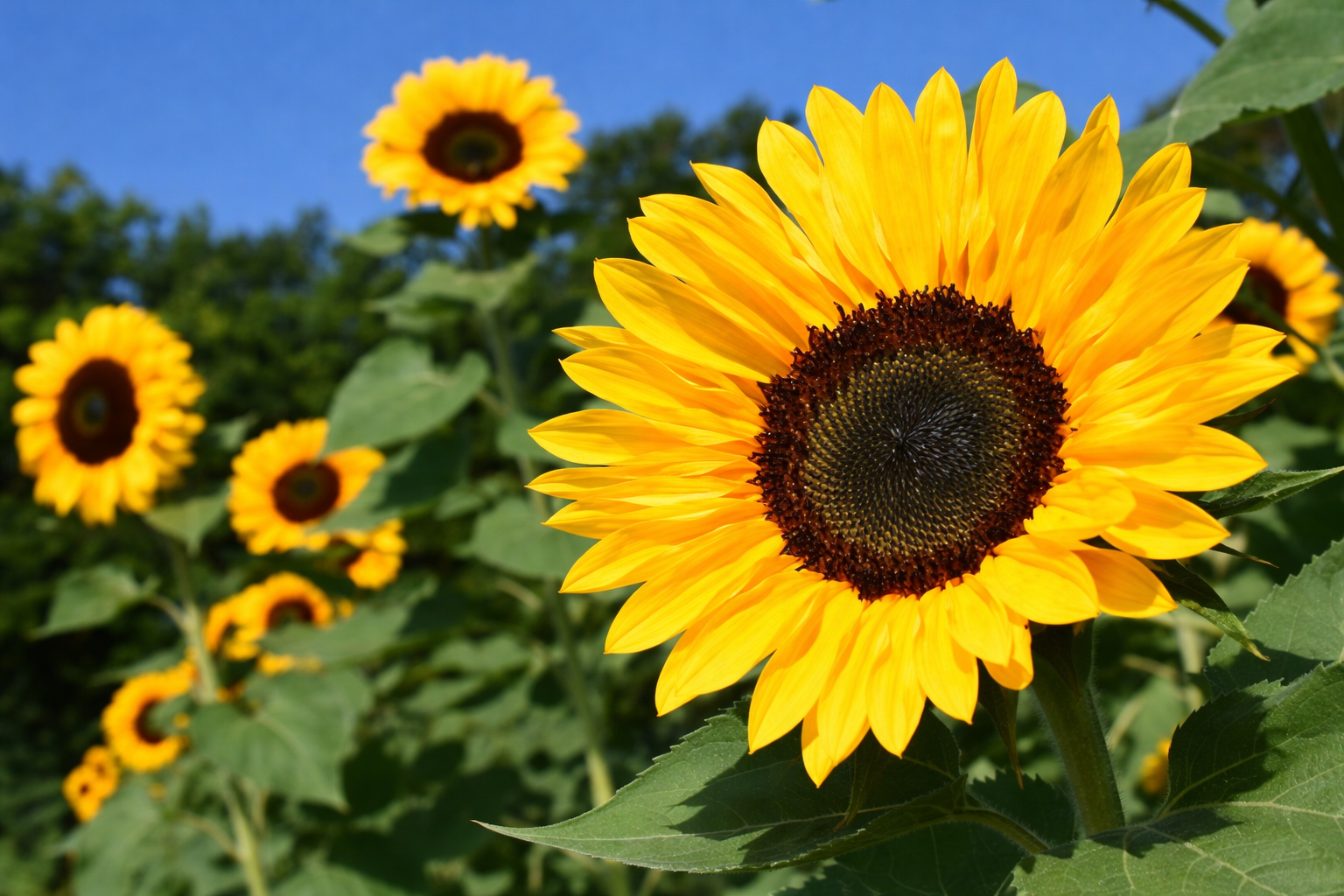
Processing

Profitable and sustainable farming with growing market opportunities.

Agarwood Requirements

Sundarban Sunflower Farming Requirements

Scientific cultivation practices and suitable environmental conditions are essential for healthy growth and high seed yield.

1. Climate Requirements

Temperature: Ideal range 20°C to 30°C for healthy growth and oil yield.

Sunlight: Requires 6–8 hours of full sunlight daily.

Rainfall: Moderate rainfall below 500 mm is suitable.

Humidity: Low to moderate humidity helps reduce disease risk.

2. Soil Requirements

Type: Well-drained loamy or sandy-loam soil preferred.

pH Level: Optimum soil pH 6.5 – 8.5.

Soil Depth: Minimum 40–60 cm deep fertile soil required.

Fertility: Moderate fertility with good organic matter improves yield.

3. Land Preparation

Clearing: Remove weeds, stones, and crop residues.

Ploughing: 2–3 deep ploughings improve soil tilth.

Bed Preparation: Fine seedbed with proper leveling required.

Moisture: Ensure soil moisture before sowing for germination.

4. Plantation & Spacing

Spacing: 60–75 cm row spacing and 20–30 cm plant spacing.

Season: Sowing in Kharif, Rabi, or summer depending on region.

Selection: Use high-yield hybrid or certified seeds.

5. Water Management

Initial Stage: Irrigate immediately after sowing.

Growth Stage: Irrigation at 7–10 day intervals as needed.

Critical Stage: Flowering and seed formation need proper watering.

6. Nutrient Management

Basal Fertilizer: Apply balanced NPK as per soil test.

Micronutrients: Boron and sulphur improve seed filling.

Organic Inputs: Use compost or FYM to enhance soil fertility.

7. Crop Care & Maintenance

Weed Control: Regular weeding during early growth stages.

Thinning: Maintain proper plant population for better yield.

Support: Protect plants from strong winds if required.

8. Pest & Disease Management

Pests: Aphids, caterpillars, and leaf hoppers are common.

Diseases: Root rot, leaf spot, and head rot affect yield.

Control: Use bio-pesticides and proper field sanitation.

Monitoring: Regular inspection prevents major damage.

9. Harvesting & Post Harvest

Harvest Time: Crop matures in 90–110 days after sowing.

Harvest Stage: When back of head turns yellow to brown.

Yield: Good yield with proper management and spacing.

Storage: Store seeds in dry and well-ventilated conditions.

Plantation Development Process

1

Land Preparation

Clearing, leveling, and preparing fine seedbeds for sowing.

2

Pit Digging & Soil

Soil enrichment with compost or fertilizers for healthy crop growth.

3

Plantation & Spacing

Scientific spacing of sunflower plants for proper sunlight and growth.

4

Irrigation Setup

Installation of efficient irrigation systems for uniform water supply.

5

Crop Management

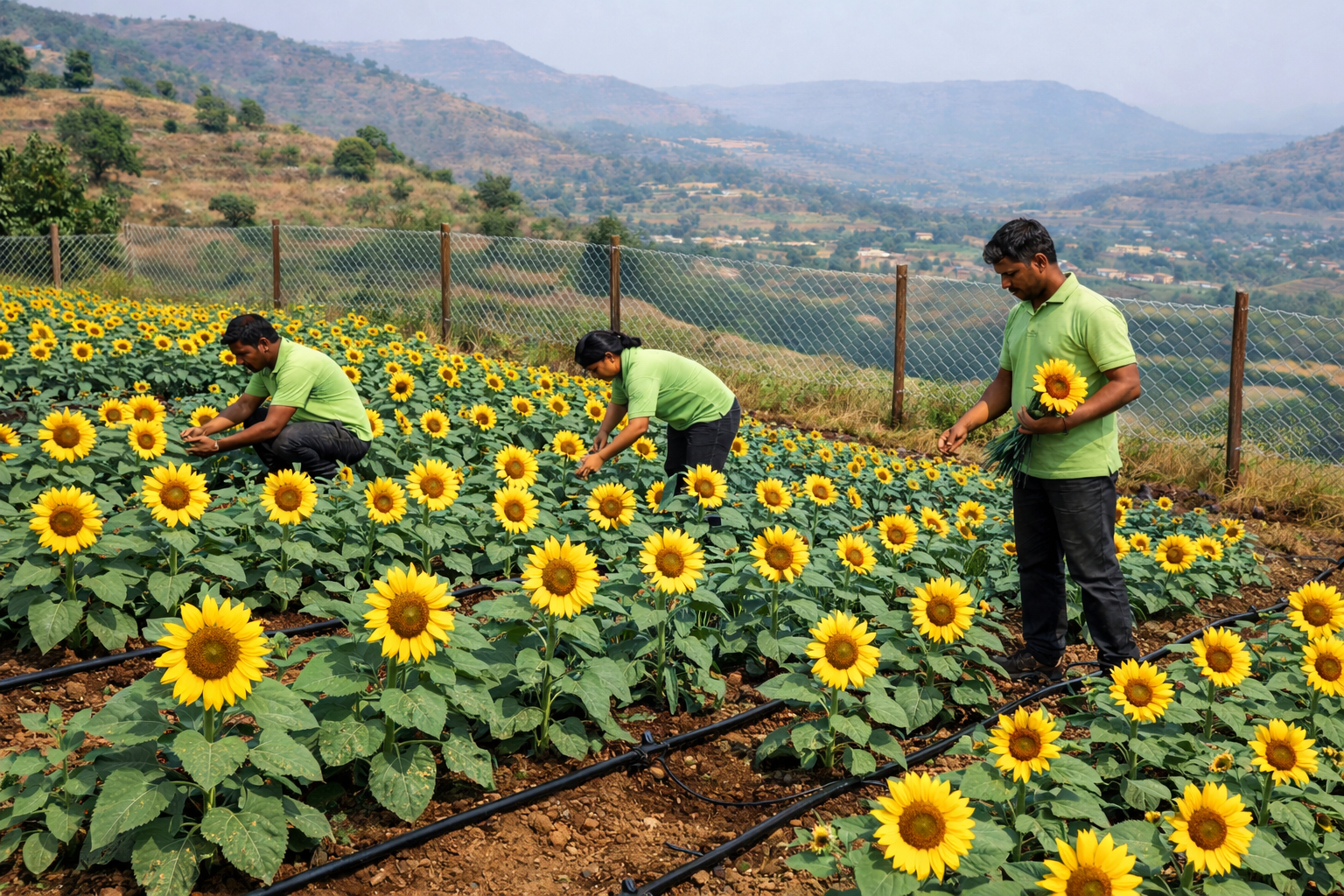
Regular weeding, nutrition, and pest management practices.

6

Harvest & Processing

Harvesting mature sunflower heads for oil extraction and sale.

Plantation Gallery

Plantation Gallery

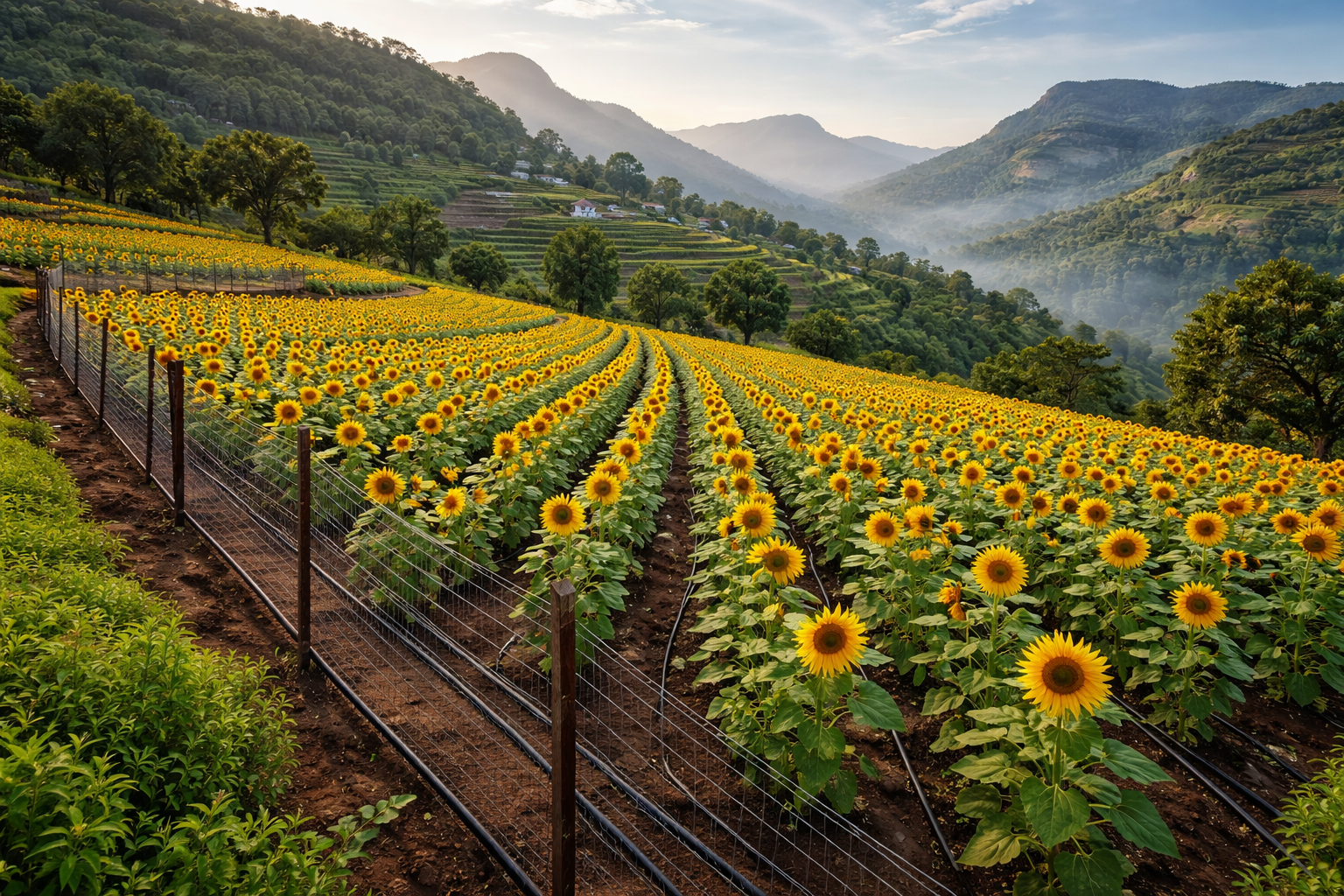
Farm Layout & Infrastructure

Farm Layout
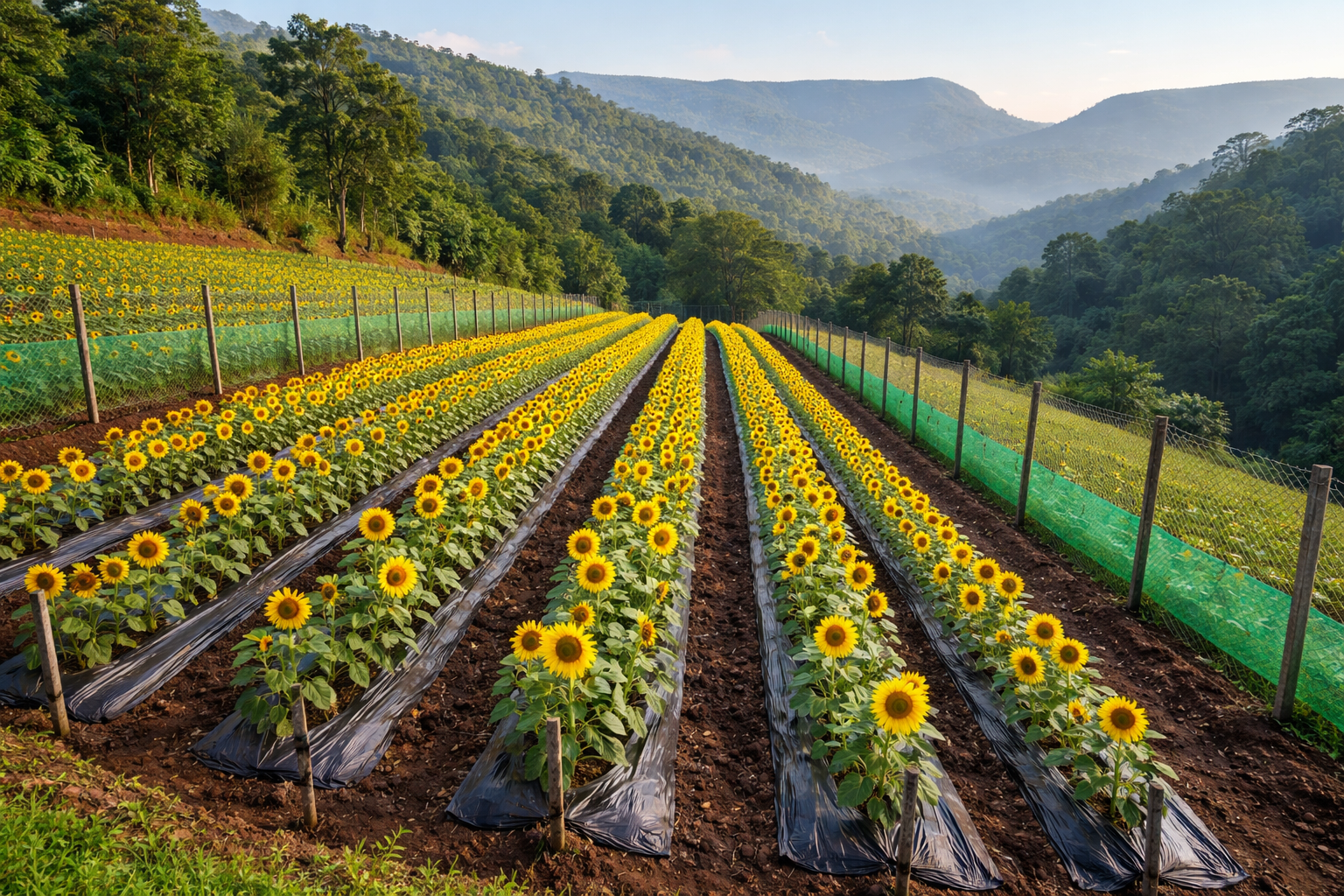
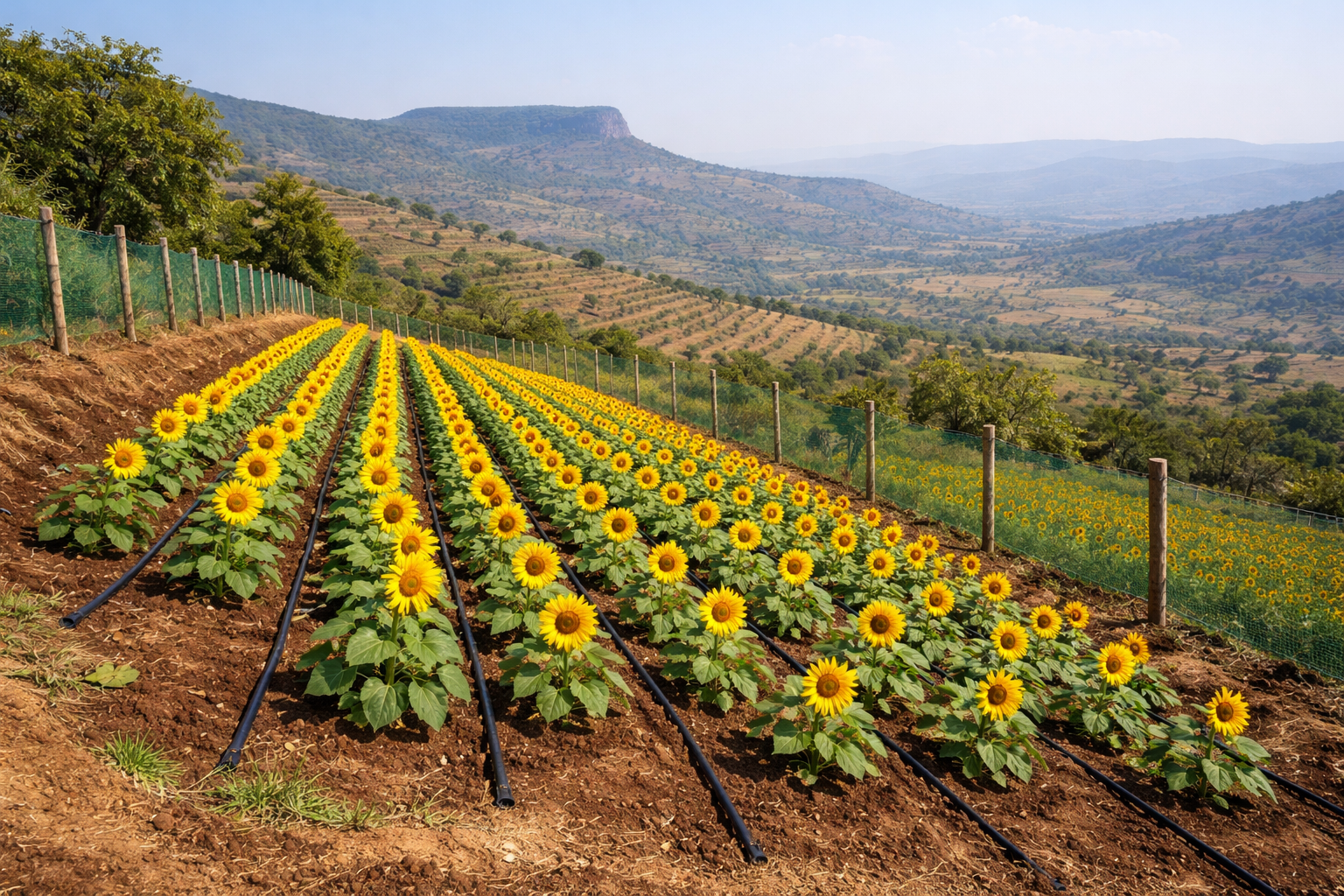
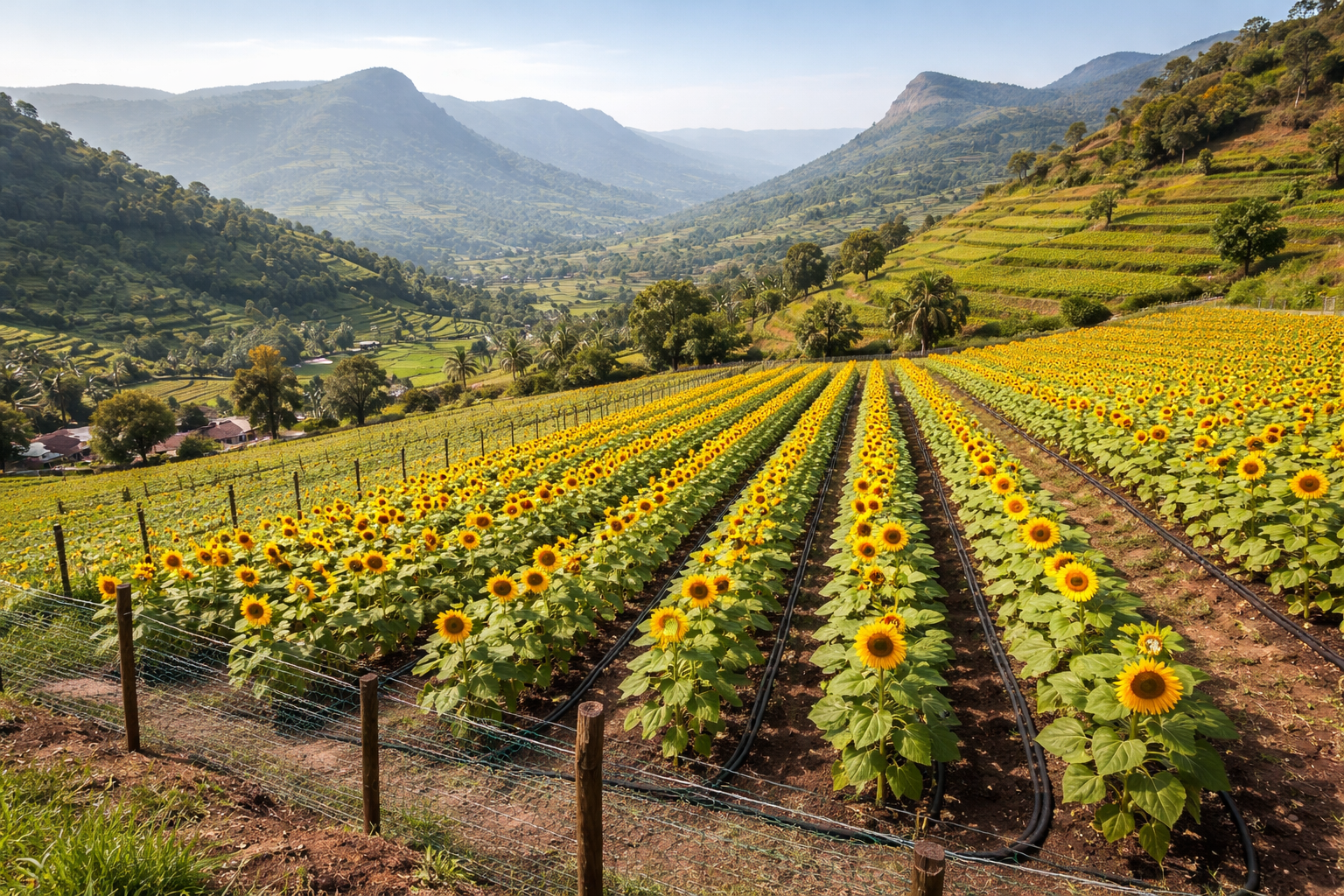
A scientifically planned sunflower farm ensures proper row spacing, uniform plant growth, and efficient land utilization. Well-prepared seedbeds and timely sowing improve germination and crop establishment. Irrigation systems help maintain moisture during critical stages like flowering and seed filling. Proper field pathways allow easy farm operations, weeding, maintenance, and smooth harvesting of sunflower heads.

Value Potential

Plants per Acre
18,000 – 24,000
Harvest Period
3 – 4 Months
Global Market
Edible oil & food industry
High Value Crop
Premium oilseed crop
Investment ROI Potential
₹15K – ₹30K / Acre (Estimated Range)
Estimated annual income from sunflower farming through seed production and oil extraction, depending on yield, hybrid selection, irrigation practices Average yields range around 6–10 quintals per acre, with strong demand from edible oil industries.

Explore Other Plantations
Mango Farm
Bamboo
Macadamia
Sandalwood

Visit Our FarmLands

Experience the farms personally and understand the managed plantation model firsthand.

Frequently Asked Questions

What is the Sunflower cultivation cycle?
Sunflower crops typically mature within 90 to 110 days after sowing. With proper irrigation, nutrient management, and timely care, farmers can achieve healthy plant growth and good seed production within a short duration.
How many Sunflower plants can be grown per acre?
With recommended spacing of about 60 to 75 cm between rows and 20 to 30 cm between plants, farmers can grow approximately 18,000 to 24,000 sunflower plants per acre depending on soil conditions and cultivation practices.
Who manages the Sunflower farm?
Sundarban Agro Farms provides complete farm management through experienced agricultural professionals including land preparation, sowing, irrigation setup, fertilizer application, pest control, and regular crop monitoring.
What is the expected Sunflower yield?
A well-managed sunflower farm can produce around 6 to 10 quintals of seeds per acre depending on hybrid selection, soil fertility, irrigation practices, and effective pest and disease management.
Can investors visit the Sunflower farm?
Yes. Investors and visitors can schedule a farm visit to explore the sunflower fields, understand cultivation practices, and experience the farm infrastructure, irrigation systems, and overall management process.

Let’s Build Your Farm Investment

Contact Us
First
Last