Carnation Farming

The Premium Flower of Demand & Consistent Market Value
High Value Floriculture Crop Strong Domestic & Export Demand Managed Agro Investment
BOTANICAL NAME
Dianthus caryophyllus
HARVEST CYCLE
4 – 5 Months
SUITABLE CLIMATE
Cool to Moderate
MARKET VALUE
Premium Flower Market
PLANTATION DENSITY
60,000 – 80,000 Plants/Acre

About Carnation

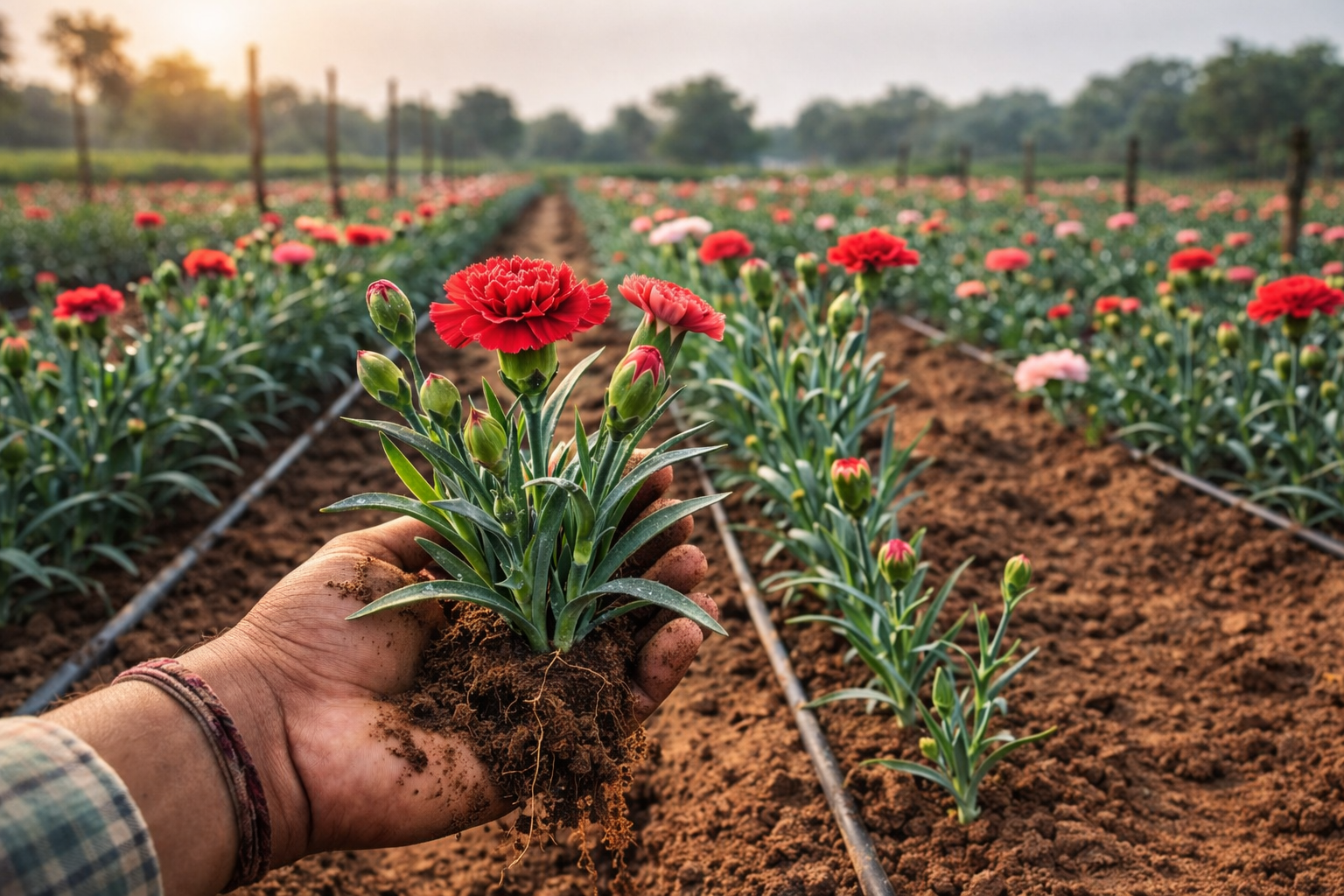
Carnation farming is a premium floriculture segment known for producing vibrant and long-lasting flowers widely used in bouquets, decorations, and gifting. Carnations are highly demanded in domestic and international markets due to their durability, wide color range, and strong commercial value.
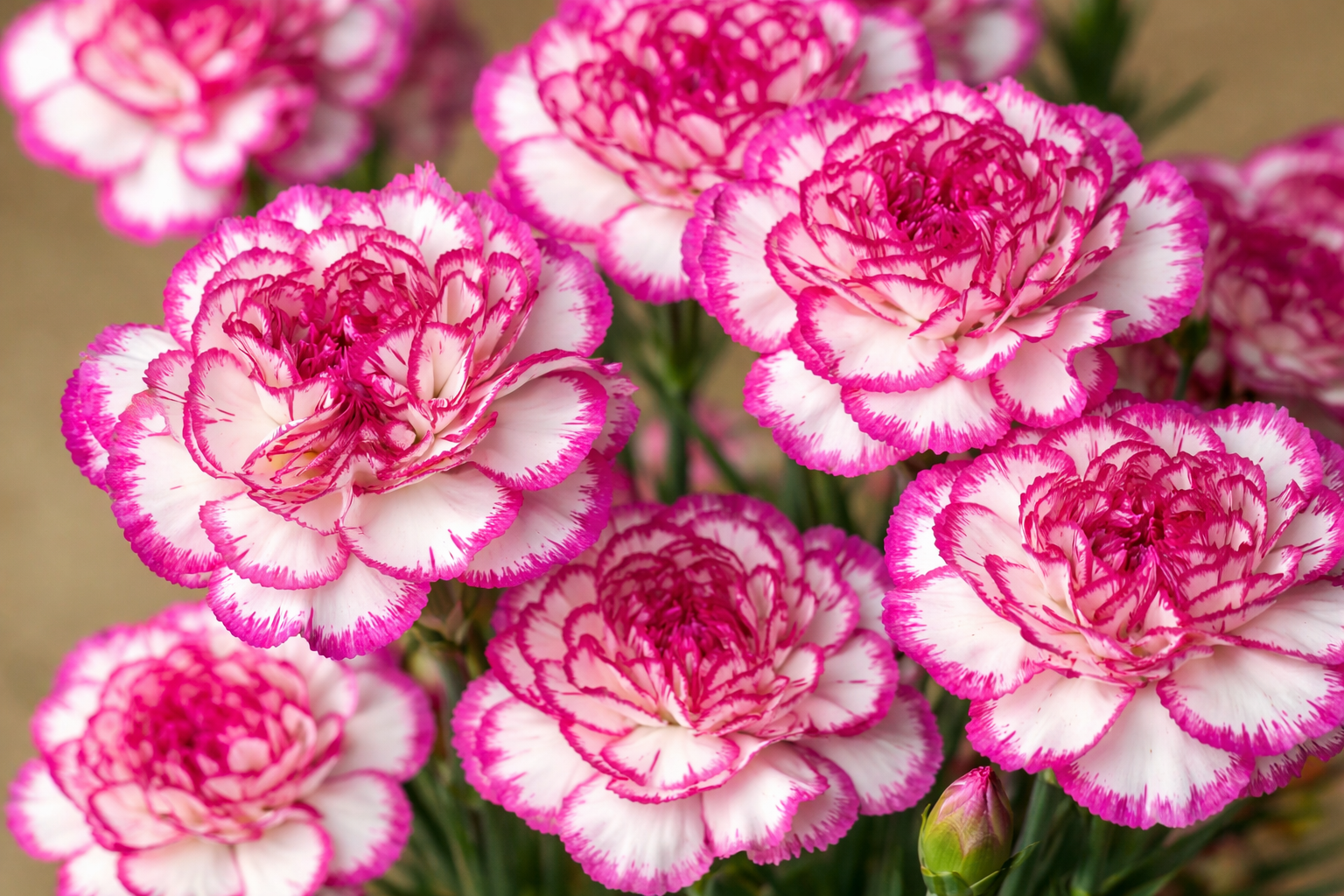
Premium flowers for bouquets and gifting use
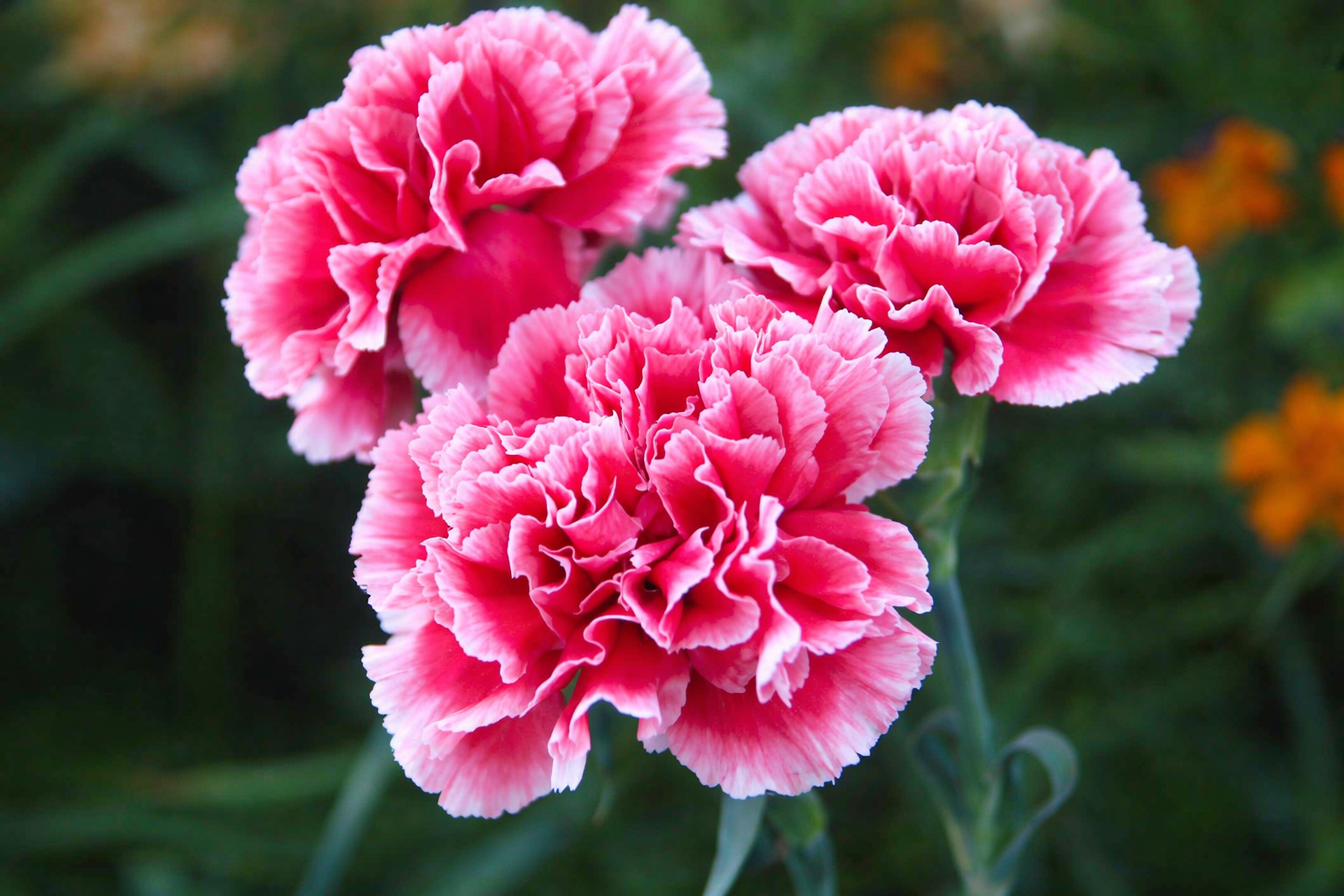
High demand in events and export markets
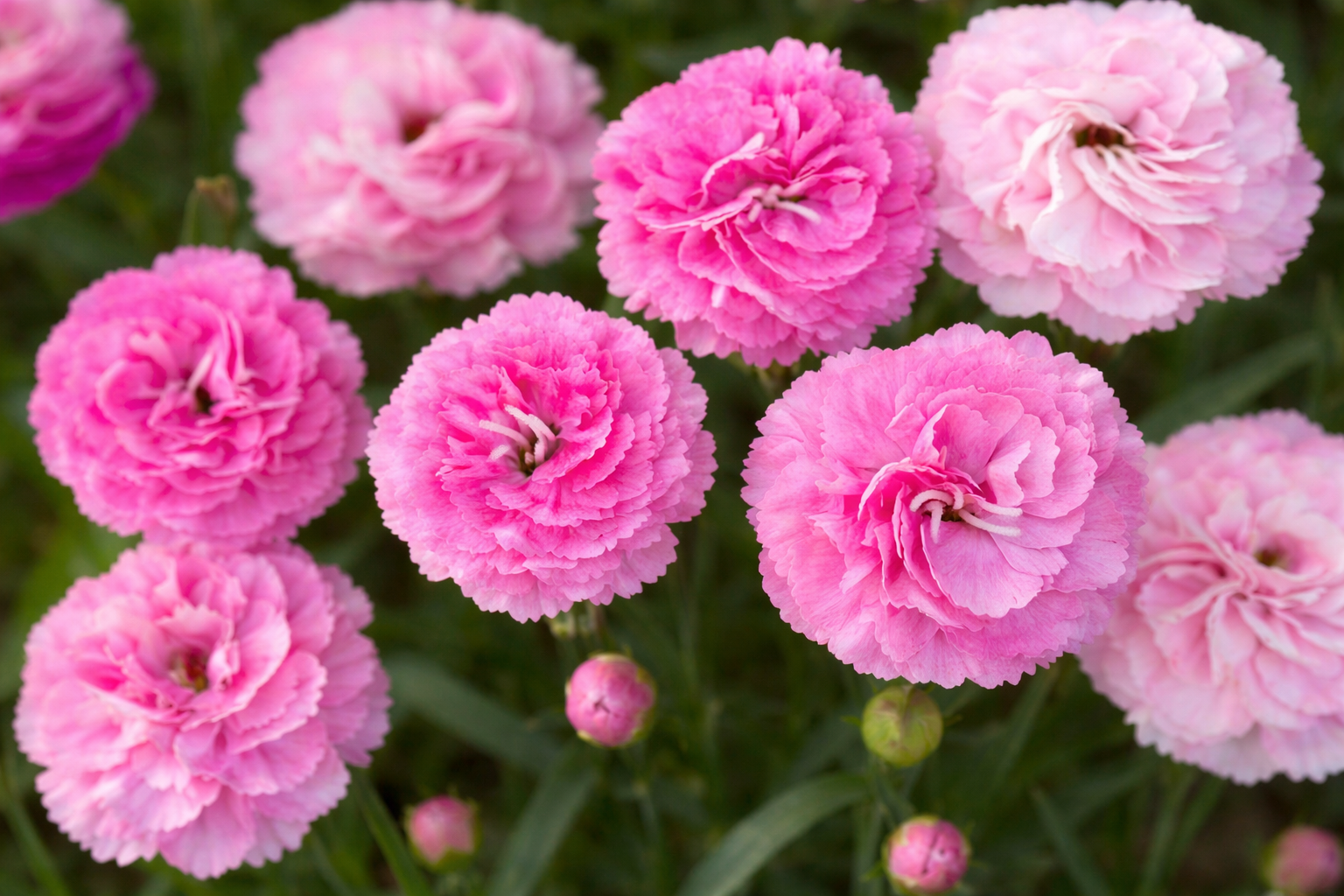
Profitable farming with strong growth potential

Carnation Farming Requirements

Sundarban Carnation Farming Requirements

Scientific cultivation practices and controlled polyhouse conditions are essential for producing high-quality carnations and achieving consistent commercial returns.

1. Climate Requirements

Temperature: Day 18°C–22°C, Night 10°C–12°C

Light: Bright diffused light is ideal

Humidity: 50–70% humidity preferred

Air Flow: Good ventilation is necessary

2. Soil Requirements

Type: Well-drained sandy loam soil

pH Level: Ideal pH 6.0 – 6.5

Drainage: Light and porous soil structure

Medium: Cocopeat, perlite, compost mix

3. Land Preparation

Ploughing: Fine tilth soil preparation required

Beds: Raised beds with proper drainage

Leveling: Uniform leveling is essential

Hygiene: Clean beds reduce disease risk

4. Plantation & Spacing

Spacing: 15 × 15 cm or 20 × 20 cm

Planting: Healthy rooted cuttings used

Density: High-density plantation practiced

5. Water Management

Irrigation: Regular but controlled watering

Method: Drip irrigation system preferred

Drainage: Avoid water stagnation strictly

6. Nutrient Management

Fertilizer: Balanced NPK fertigation program

Micronutrients: Essential for flower quality

Organic: Compost and bio inputs recommended

7. Crop Care & Maintenance

Pinching: Encourages more branching

Support: Netting required for straight stems

Cleaning: Remove dry leaves regularly

8. Pest & Disease Management

Pests: Aphids, thrips and mites common

Diseases: Fusarium wilt, rust issues

Control: Integrated pest management practices

Monitoring: Regular crop inspection required

9. Harvesting & Post Harvest

Harvest: 110–130 days after planting

Stage: Harvest at tight bud stage

Quality: Grading based on stem length

Storage: Cold storage extends shelf life

Plantation Development Process

1

Land Preparation

Clearing, leveling, and preparing raised beds with well-drained soil.

2

Soil Conditioning

Soil enrichment with compost and cocopeat for healthy root development.

3

Plantation & Spacing

Scientific spacing of carnation cuttings for uniform growth and airflow.

4

Irrigation Setup

Installation of drip irrigation for precise and efficient water supply.

5

Crop Management

Regular pinching, nutrition management, and pest control practices.

6

Harvest & Processing

Harvesting premium carnation flowers for fresh and export markets.

Plantation Gallery

Plantation Gallery

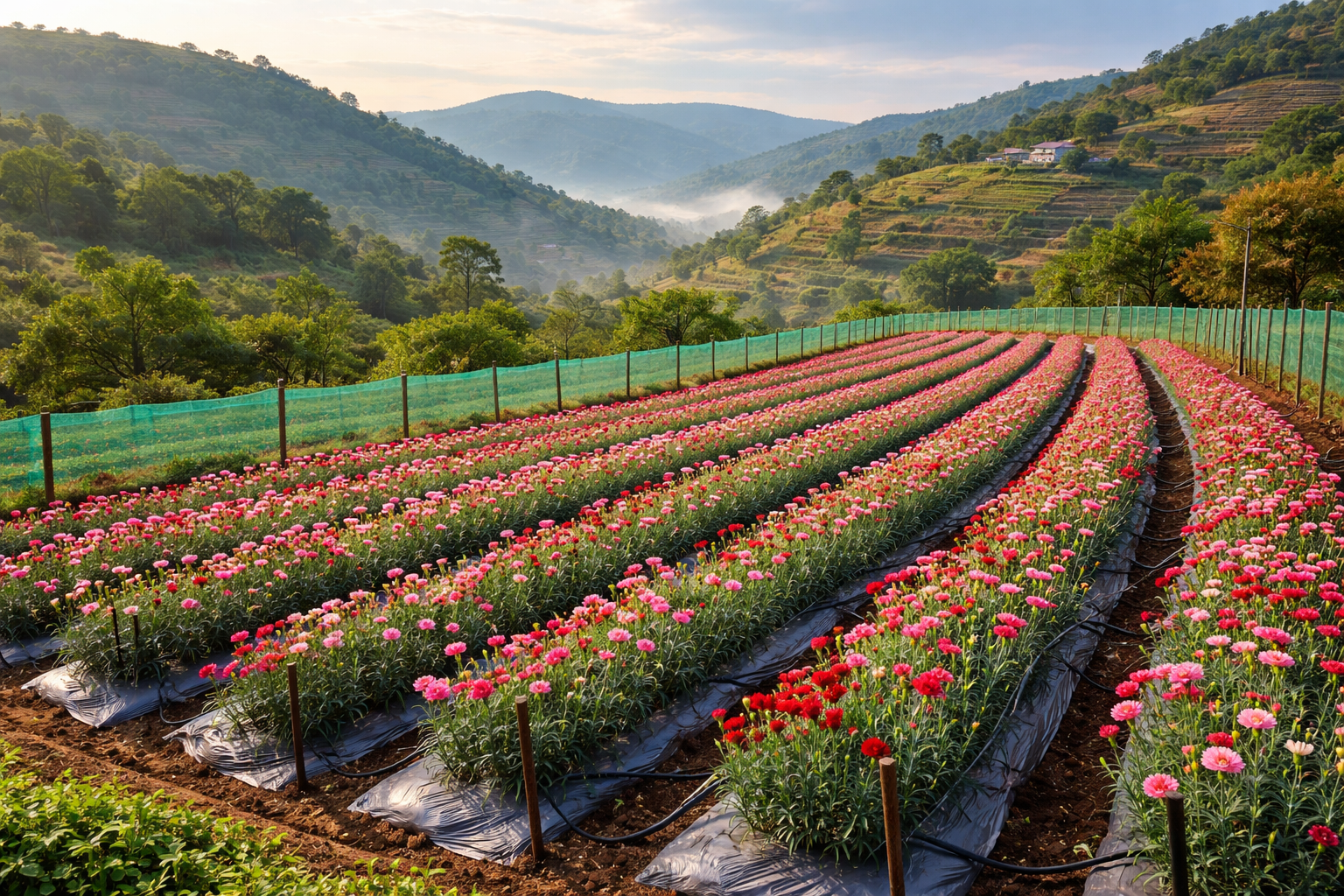
Farm Layout & Infrastructure

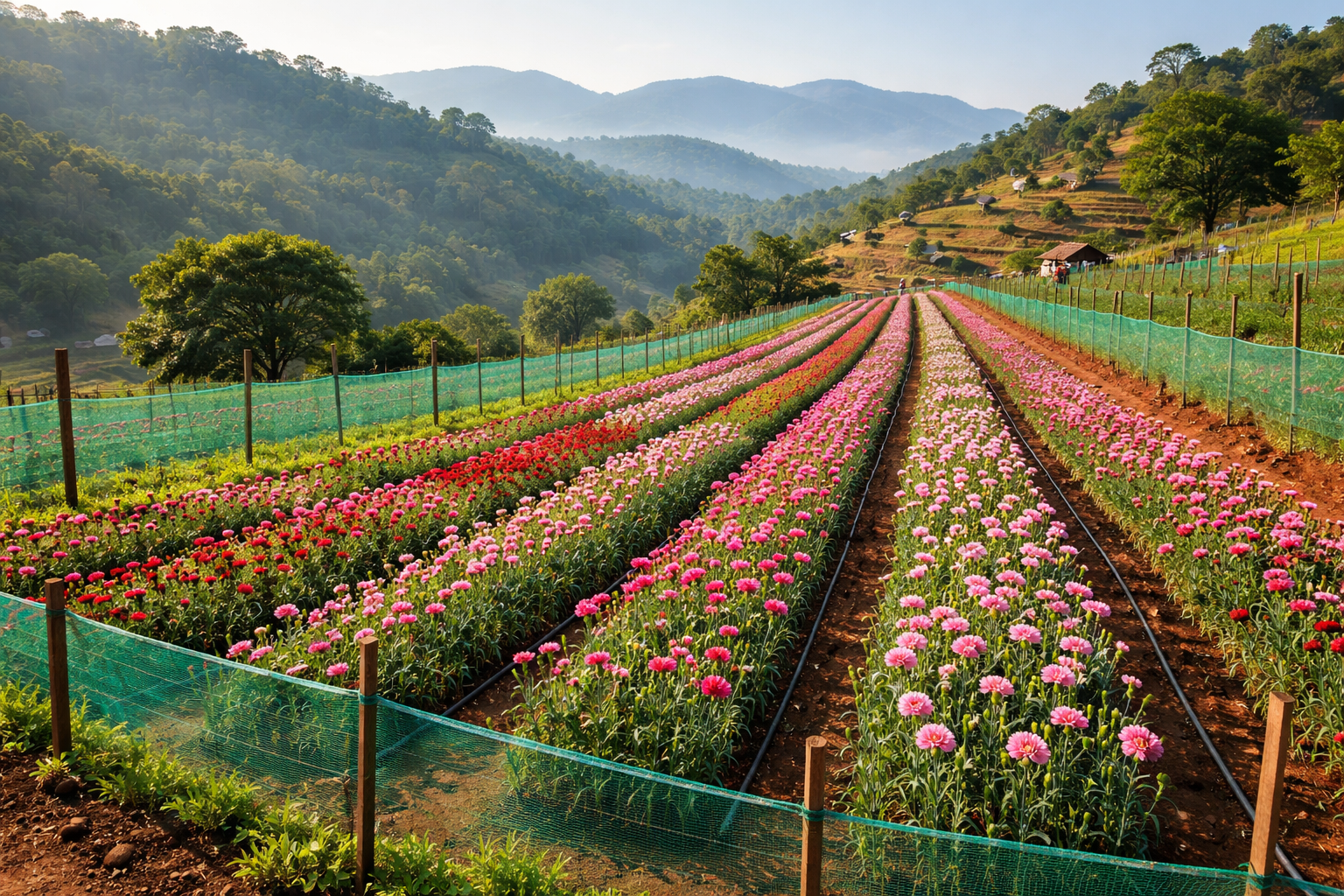
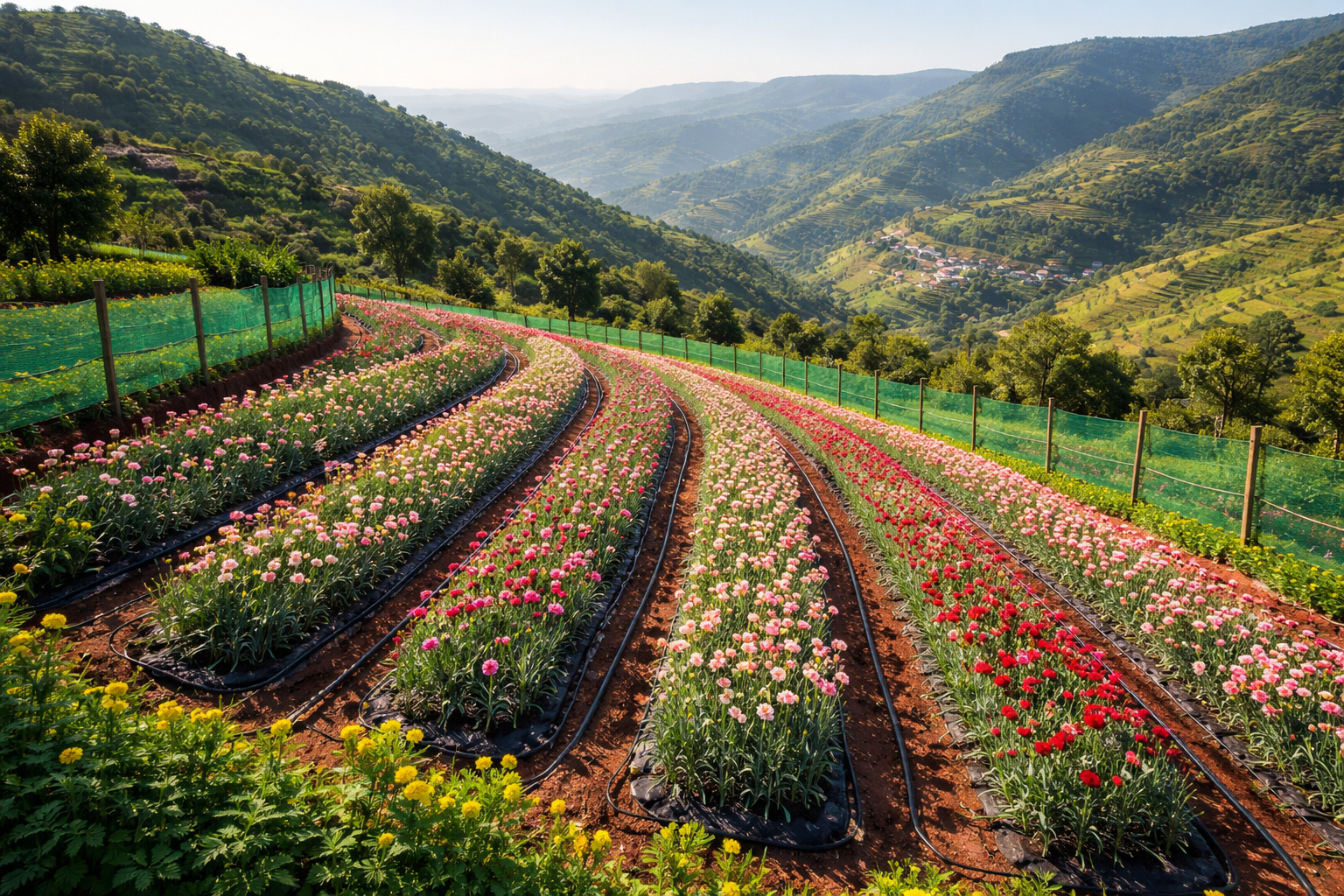
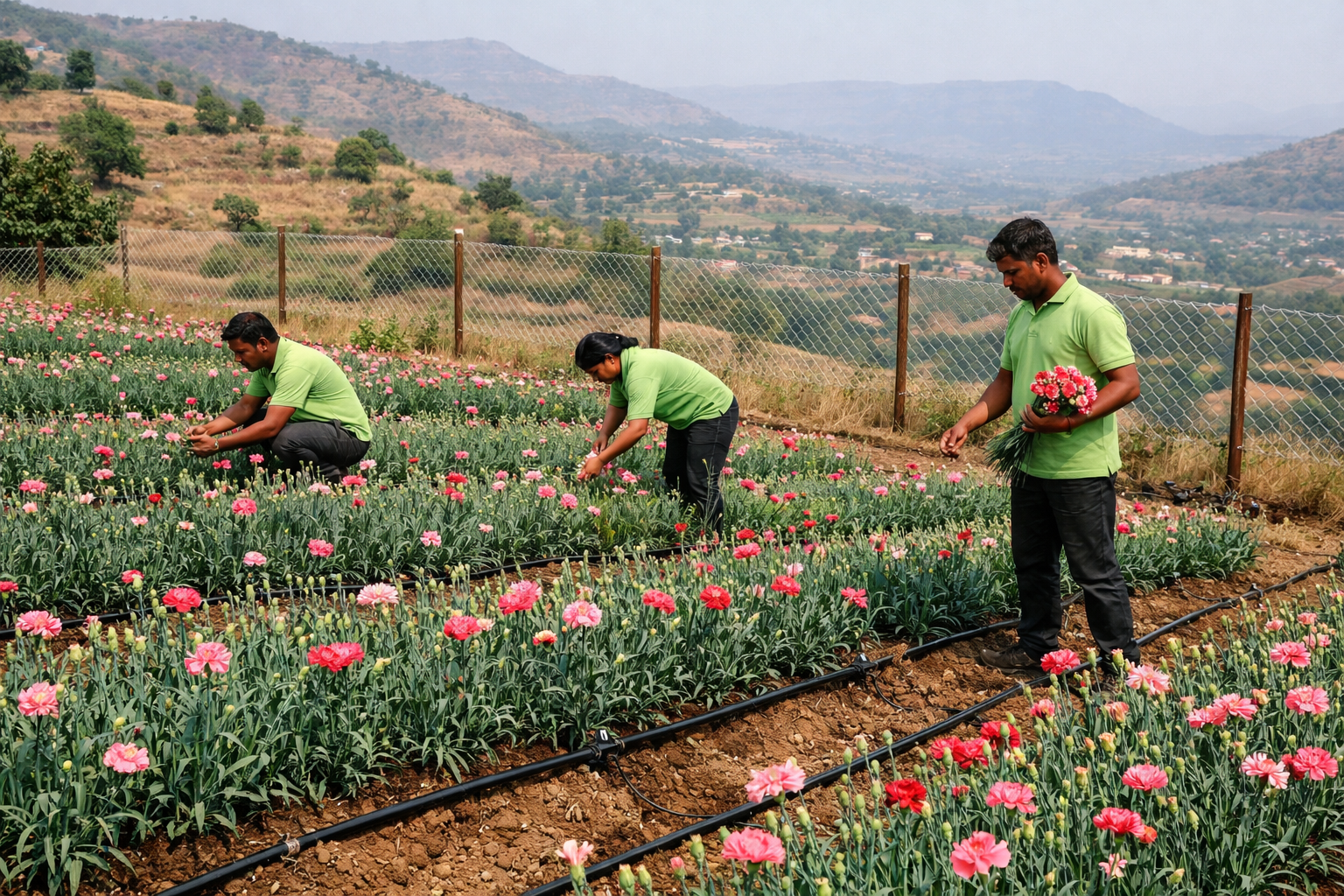
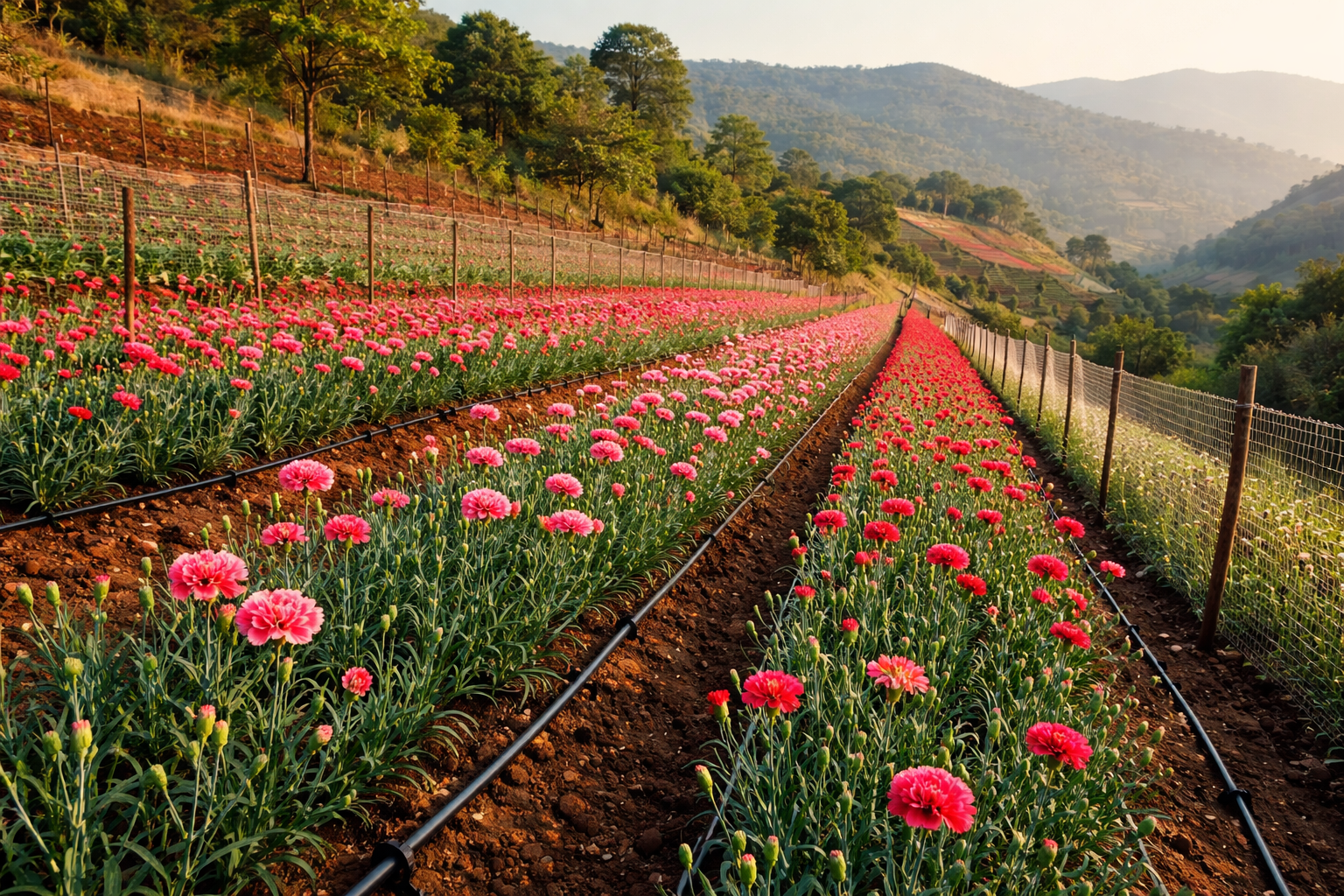
Sundarban Carnation Farm
A scientifically designed Sundarban carnation farming focuses on high-density planting using rooted cuttings to ensure uniform crop growth and maximum yield. Raised beds with well-drained growing media such as cocopeat and compost improve root aeration and prevent waterlogging.

Value Potential

Plants per Acre
60,000 – 80,000
Harvest Period
4 – 5 Months
Global Market
Premium cut flower industry
High Value Crop
Export quality decorative flowers
Investment ROI Potential
₹4L – ₹8L / Acre (Estimated Range)
Estimated annual revenue from carnation farming through continuous flower harvesting and supply to domestic and export markets.

Explore Other Plantations
Mango Farm
Bamboo
Macadamia
Sandalwood

Visit Our FarmLands

Experience the farms personally and understand the managed plantation model firsthand.

Frequently Asked Questions

What is the Carnation cultivation cycle?
Carnation plants typically start flowering within 110 to 130 days after planting. Under controlled polyhouse conditions with proper irrigation and nutrient management, they provide continuous and high-quality flower production.
How many Carnation plants can be grown per acre?
Farmers can cultivate approximately 60,000 to 80,000 carnation plants per acre depending on spacing, variety selection, and cultivation practices for maximum yield and quality.
Who manages the Carnation farm?
Sundarban Agro Farms provides complete farm management through expert teams including land preparation, planting of cuttings, irrigation setup, fertigation, pest control, and continuous crop monitoring.
What is the expected Carnation yield?
A well-managed carnation farm can produce around 300,000 to 400,000 quality stems per acre annually, depending on variety, climate control, and farm management practices.
Can investors visit the Carnation farm?
Yes. Investors and visitors can schedule a farm visit to explore carnation cultivation, understand polyhouse infrastructure, and experience the complete plantation development process.

Let’s Build Your Farm Investment

Contact Us
First
Last