Orchid Farming
About Orchid
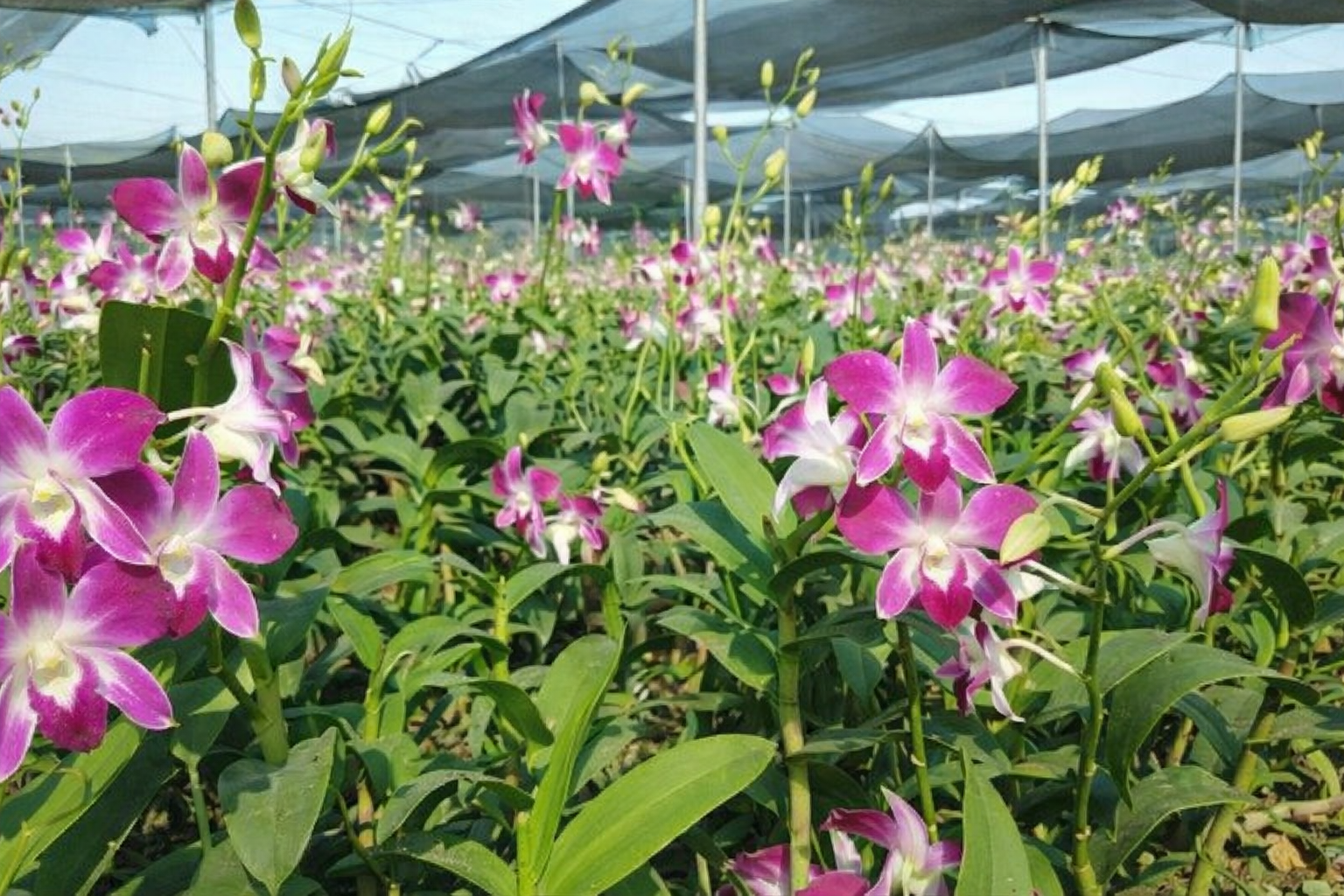
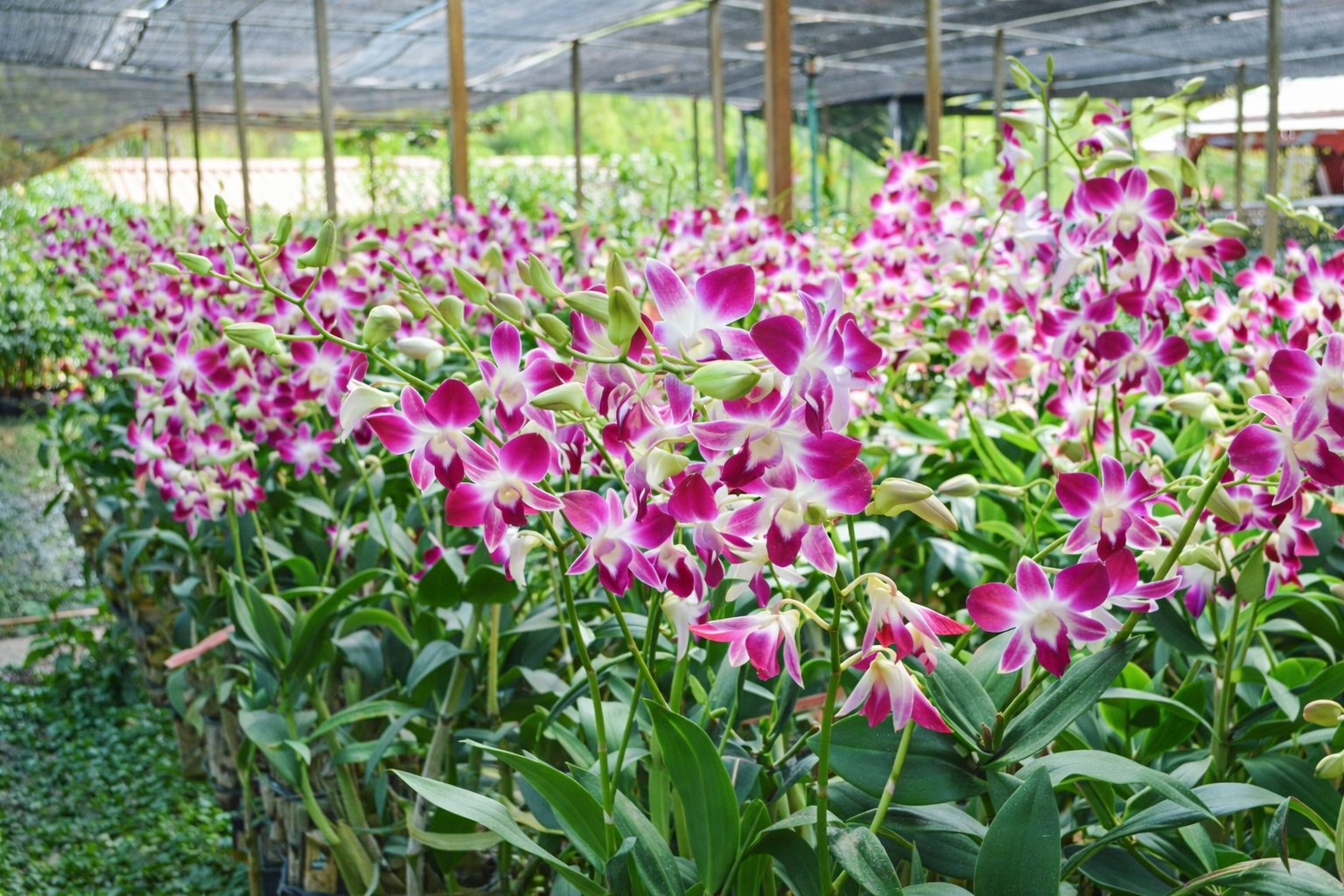
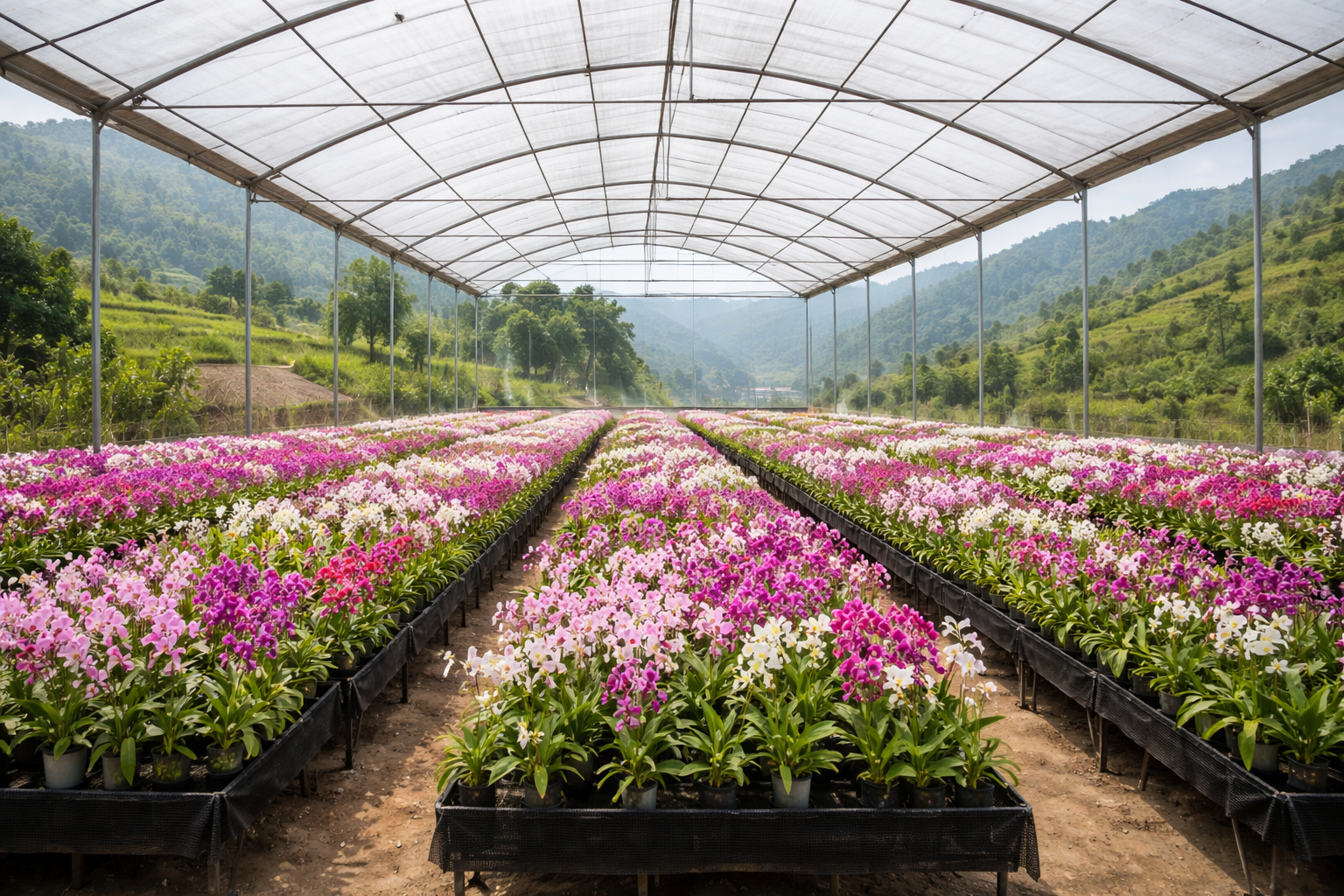
Orchid farming is a premium floriculture venture widely known for producing exotic flowers used in decoration, gifting, and luxury floral arrangements. Orchid blooms are valued for their long shelf life, vibrant colors, and elegant appearance, making them highly demanded in domestic and international markets.
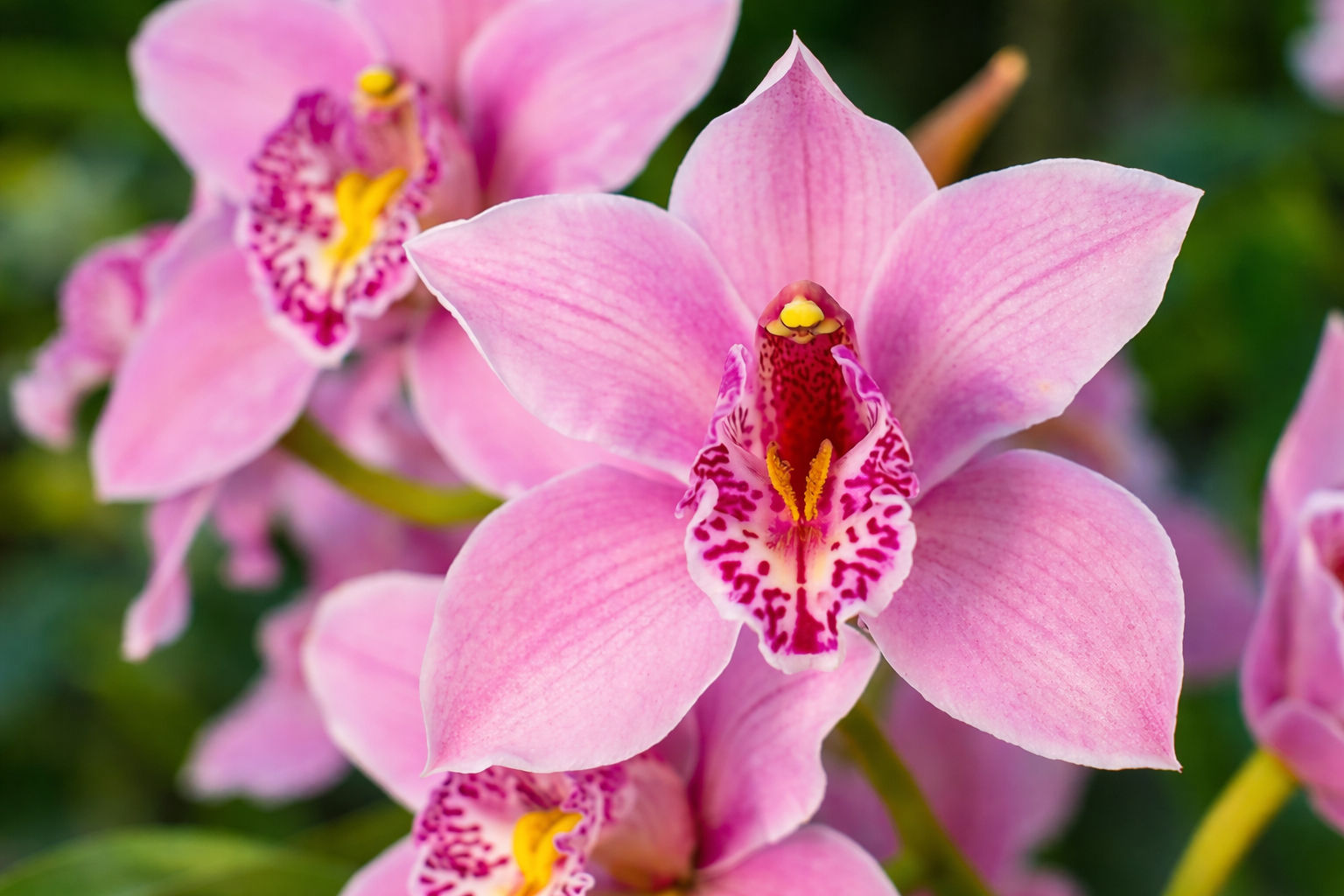
Premium orchid flowers used in floral decoration and luxury arrangements.
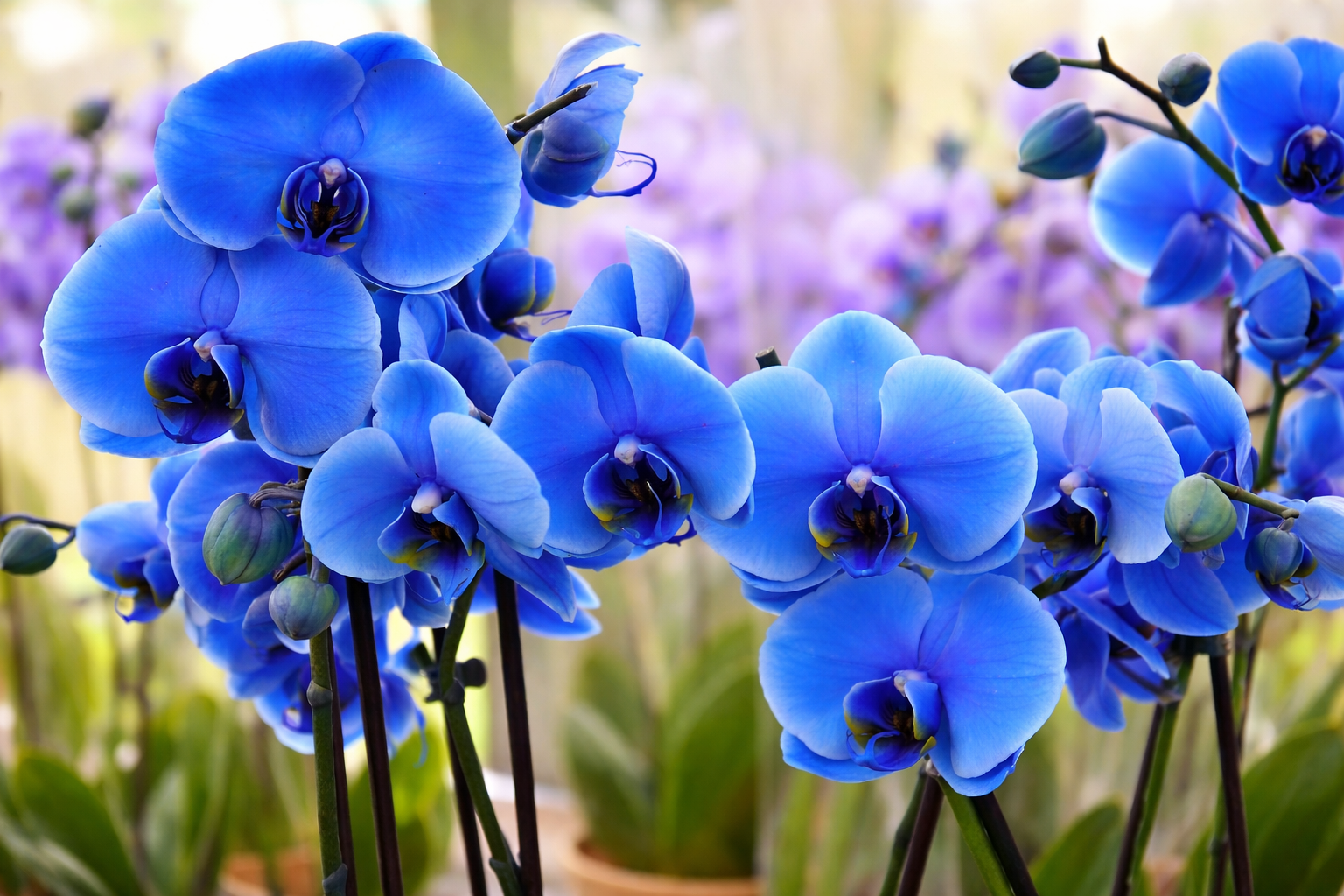
High-demand crop with strong presence in gifting and export markets.
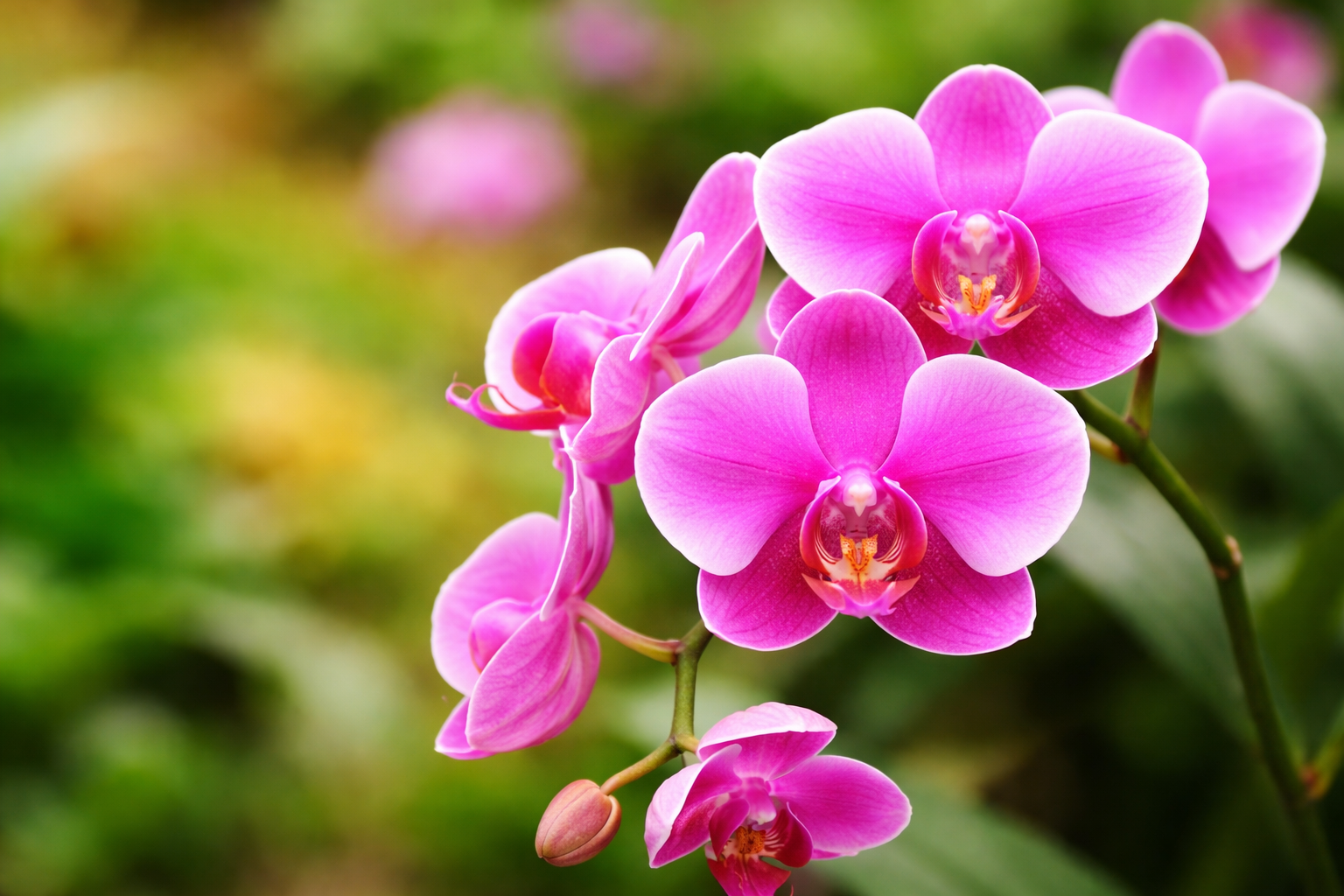
Profitable and sustainable farming with growing global demand.
Sundarban Orchid Farming Requirements
Controlled cultivation practices and suitable environmental conditions are essential for healthy growth and premium flower quality.
1. Climate Requirements
Temperature: Ideal range 18°C to 30°C.
Light: Indirect sunlight under shade net.
Humidity: 60–80% humidity preferred.
Air Flow: Good ventilation is essential.
2. Growing Medium
Type: Cocopeat, bark, or charcoal mix.
pH Level: Ideal pH 5.5 – 6.5.
Drainage: Excellent drainage required.
Support: Pots or trays for growth.
3. Structure Setup
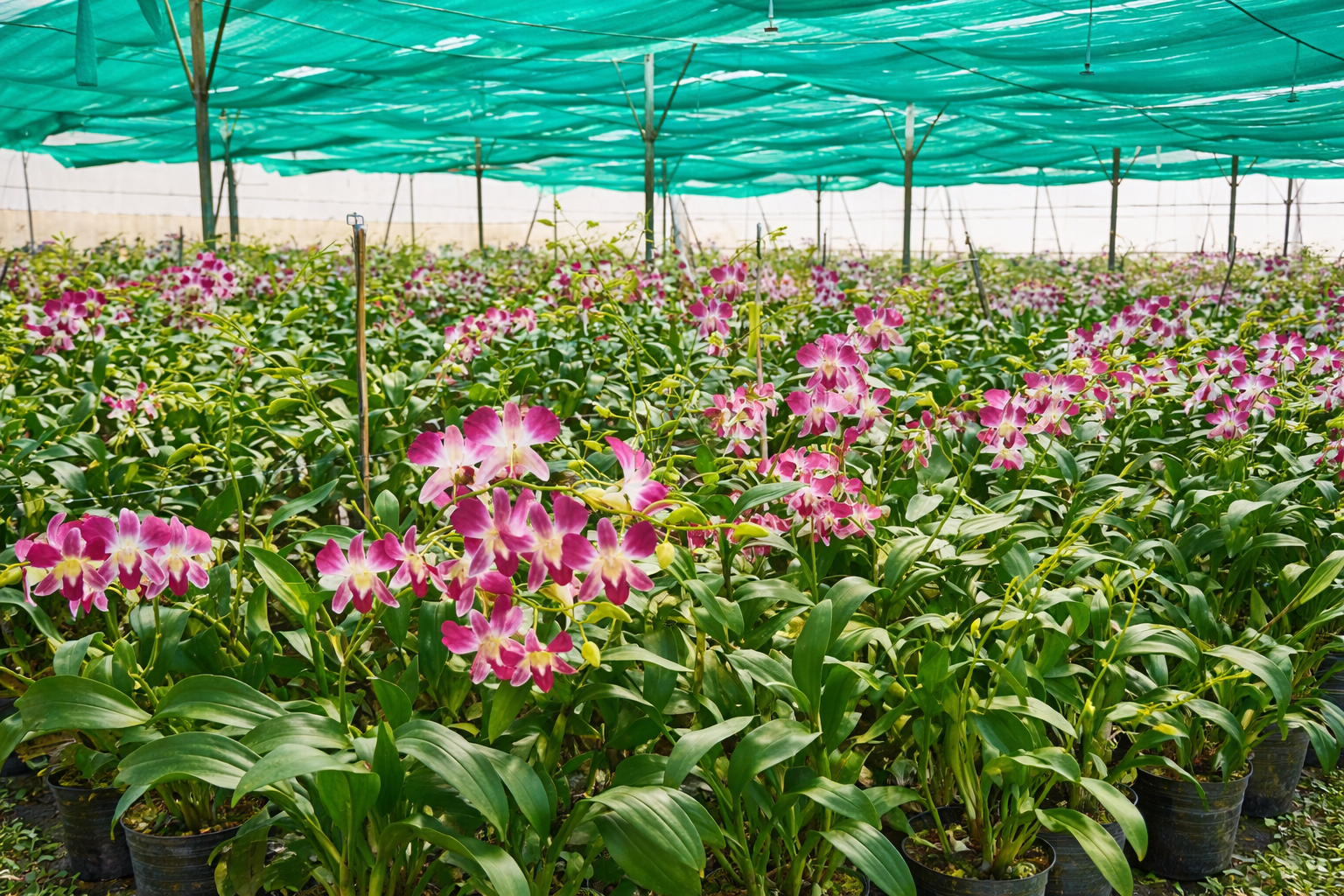
Shade Net: 50–70% shade recommended.
Polyhouse: Improves quality and yield.
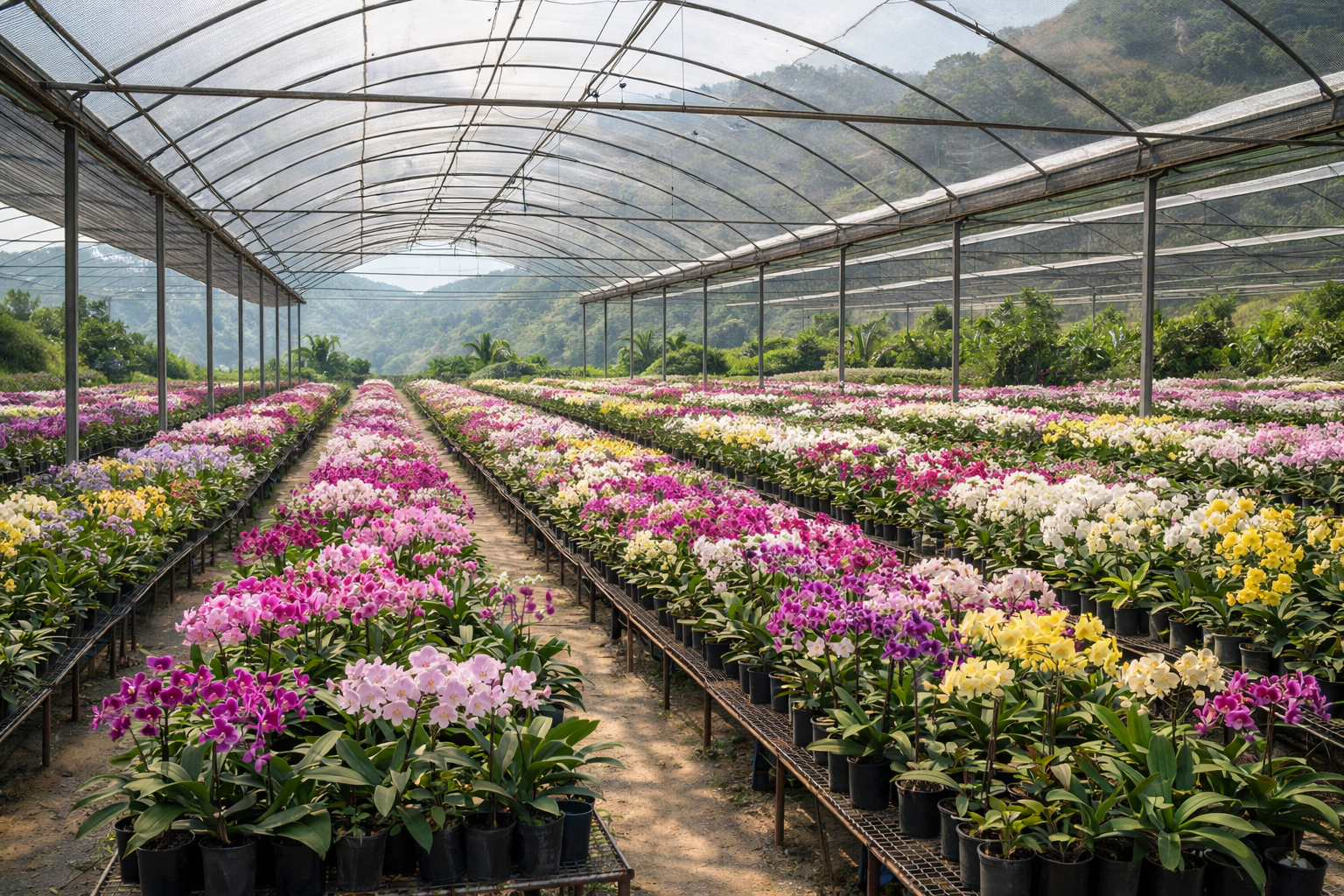
Benches: Raised beds for better care.
Hygiene: Clean setup prevents disease.
4. Plantation & Spacing
Spacing: Proper spacing for airflow.
Varieties: Dendrobium, Phalaenopsis.
Planting: Healthy tissue culture plants.
5. Water Management
Irrigation: Light and frequent watering.
Method: Drip or mist system preferred.
Drainage: Avoid water stagnation.
6. Nutrient Management
Fertilizer: Liquid nutrients regularly.
Micronutrients: Supports flowering.
Organic: Use bio-fertilizers.
7. Crop Care & Maintenance
Pruning: Remove dry leaves.
Cleaning: Maintain hygiene.
Support: Provide plant support.
8. Pest & Disease Management
Pests: Thrips, mites, aphids.
Diseases: Root rot, fungal issues.
Control: Bio-pesticides preferred.
Monitoring: Regular inspection needed.
9. Harvesting & Post Harvest
Harvest: Year-round flower production.
Stage: Harvest at right bloom stage.
Quality: Maintain freshness.
Storage: Keep in cool conditions.
Plantation Development Process
Land Preparation
Setting up shade net or polyhouse with proper ventilation and humidity control.
Pit Digging & Soil
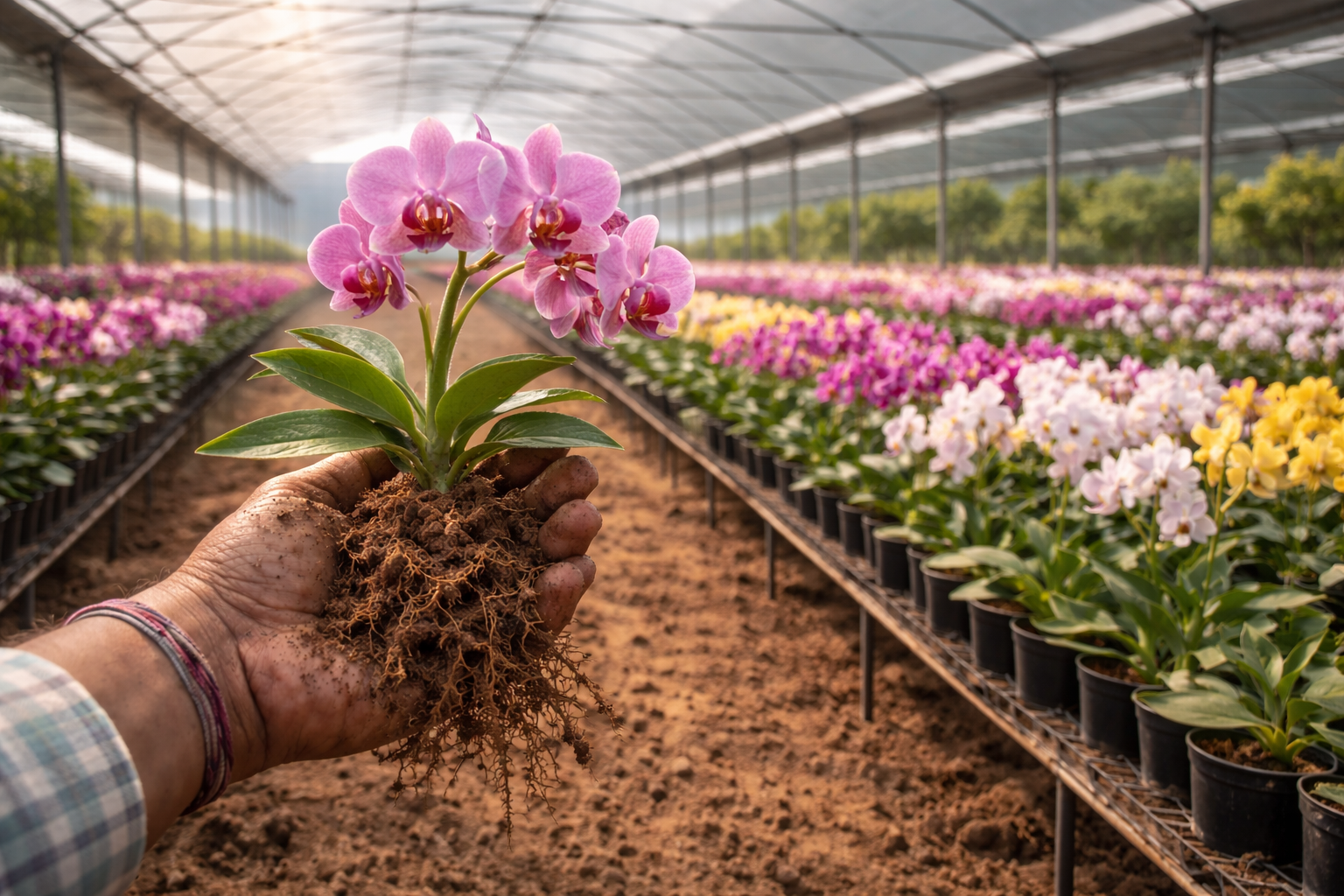
Preparing cocopeat, bark, or charcoal mix for healthy root development.
Plantation & Spacing
Planting orchids with proper spacing for airflow and uniform growth.
Irrigation Setup
Installation of mist or drip irrigation systems for controlled watering.
Crop Management
Regular monitoring, pruning, nutrition, and pest management practices.
Harvest & Processing
Harvesting premium orchid flowers and maintaining quality for market.
Plantation Gallery
Farm Layout & Infrastructure
Value Potential
Explore Other Plantations
Visit Our FarmLands
Experience the farms personally and understand the managed plantation model firsthand.
Frequently Asked Questions
Orchid plants typically start flowering within 6 to 12 months after planting depending on the variety. With proper humidity, nutrition, and controlled conditions, they produce flowers continuously throughout the year.
Under shade net or polyhouse conditions, farmers can grow approximately 8,000 to 12,000 orchid plants per acre depending on spacing, variety selection, and cultivation practices.
Sundarban Agro Farms provides complete farm management through expert teams including structure setup, planting, irrigation, nutrient management, pest control, and regular monitoring of orchid plants.
A well-maintained orchid farm can produce high-quality flowers year-round, with multiple flower spikes per plant depending on variety, growing conditions, and proper crop management.
Yes. Investors and visitors can schedule a farm visit to explore orchid cultivation, understand greenhouse systems, and experience the farm infrastructure and management process.