Areca Nut Farming
About Areca Nuts
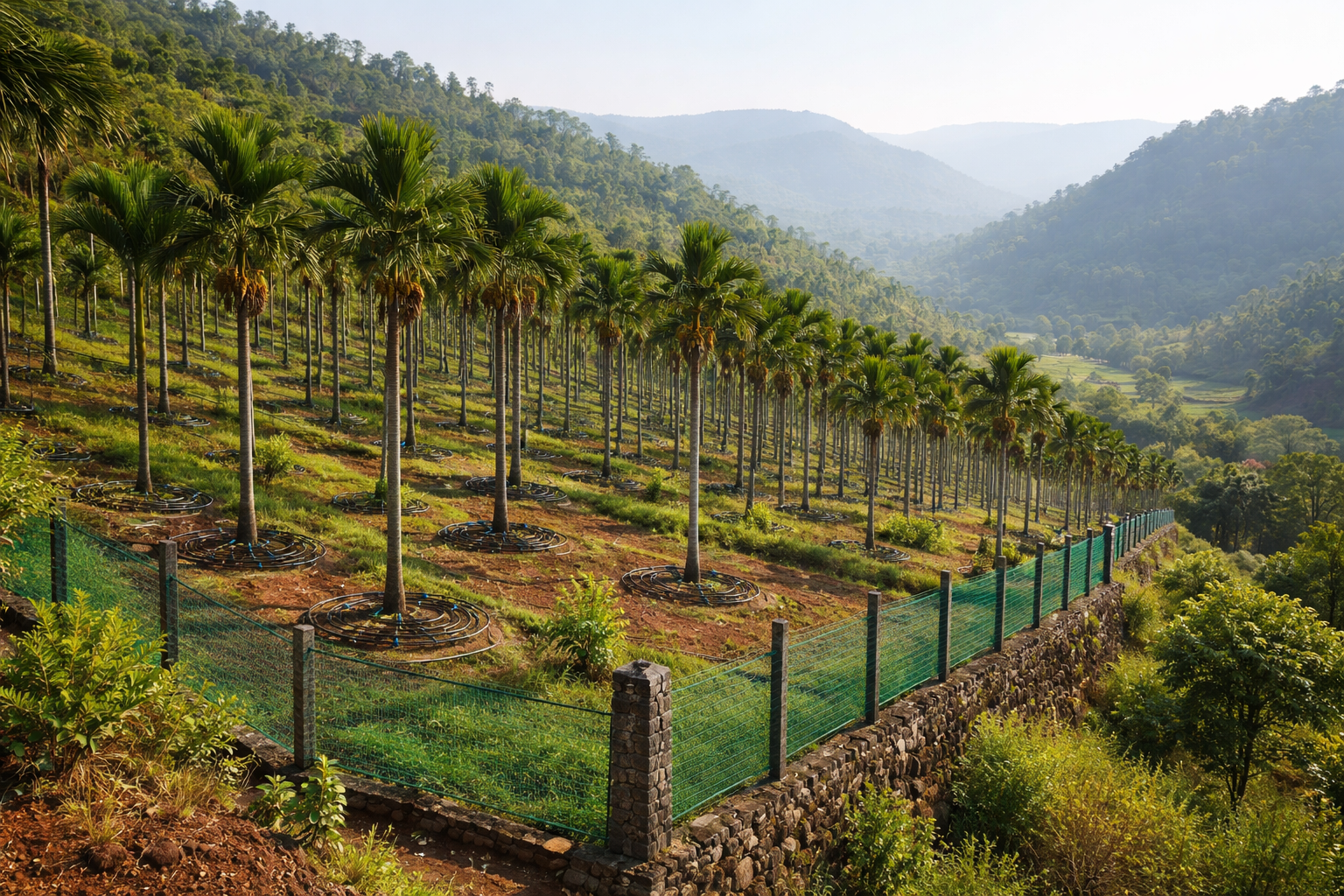
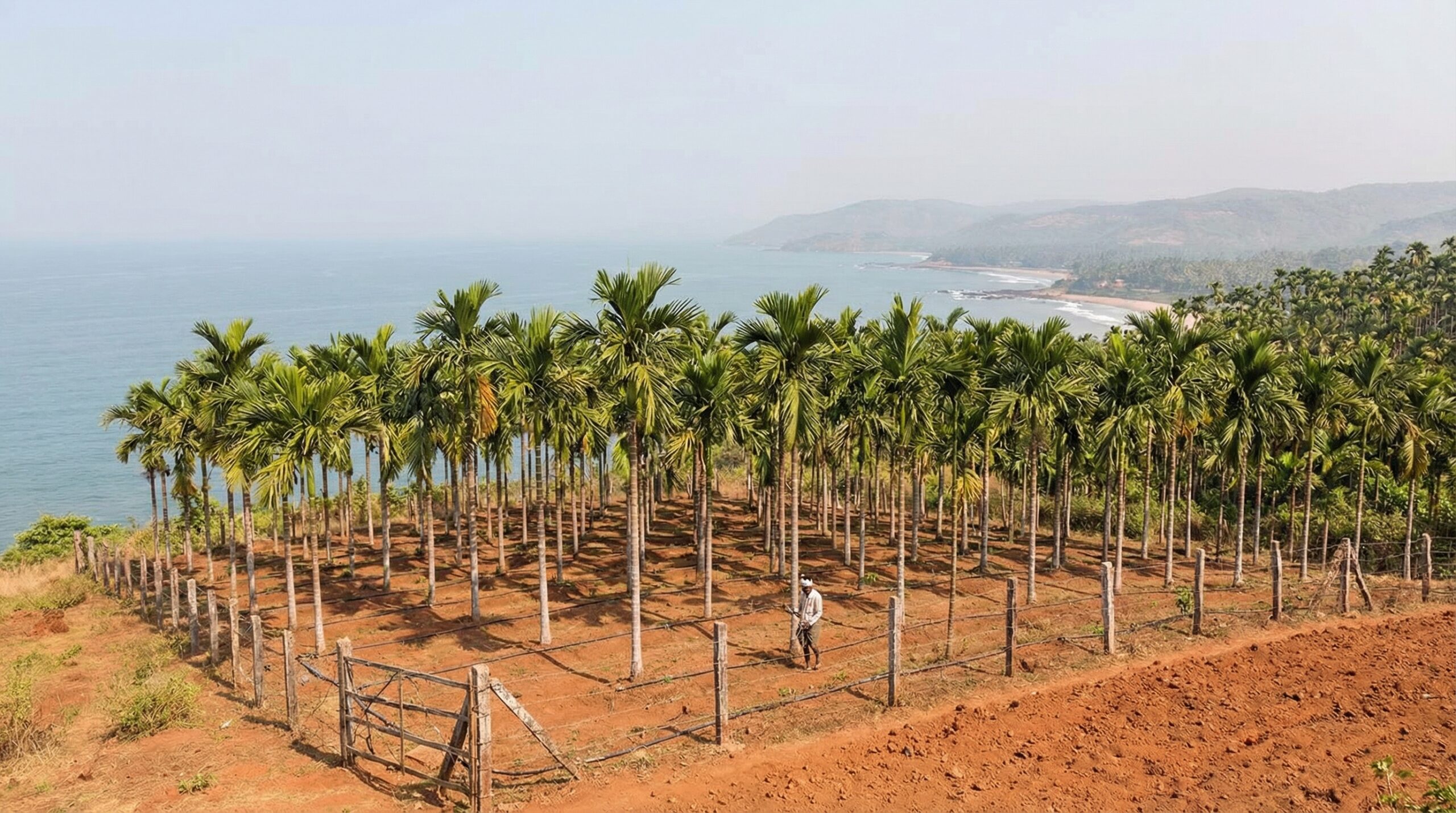
Areca nut farming is a high-value plantation crop widely cultivated for its strong and consistent market demand. It plays an important role in traditional, cultural, and commercial uses across India and thrives in tropical humid climates. With long-term yield potential and stable returns, it offers a reliable and sustainable farming opportunity.
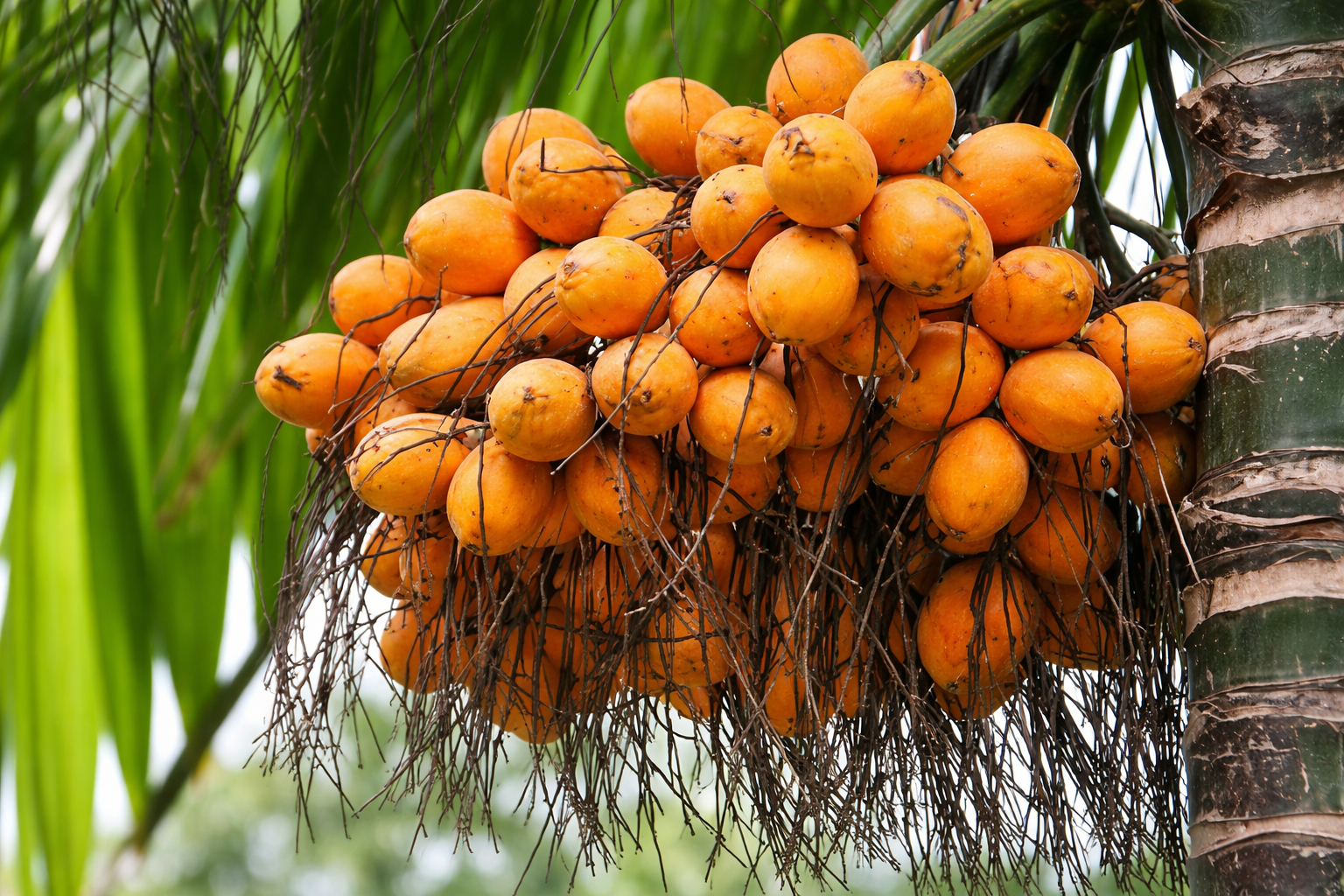
Premium areca nuts for processing and domestic markets.
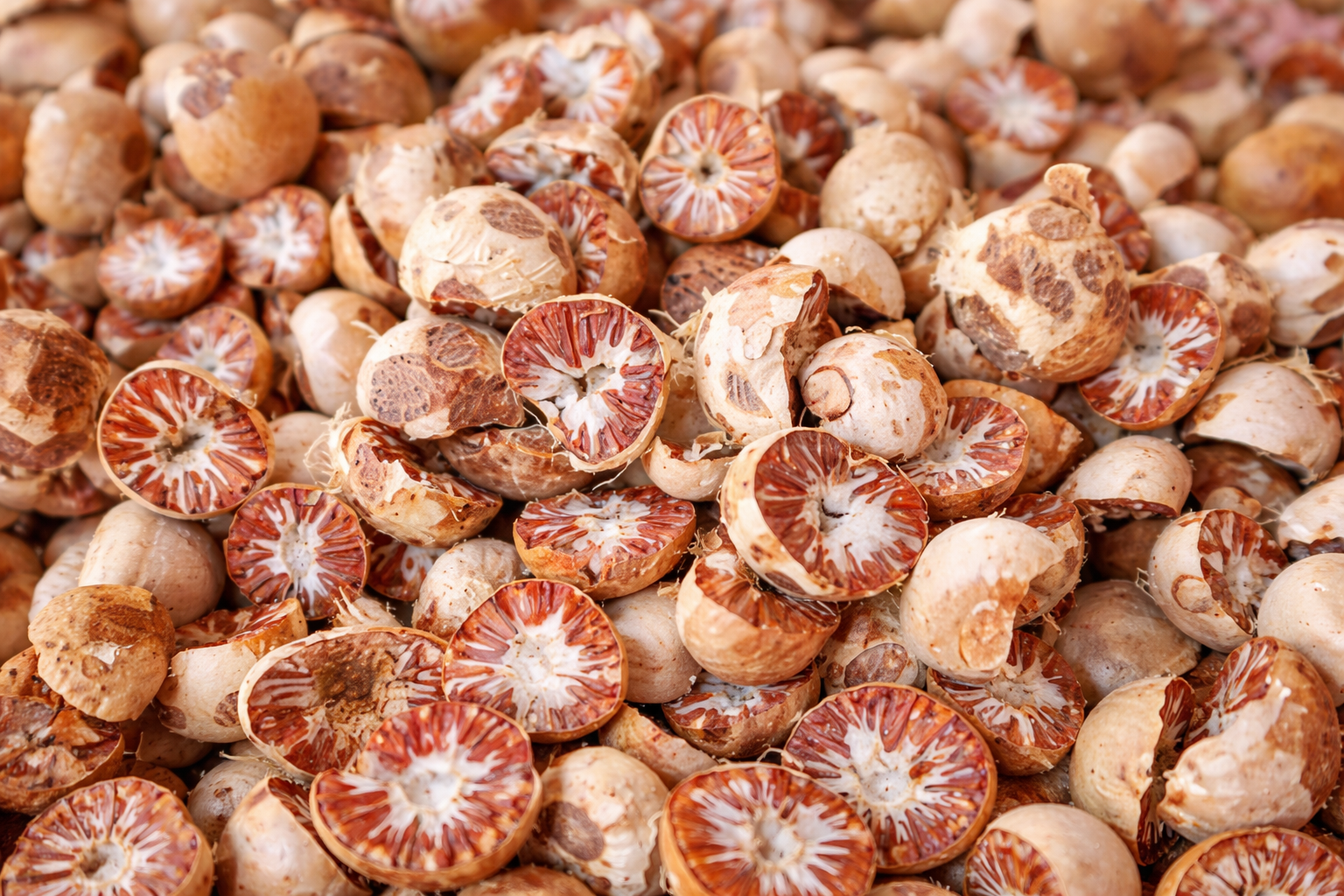
High-demand crop with strong cultural and commercial value.
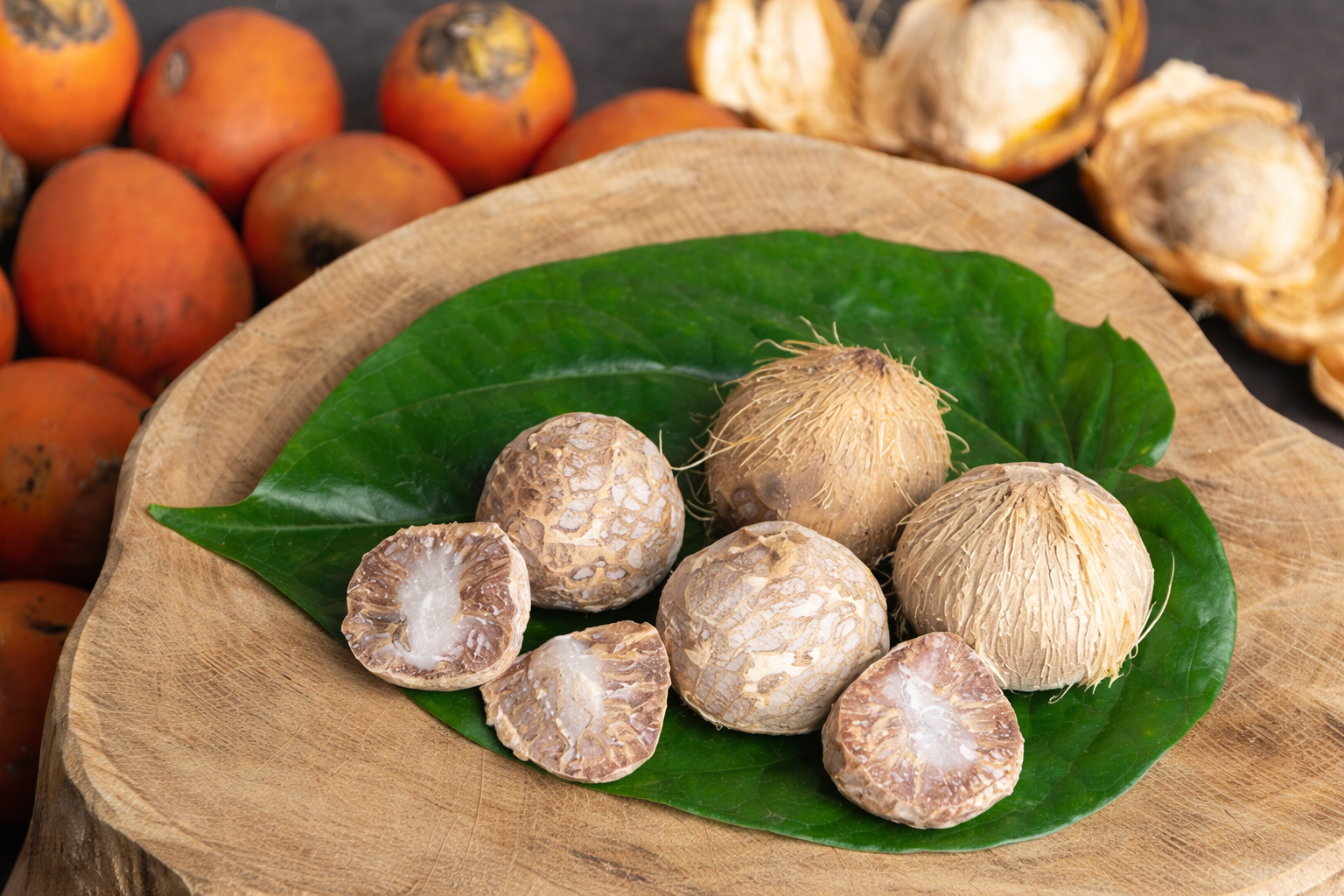
Reliable long-term farming with consistent returns.
Sundarban Areca Nut Farming Requirements
Areca nut farming is a high-value plantation crop widely grown in tropical regions for its strong domestic demand, cultural importance, and long-term income potential.
1. Climate Requirements
Temperature: Ideal range 20°C to 35°C.
Rainfall: Requires 750–2000 mm annually.
Humidity: High humidity preferred.
Sunlight: Partial shade in early stages.
2. Soil Requirements
Type: Deep, well-drained loamy soil.
pH Level: Ideal pH 5.5 – 6.5.
Drainage: Essential to avoid waterlogging.
Fertility: Rich in organic matter preferred.
3. Land Preparation
Clearing: Remove weeds and debris.
Pits: 60 cm × 60 cm × 60 cm pits prepared.
Shade: Provide temporary shade if needed.
Layout: Ensure proper spacing and drainage.
4. Plantation & Spacing
Spacing: 2.7 m × 2.7 m standard spacing.
Density: 500–550 plants per acre.
Season: Best during monsoon season.
Planting Material: Healthy seedlings (10–12 months).
5. Water Management
Irrigation: Regular watering required.
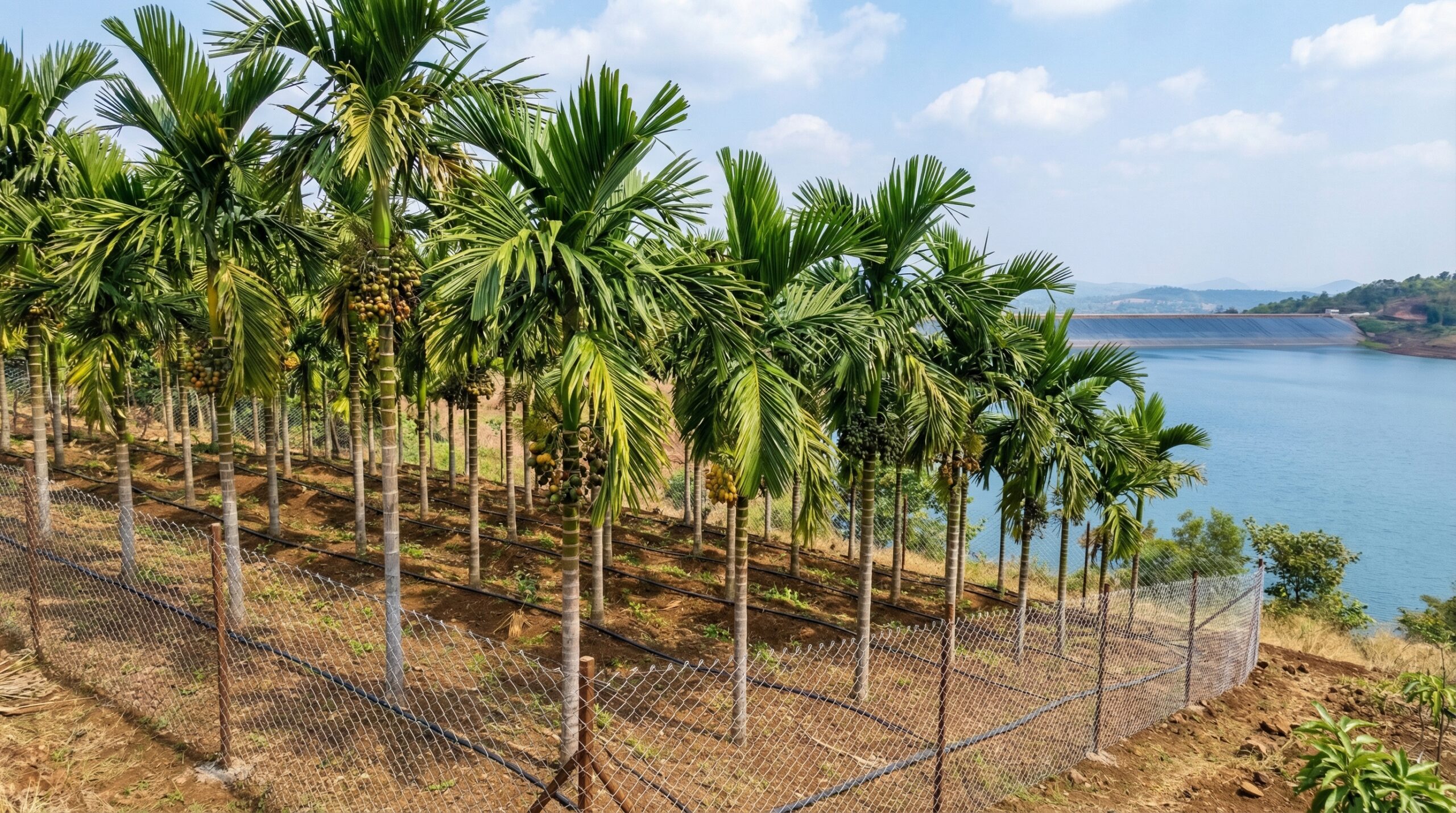
Drip System: Recommended for efficiency.
Waterlogging: Strictly avoid stagnation.
Frequency: Depends on soil and climate.
6. Nutrient Management
Organic Matter: Apply compost or FYM.
Fertilizers: Balanced NPK required.
Micronutrients: Magnesium and boron important.
Schedule: Split doses during growth stages.
7. Plant Care & Maintenance
Mulching: Helps retain soil moisture.
Weeding: Regular weed control required.
Intercropping: Possible in early years.
Support: Protect young plants from wind.
8. Pest & Disease
Pests: Spindle bug, root grub.
Diseases: Yellow leaf disease, rot.
Control: Integrated pest management.
Prevention: Good drainage and sanitation.
9. Harvesting & Post Harvest
First Yield: Starts after 5–7 years.
Full Yield: 8–10 years.
Harvest: Nuts harvested at maturity stages.
Post Harvest: Drying, processing, and grading.
Plantation Development Process
Land Preparation
Clearing, leveling, and preparing fertile, well-drained soil for plantation.
Pit Digging & Soil
Pits enriched with compost and organic matter for healthy root development.
Plantation & Spacing
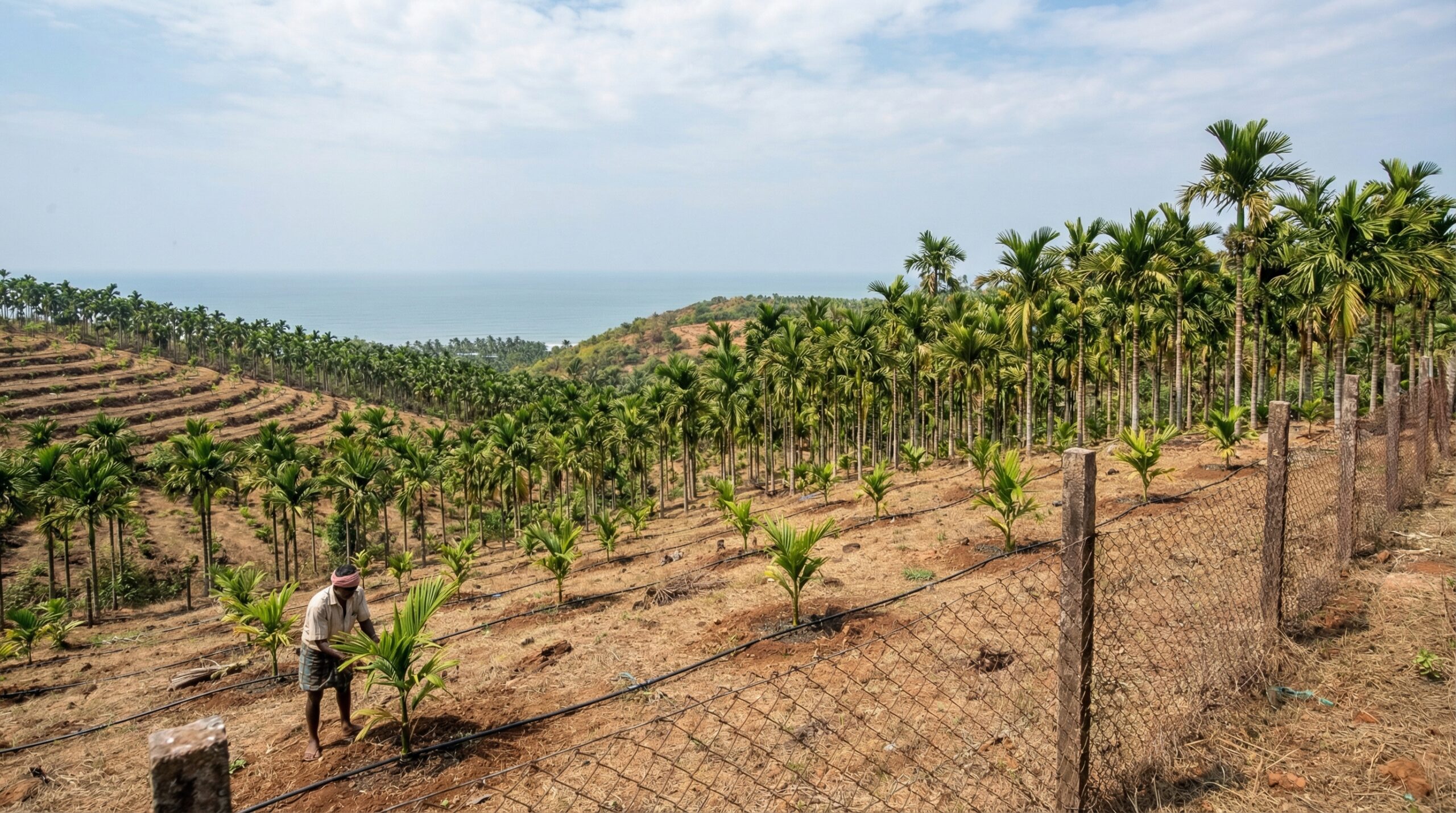
Scientific spacing of areca nut palms for optimal growth and yield.
Irrigation Setup
Installation of drip irrigation for efficient and consistent water supply.
Crop Management
Regular fertilization, mulching, and pest control for healthy plantation.
Harvest & Processing
Harvesting mature nuts, followed by drying and processing for market.
Plantation Gallery
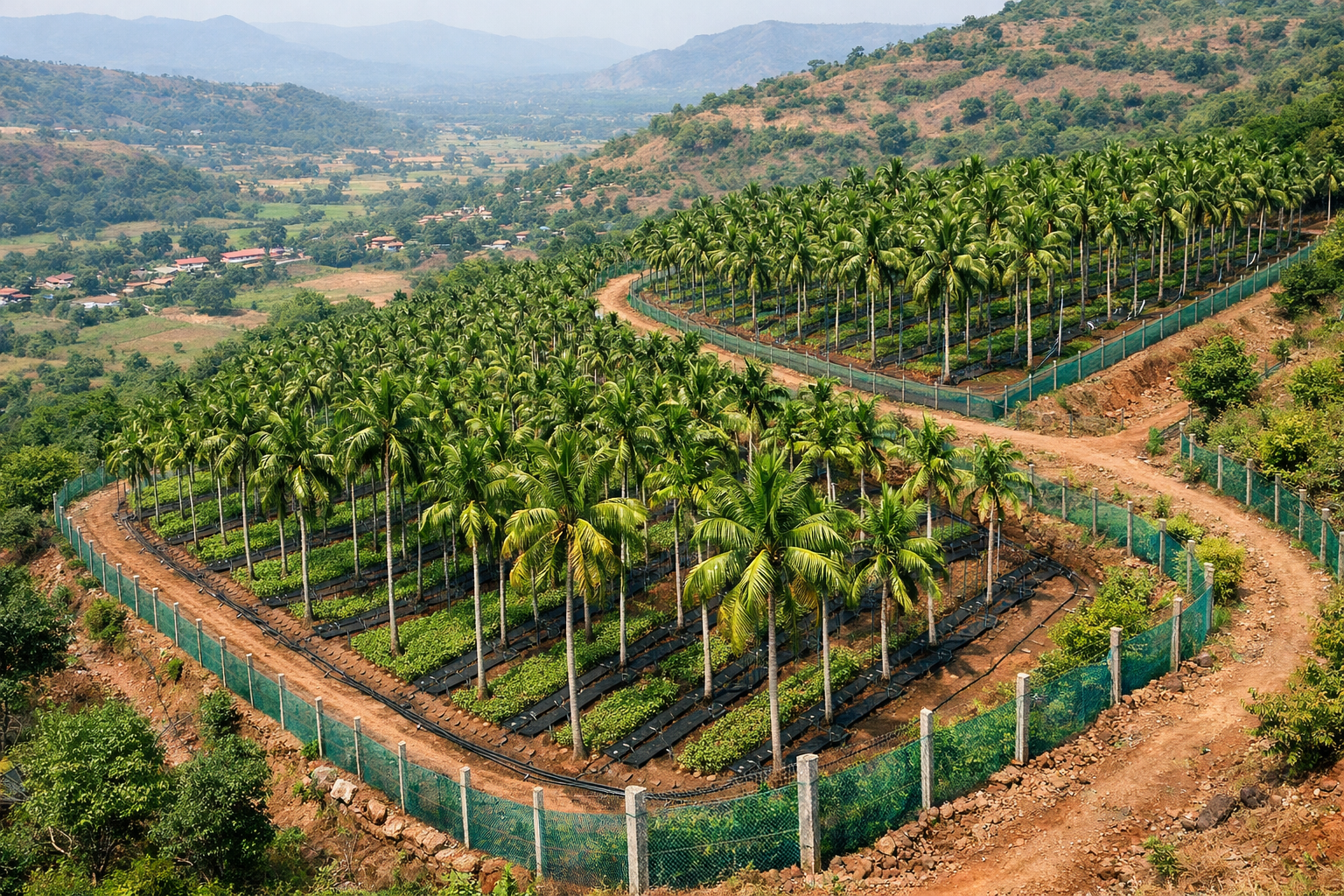
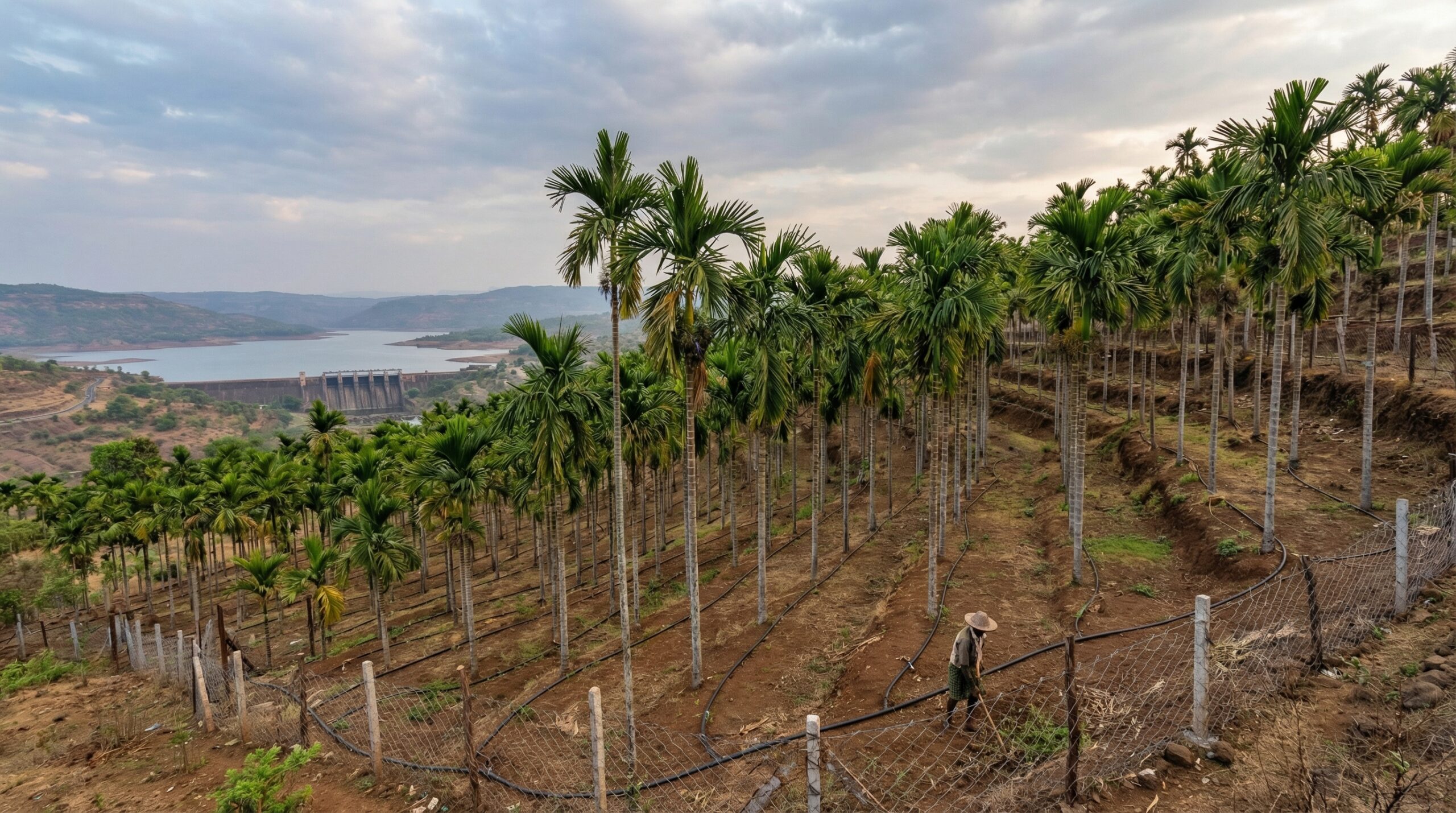
Farm Layout & Infrastructure
Value Potential
Explore Other Plantations
Visit Our FarmLands
Experience the farms personally and understand the managed plantation model firsthand.
Frequently Asked Questions
Areca nut palms start yielding from 4–6 years after planting and reach full production in 8–10 years. With proper care, plantations can remain productive for over 30 to 40 years.
Typically, 500 to 550 areca nut palms are grown per acre with standard spacing of around 2.7 m × 2.7 m. Plant density may vary based on soil, climate, and management practices.
Professional farm management includes land preparation, plantation, irrigation setup, nutrient management, pest control, and regular monitoring to ensure healthy growth and long-term productivity.
A mature areca nut plantation can produce around 1.5 to 2 tons per acre annually depending on variety, climate, and farm management practices.
Yes. Visitors and investors can schedule farm visits to explore areca plantations, understand cultivation practices, and experience farm infrastructure and operations firsthand.