Cashew Farming
About Cashew
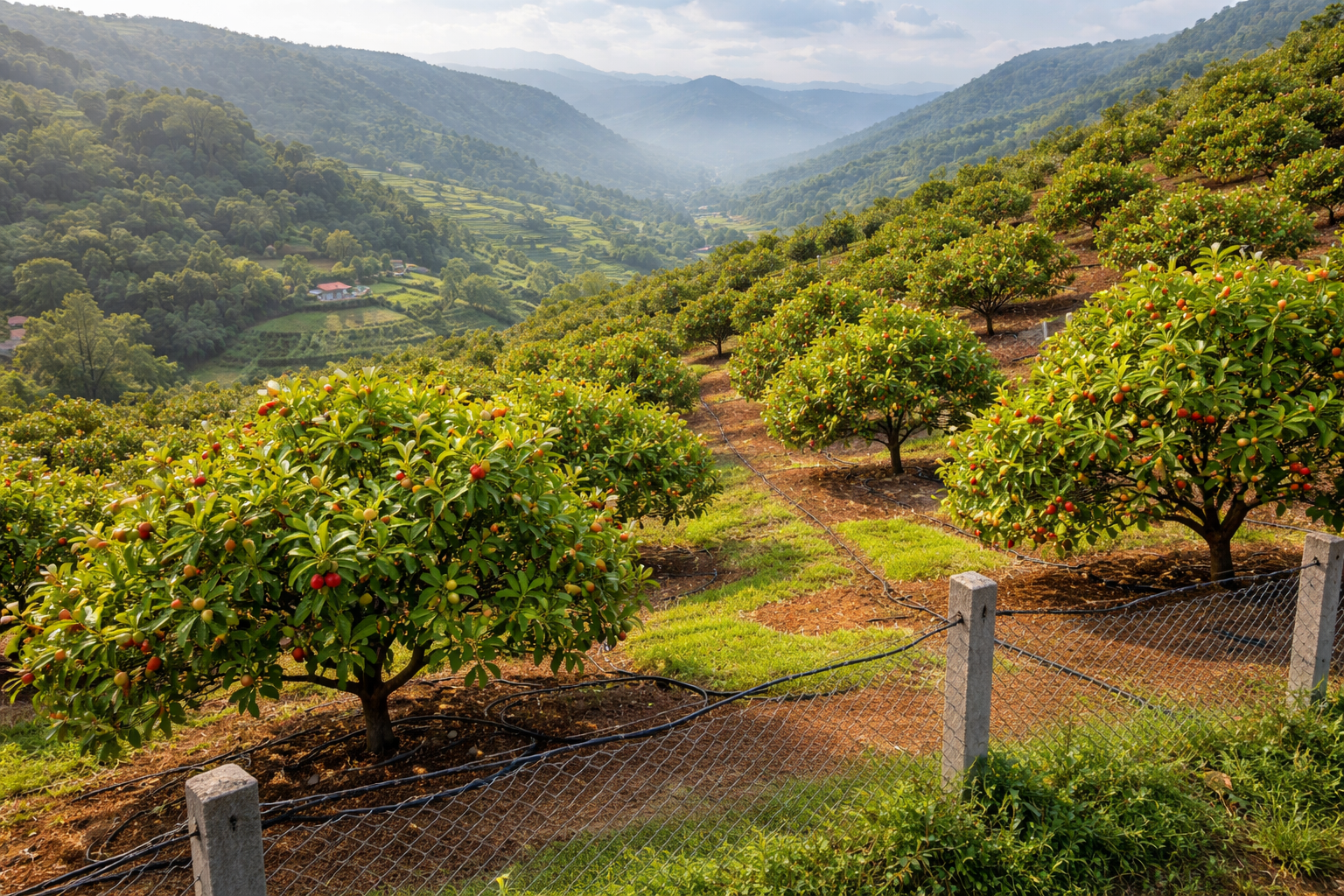
Cashew farming is a high-value crop known for premium edible nuts with strong global demand. It is widely used in the food and processing industries and thrives in tropical climates. With early yield and export potential, it offers a profitable and sustainable farming opportunity.
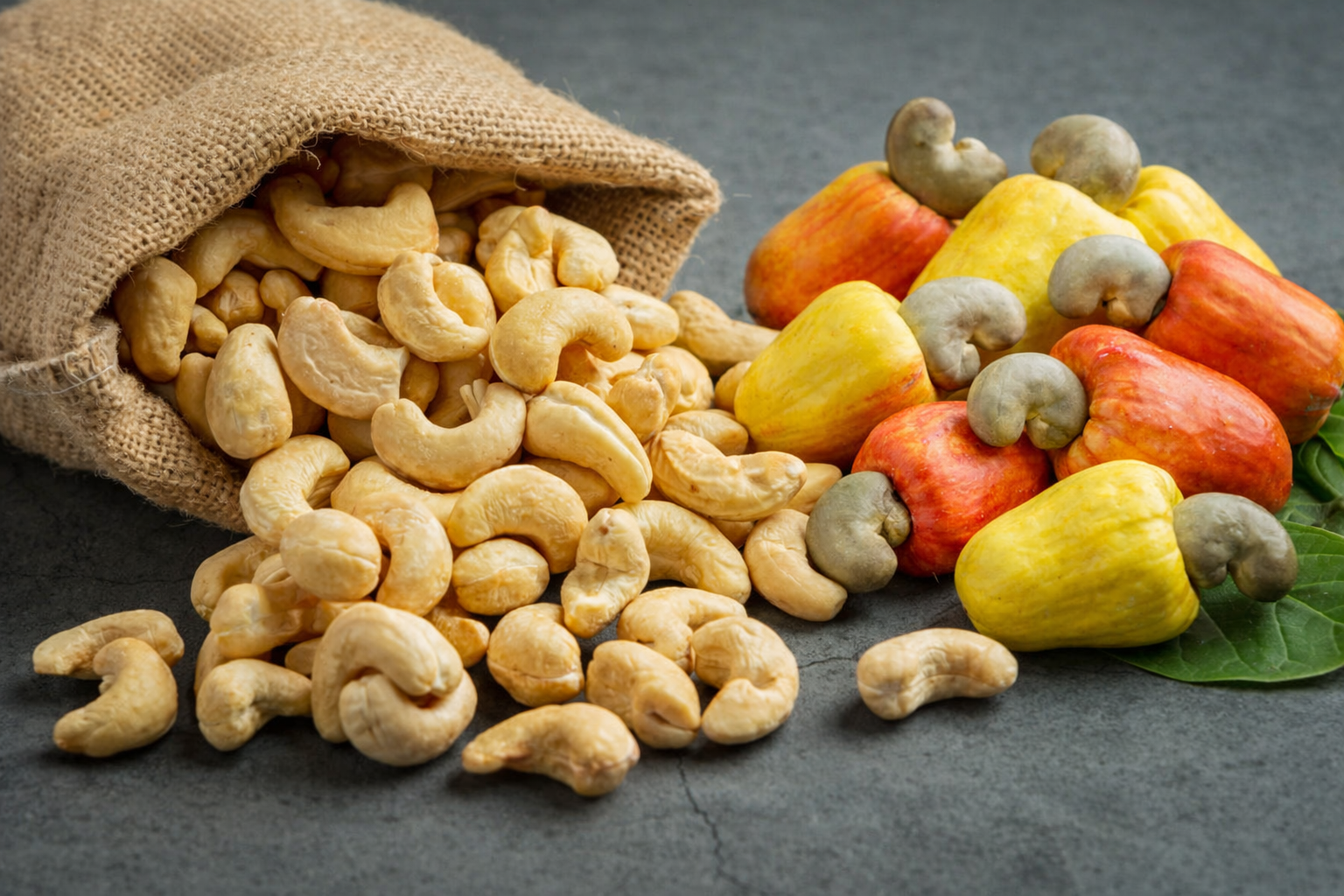
Premium cashew nuts for processing and export
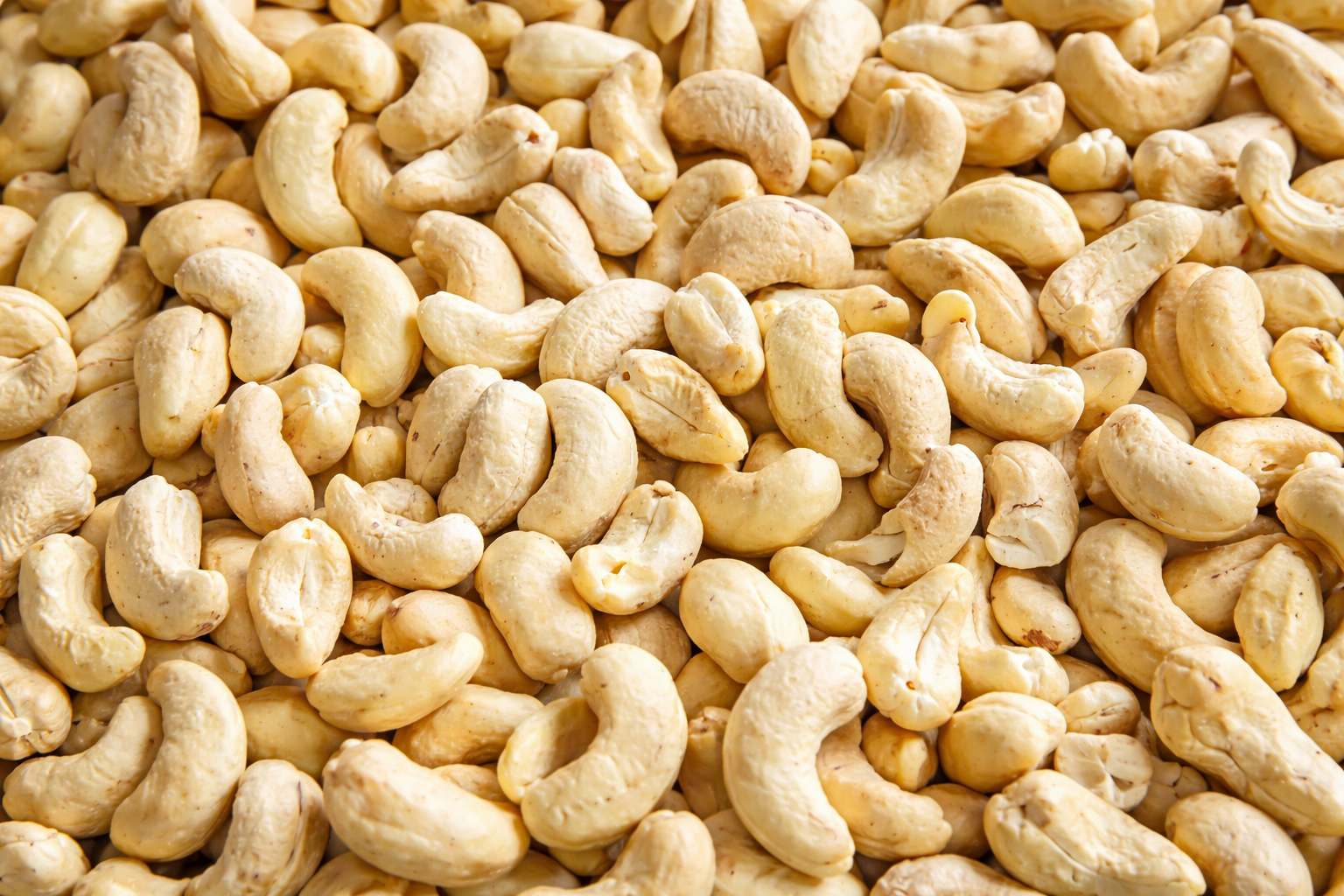
High-demand crop in food and processing industries.
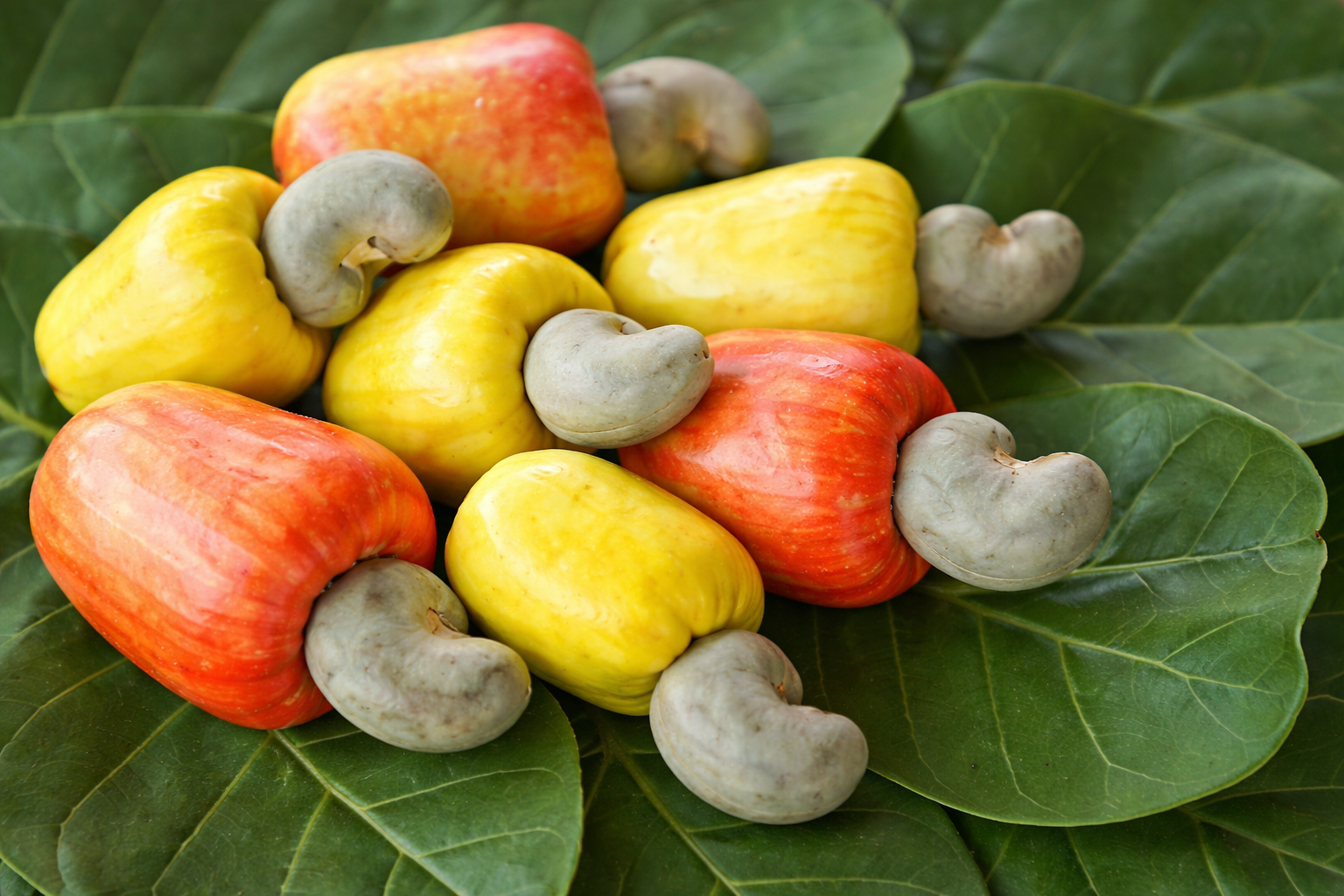
Profitable long-term farming with global demand.
Sundarban Cashew Farming Requirements
Cashew farming is a high-value tropical plantation crop known for its strong export demand and profitability.
1. Climate Requirements
Temperature: Ideal range 20°C to 35°C.
Rainfall: Requires 600–1200 mm annually.
Humidity: Moderate humidity preferred.
Altitude: Suitable up to 700 m elevation.
2. Soil Requirements
Type: Sandy loam, laterite, or coastal soil.
pH Level: Ideal pH 4.5 – 6.5.
Drainage: Well-drained soil is essential.
Fertility: Performs well in poor soils also.
3. Land Preparation
Clearing: Remove bushes and unwanted plants.
Pits: 60 cm × 60 cm × 60 cm pits prepared.
Soil Mixing: Mix compost and topsoil.
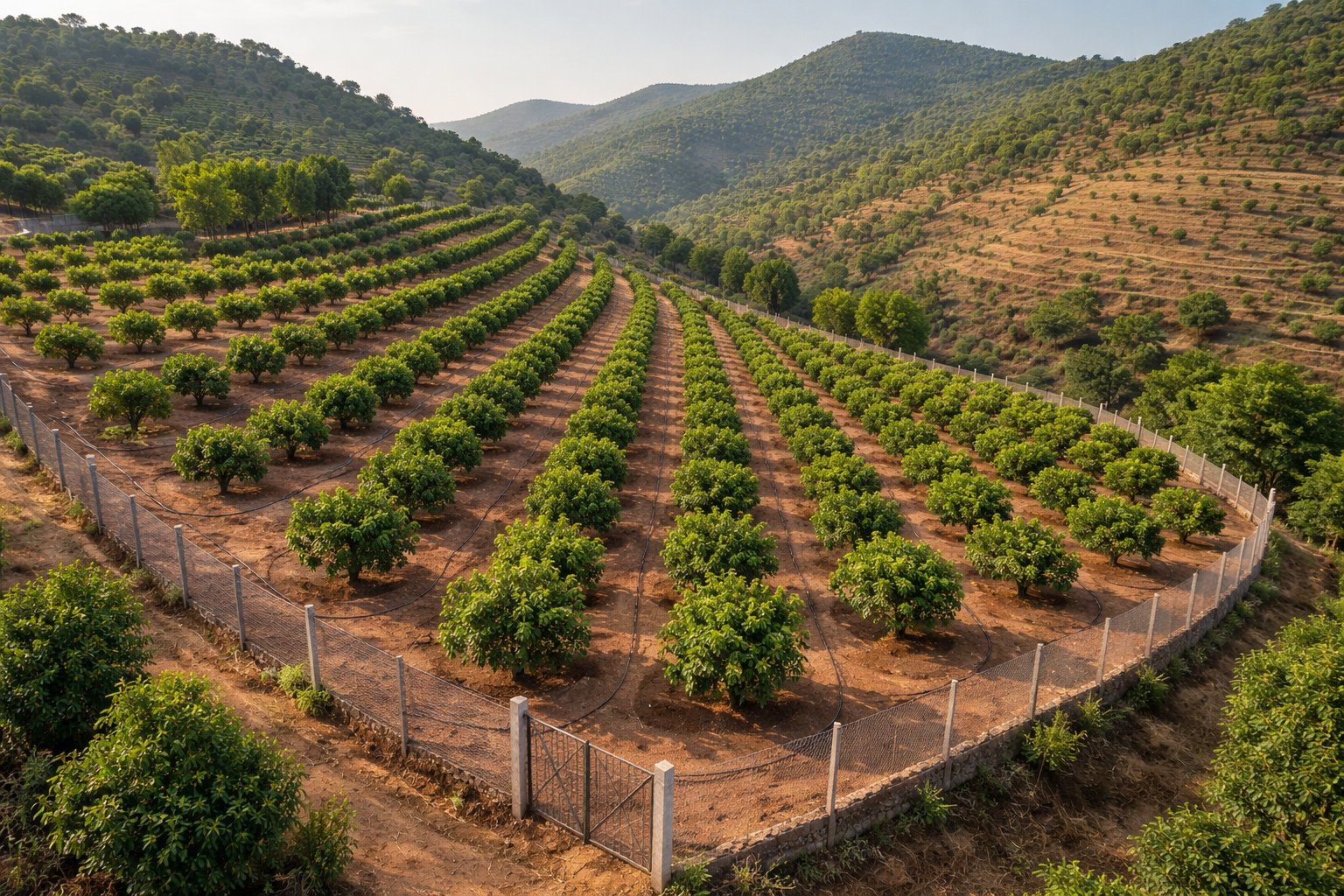
Layout: Proper spacing and alignment required.
4. Plantation & Spacing
Spacing: 7 m × 7 m (standard system).
Density: Around 70–100 trees per acre.
Season: Monsoon is ideal for planting.
Planting Material: Grafted plants recommended.
5. Water Management
Irrigation: Minimal water once established.
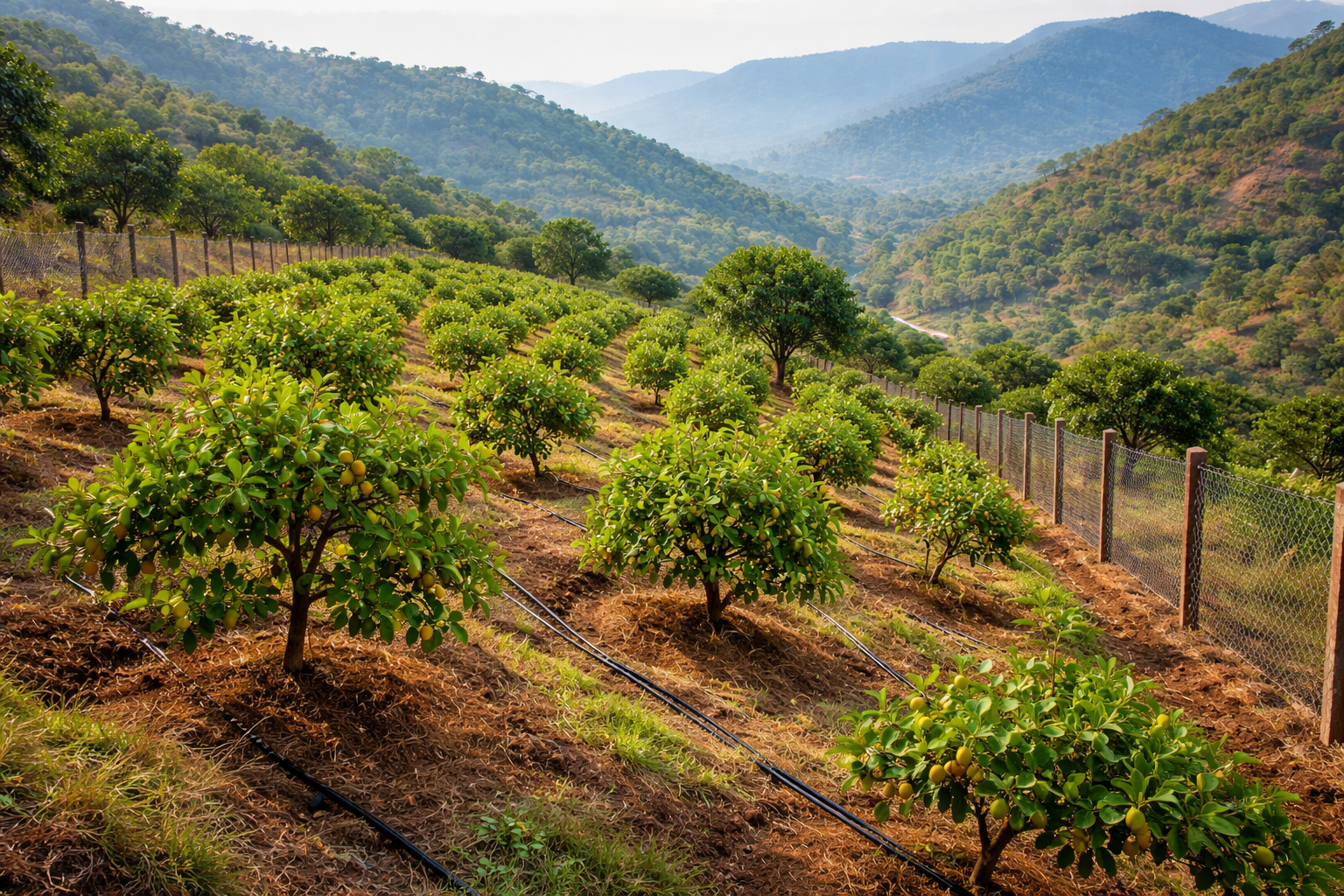
Drip System: Recommended for young plants.
Drought: Highly drought tolerant crop.
Mulching: Helps retain soil moisture.
6. Nutrient Management
Organic Matter: Apply compost or FYM annually.
Fertilizers: Balanced NPK for better yield.
Micronutrients: Zinc and boron important.
Schedule: Apply before flowering season.
7. Pruning & Plant Care
Pruning: Shape trees during early growth.
Weed Control: Keep basin area clean.
Mulching: Improves soil fertility.
Intercropping: Possible in initial years.
8. Pest & Disease
Pests: Tea mosquito bug, stem borer.
Diseases: Powdery mildew, dieback.
Control: Integrated pest management.
Prevention: Regular monitoring required.
9. Harvesting & Post Harvest
First Yield: Starts after 3–4 years.
Full Yield: 7–10 years.
Harvest: Nuts collected after natural fall.
Post Harvest: Drying and processing of kernels.
Plantation Development Process
Land Preparation
Clearing, leveling, and preparing well-drained sandy or laterite land.
Pit Digging & Soil
Pits enriched with compost and organic matter for strong root growth.
Plantation & Spacing
Scientific spacing of cashew trees for proper canopy and airflow development.
Irrigation Setup
Installation of drip irrigation for efficient water use in early stages.
Crop Management
Regular pruning, fertilization, and pest control for healthy tree growth.
Harvest & Processing
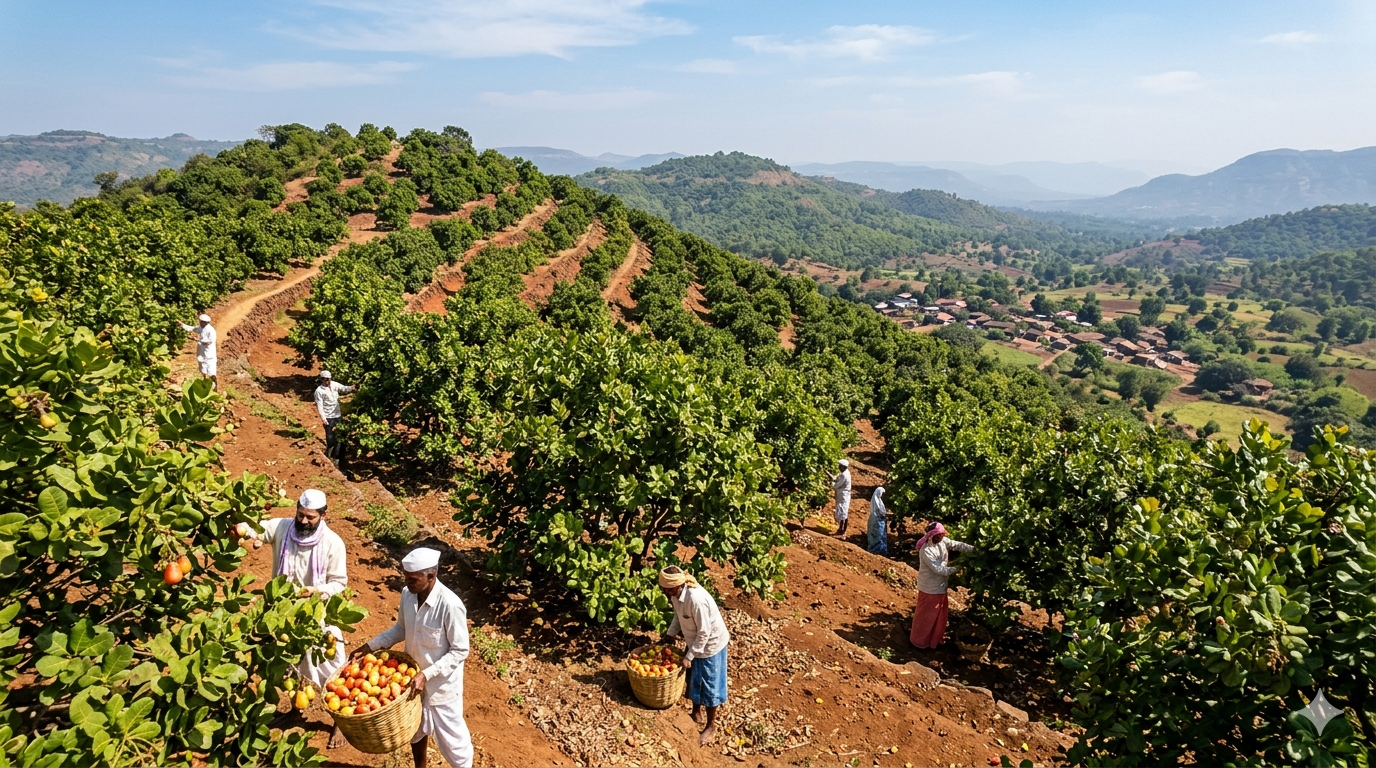
Collecting fallen cashew nuts, followed by drying and shell processing.
Plantation Gallery
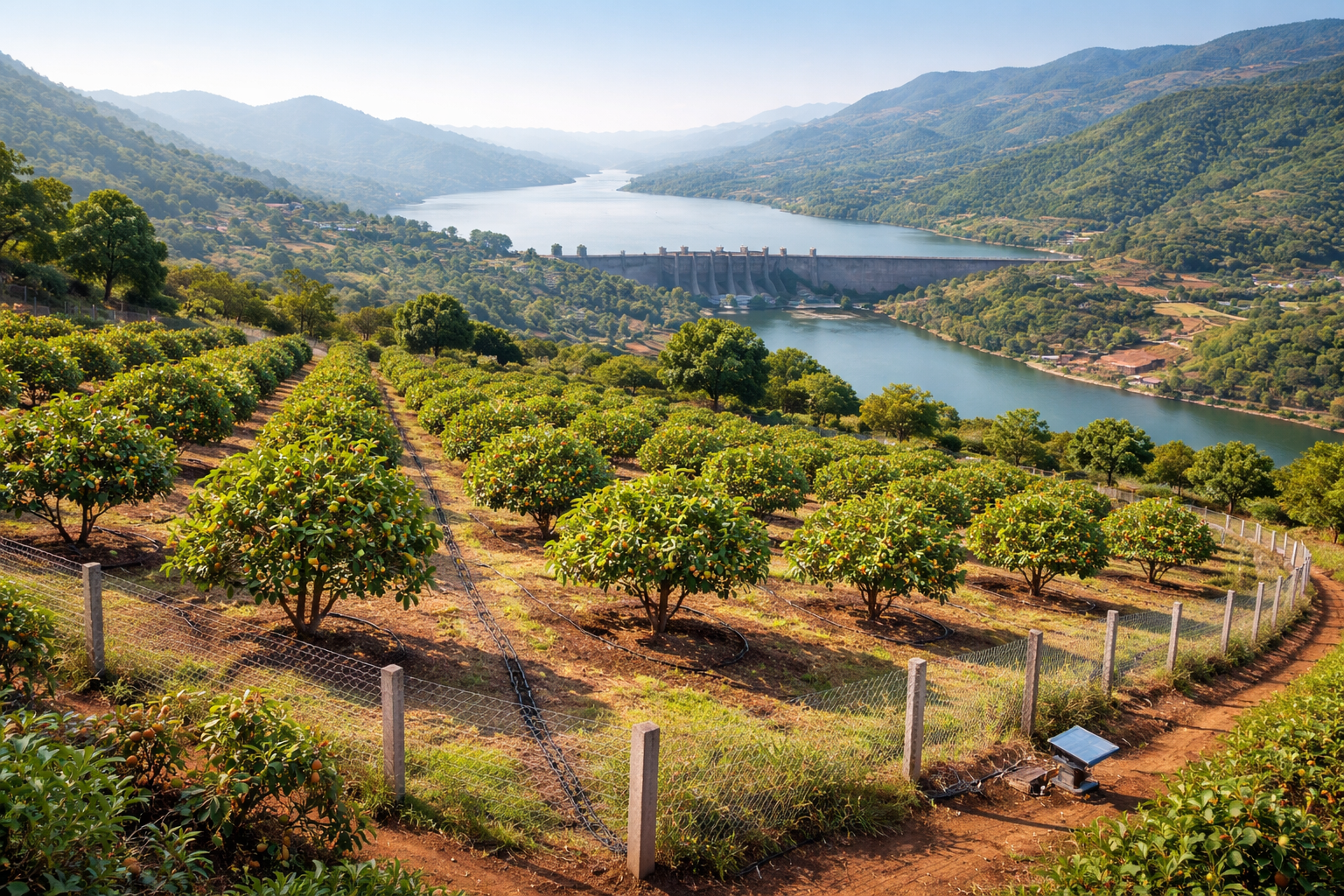
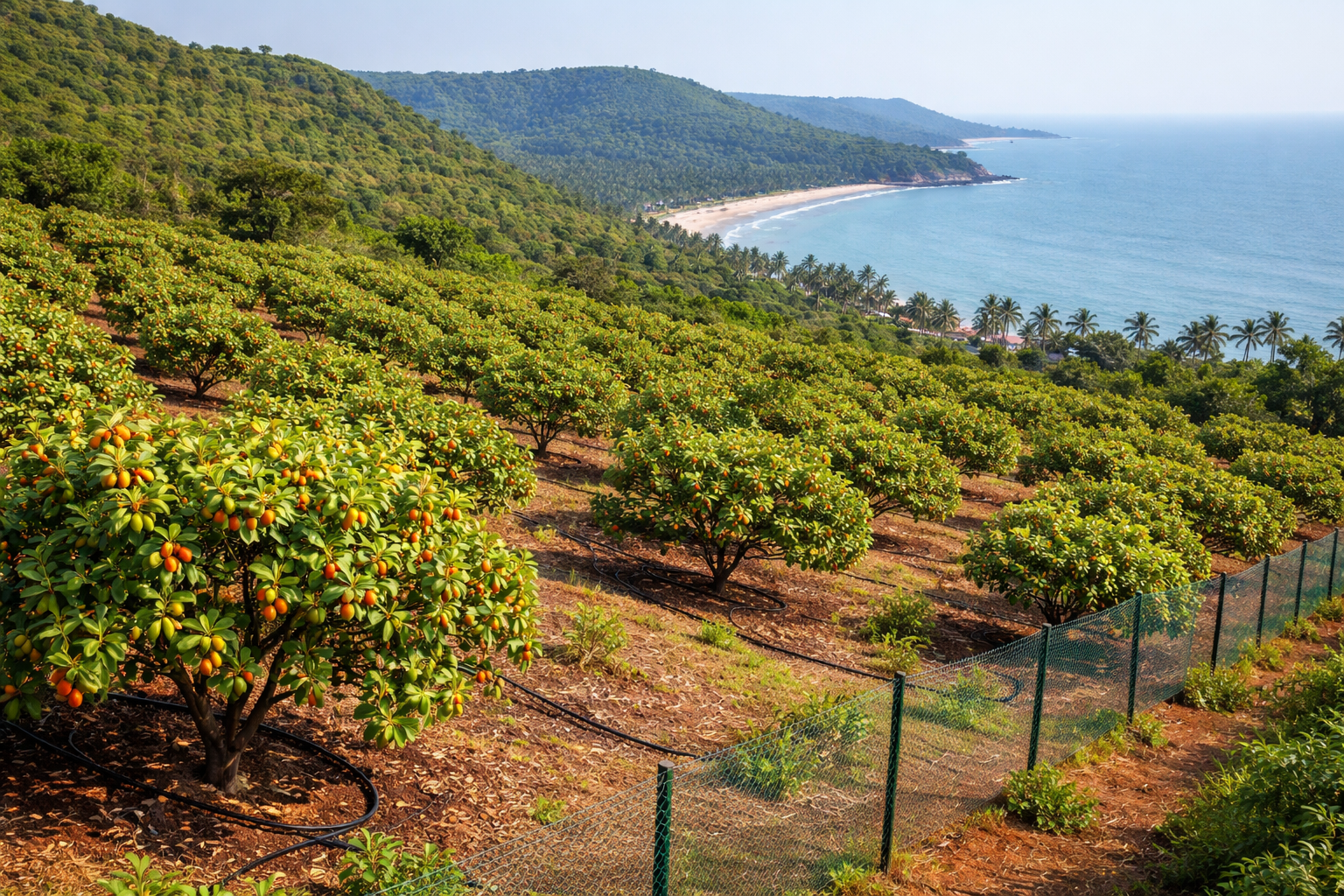
Farm Layout & Infrastructure
Value Potential
Explore Other Plantations
Visit Our FarmLands
Experience the farms personally and understand the managed plantation model firsthand.
Frequently Asked Questions
Cashew trees start yielding from 3–4 years after planting and reach full production in 6–8 years. With proper care, they can remain productive for over 30 to 40 years.
Typically, 70 to 100 cashew trees are planted per acre under standard spacing. High-density planting systems can accommodate up to 150–200 trees per acre.
Professional farm management includes land preparation, plantation, irrigation setup, pruning, nutrient management, pest control, and regular monitoring by agricultural experts.
A mature cashew tree can produce around 8 to 15 kg of raw nuts annually depending on variety and care. Yield varies based on climate, spacing, and management practices.
Yes. Visitors and investors can schedule farm visits to explore cashew plantations, understand farming practices, and experience farm infrastructure and operations firsthand.