Rose Farming
About Rose
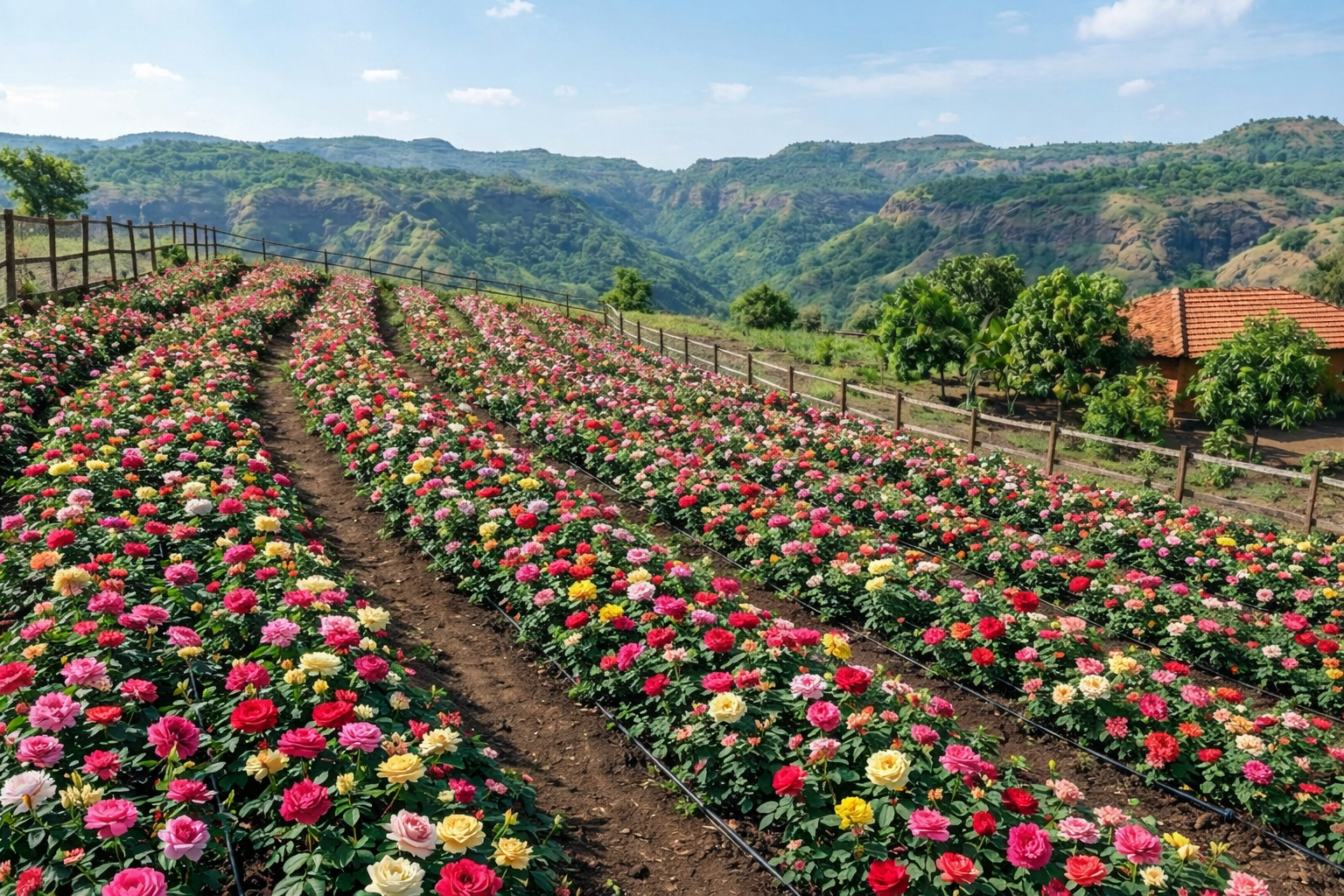
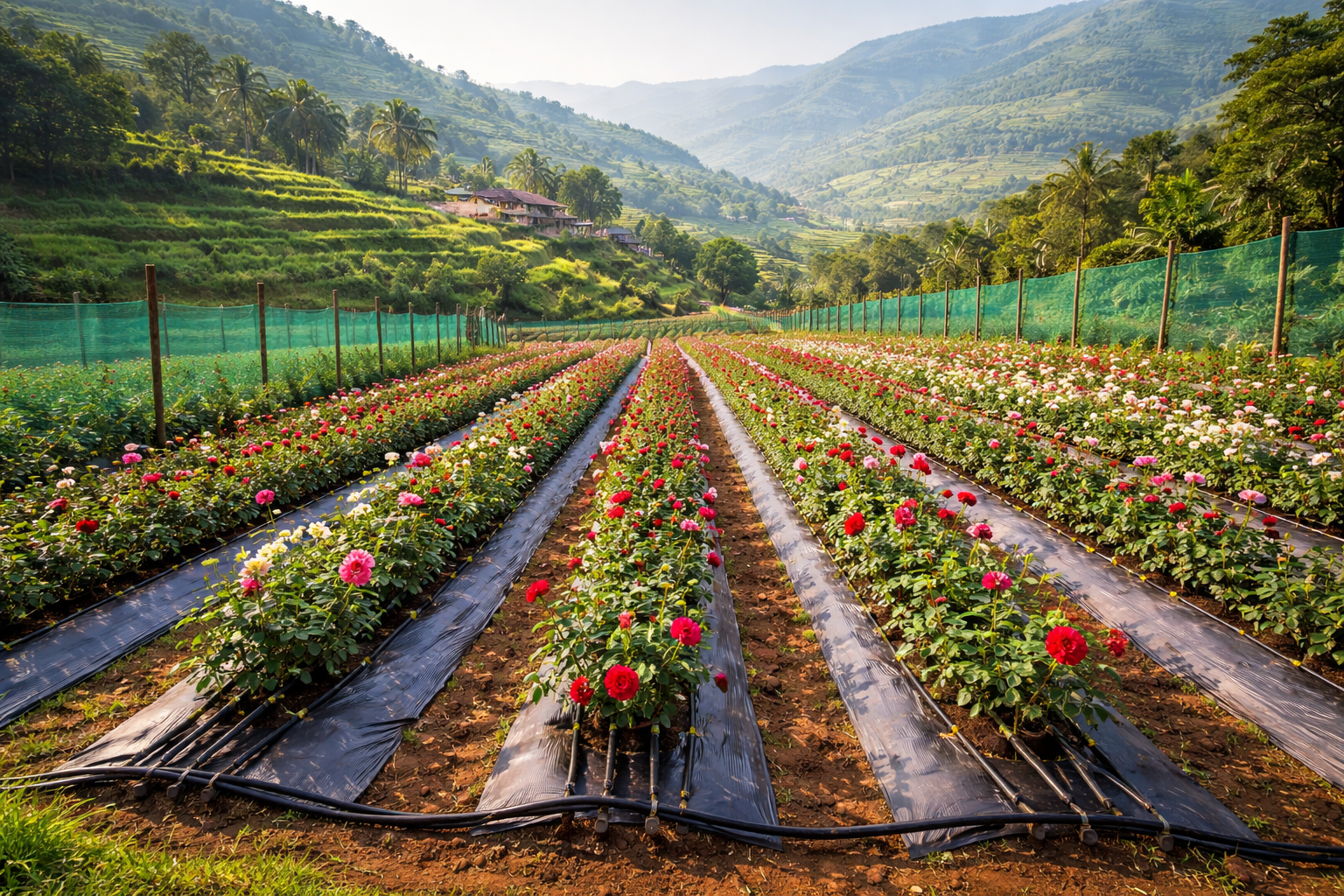
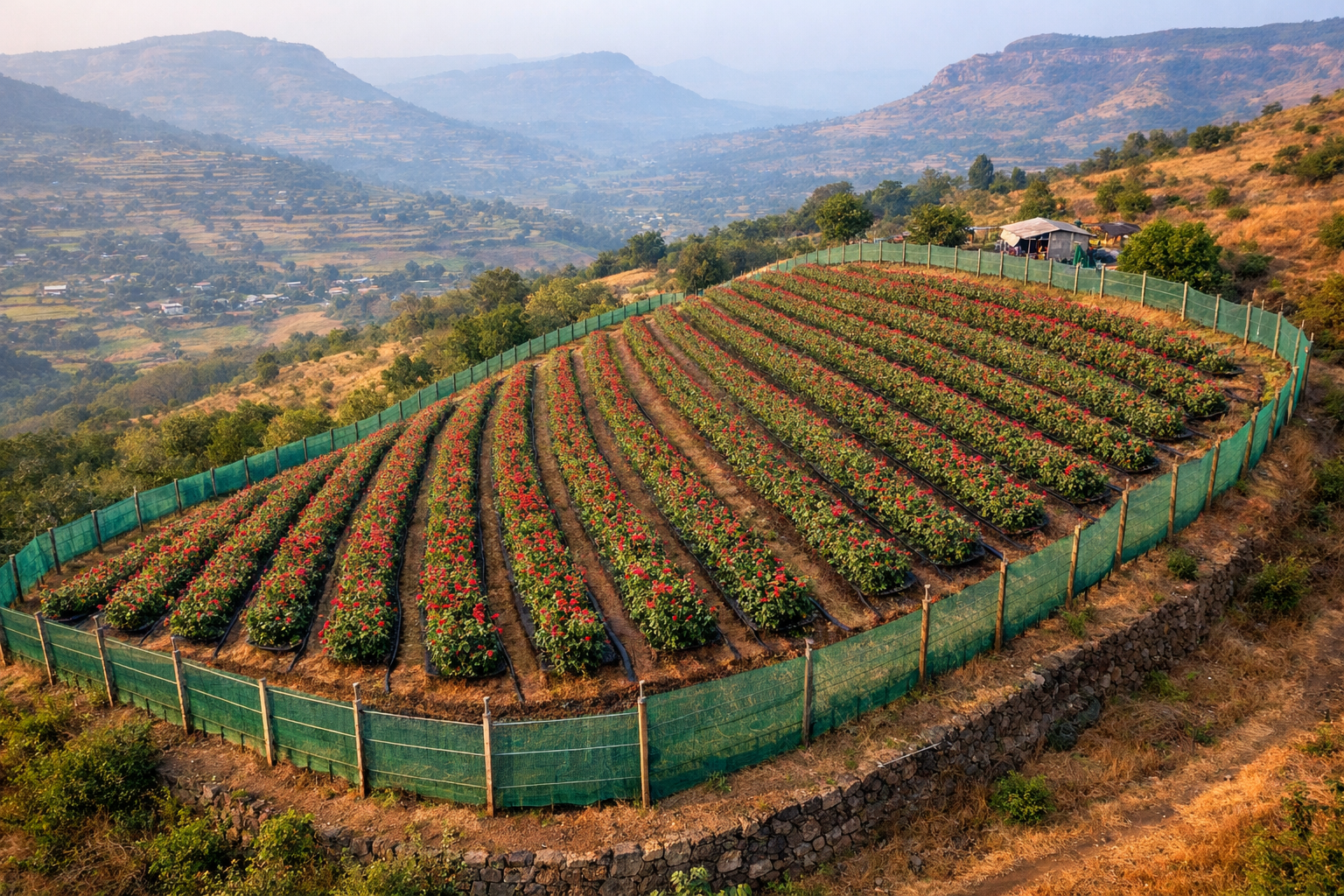
Rose farming is a highly valuable floriculture crop widely known for producing fragrant flowers used in perfumes, cosmetics, and essential oils. Rose petals contain natural aromatic compounds that are widely used in the fragrance, skincare, food, and pharmaceutical industries. Rose plants grow well in moderate to subtropical climates and are known for their beauty, commercial value, and consistent market demand.
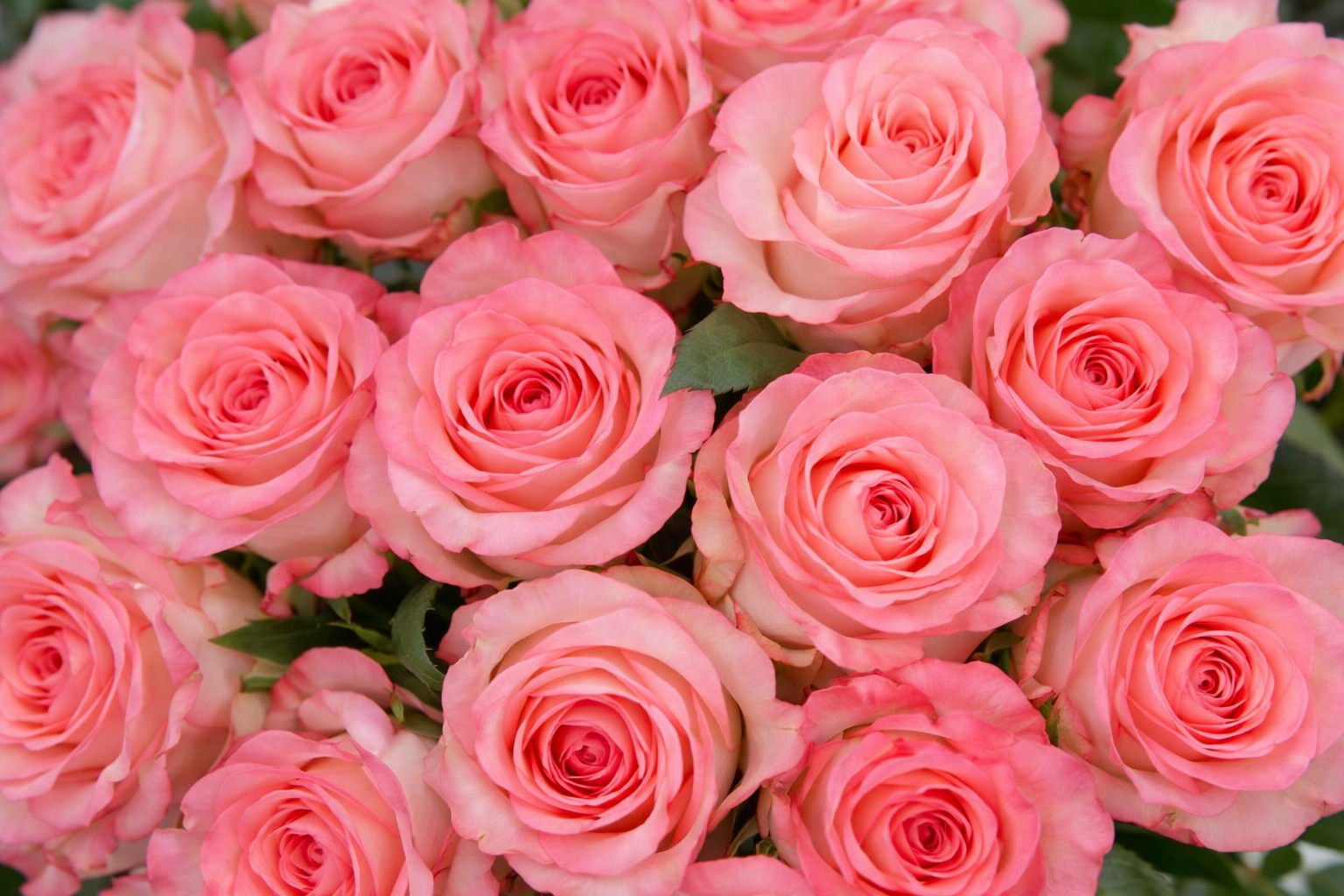
Fresh rose petals used for producing premium rose oil and aromatic products.
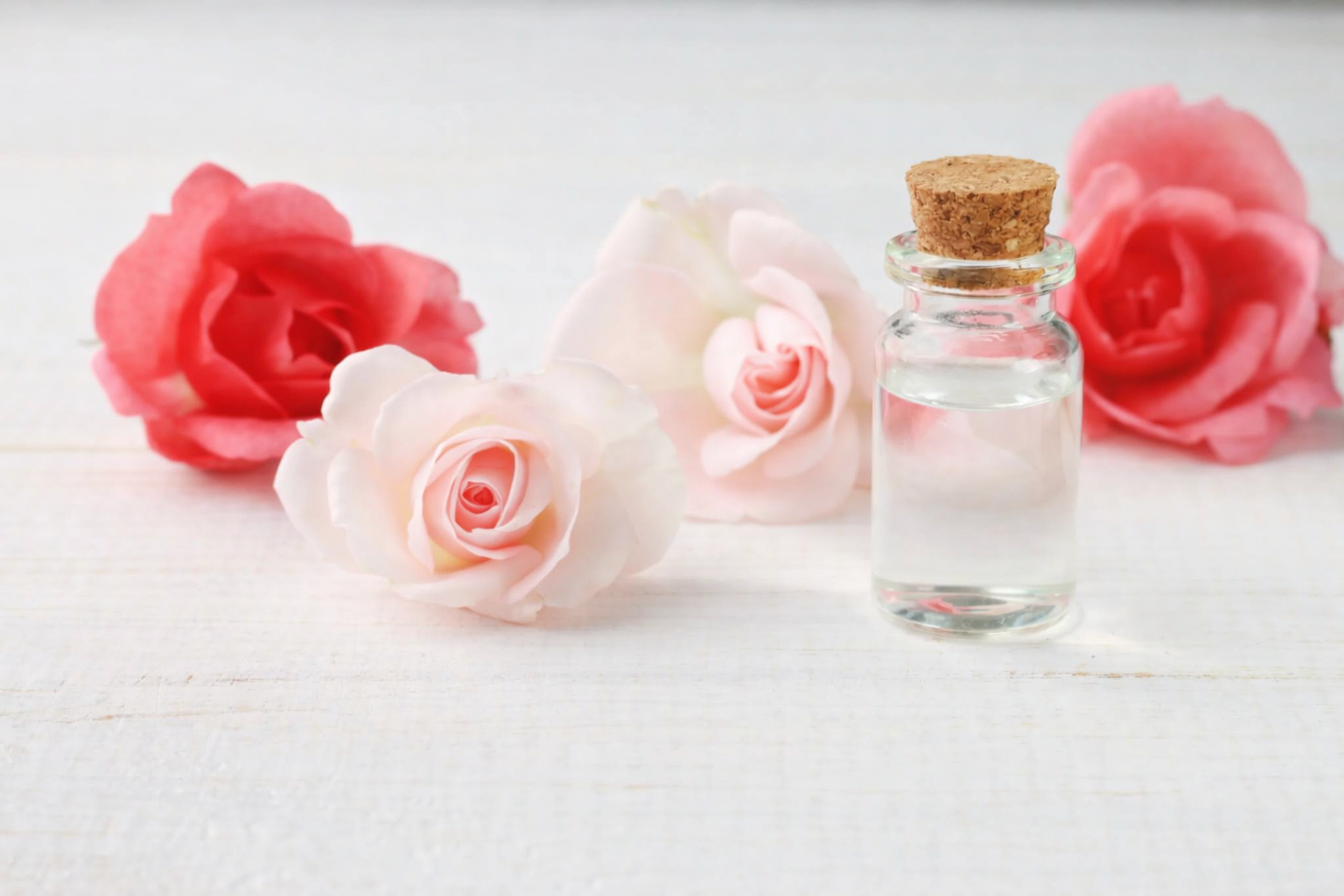
High-demand floriculture crop with strong demand in perfume and cosmetic industries.
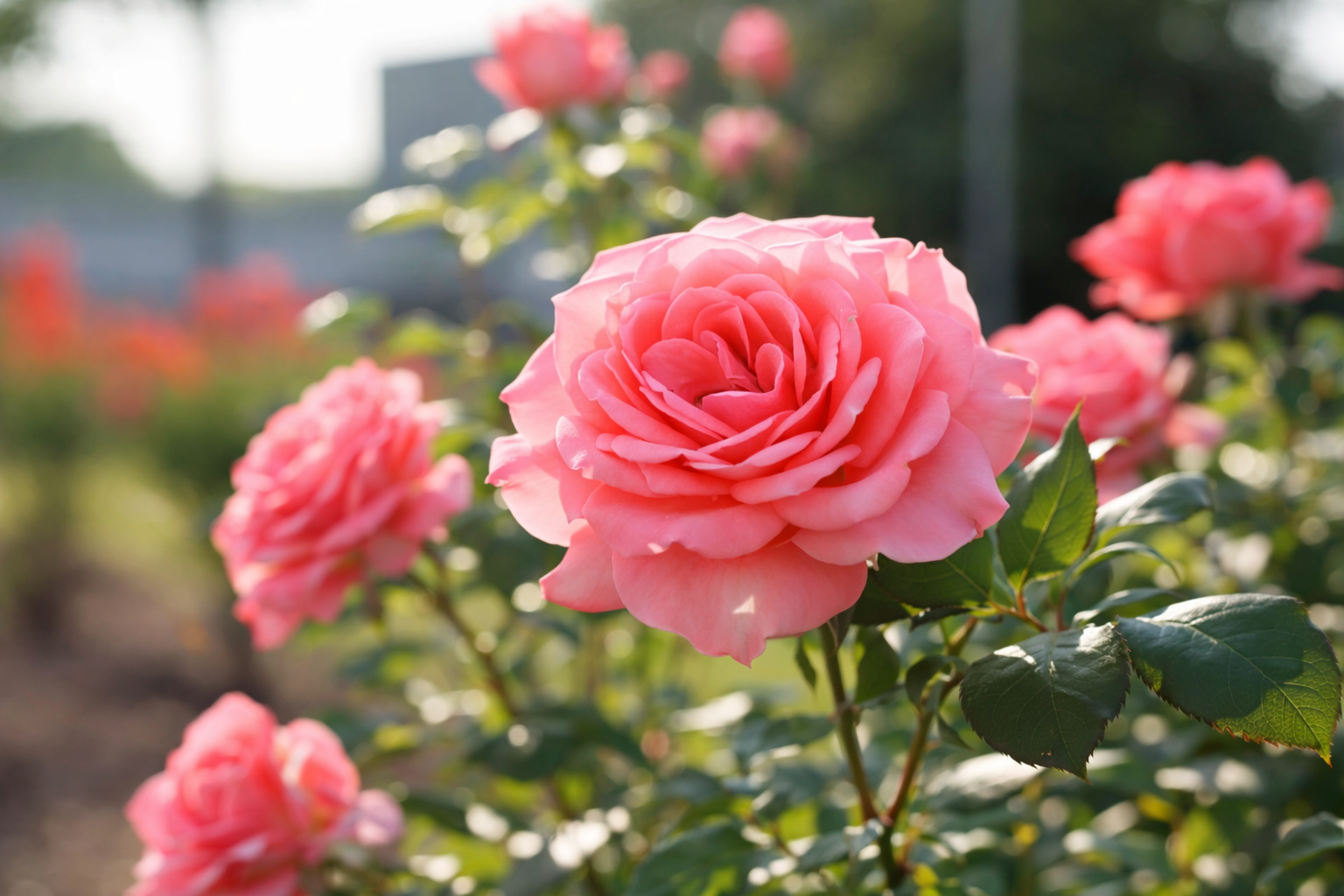
Profitable and sustainable flower farming with growing export and market opportunities.
Sundarban Rose Farming Requirements
Scientific cultivation practices and suitable environmental conditions are essential for healthy growth and high flower yield.
1. Climate Requirements
Temperature: Ideal range 15°C to 28°C for healthy flowering.
Sunlight: Requires 6–8 hours of direct sunlight daily.
Rainfall: Moderate rainfall 800–1,200 mm annually is suitable.
Humidity: Moderate humidity improves flower yield and aroma.
2. Soil Requirements
Type: Well-drained loamy or sandy-loam soil preferred.
pH Level: OOptimum soil pH 6.0 – 7.0.
Soil Depth: Minimum 40–60 cm fertile soil depth recommended.
Fertility: High organic matter improves plant growth.
3. Land Preparation
Clearing: Remove weeds, stones, and debris.
Ploughing: Deep ploughing improves soil aeration.
Bed Preparation: Prepare beds with compost or organic manure.
Pit Preparation: 30 × 30 × 30 cm pits with farmyard manure.
4. Plantation & Spacing
Spacing: 60 cm × 60 cm or 75 cm × 75 cm spacing.
Season: Planting done before monsoon or mild winter.
Selection: Use healthy rooted cuttings or budded plants.
5. Water Management
Young Plants: Frequent irrigation during early growth stage.
Mature Plants: Irrigate during flowering and seed development stages.
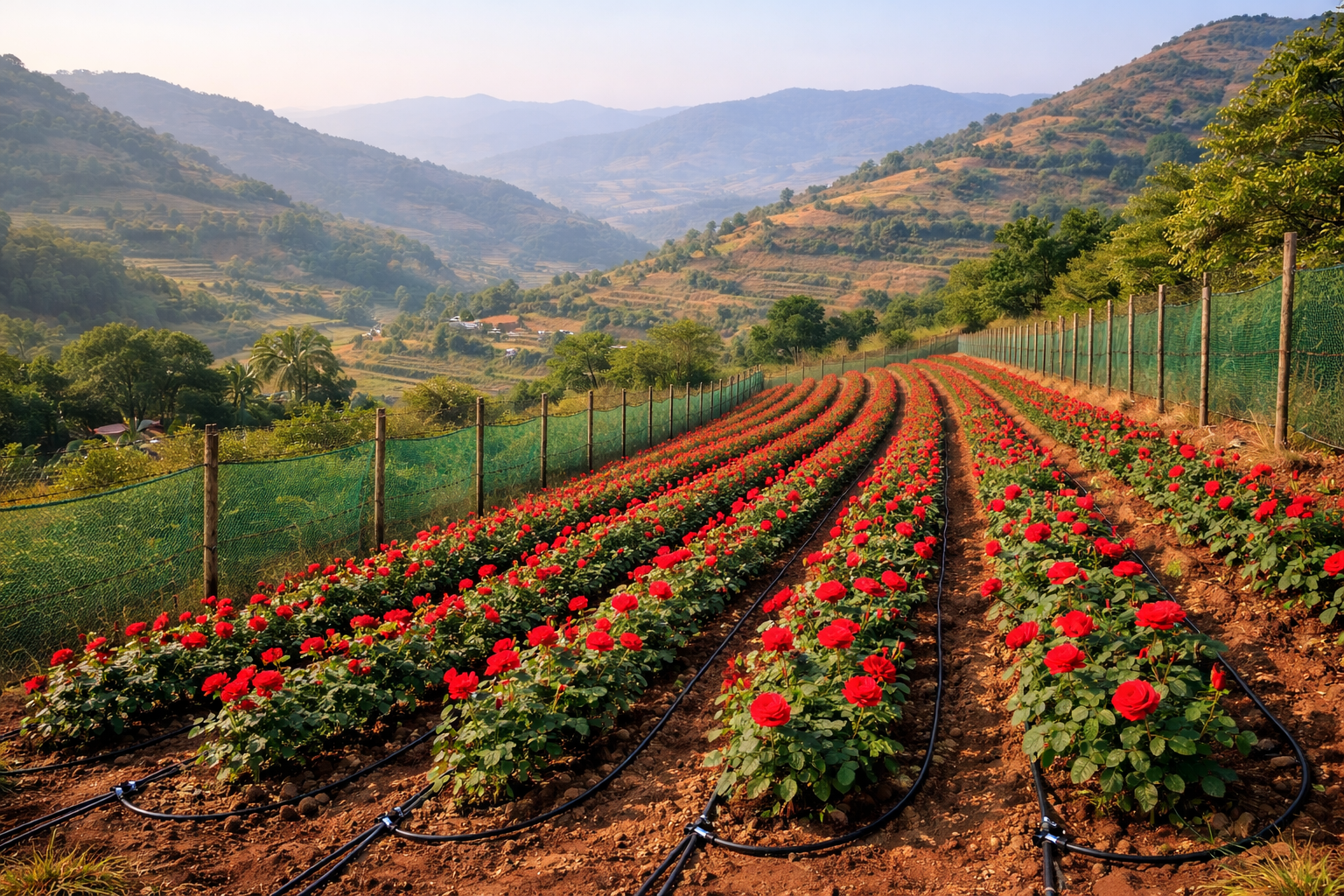
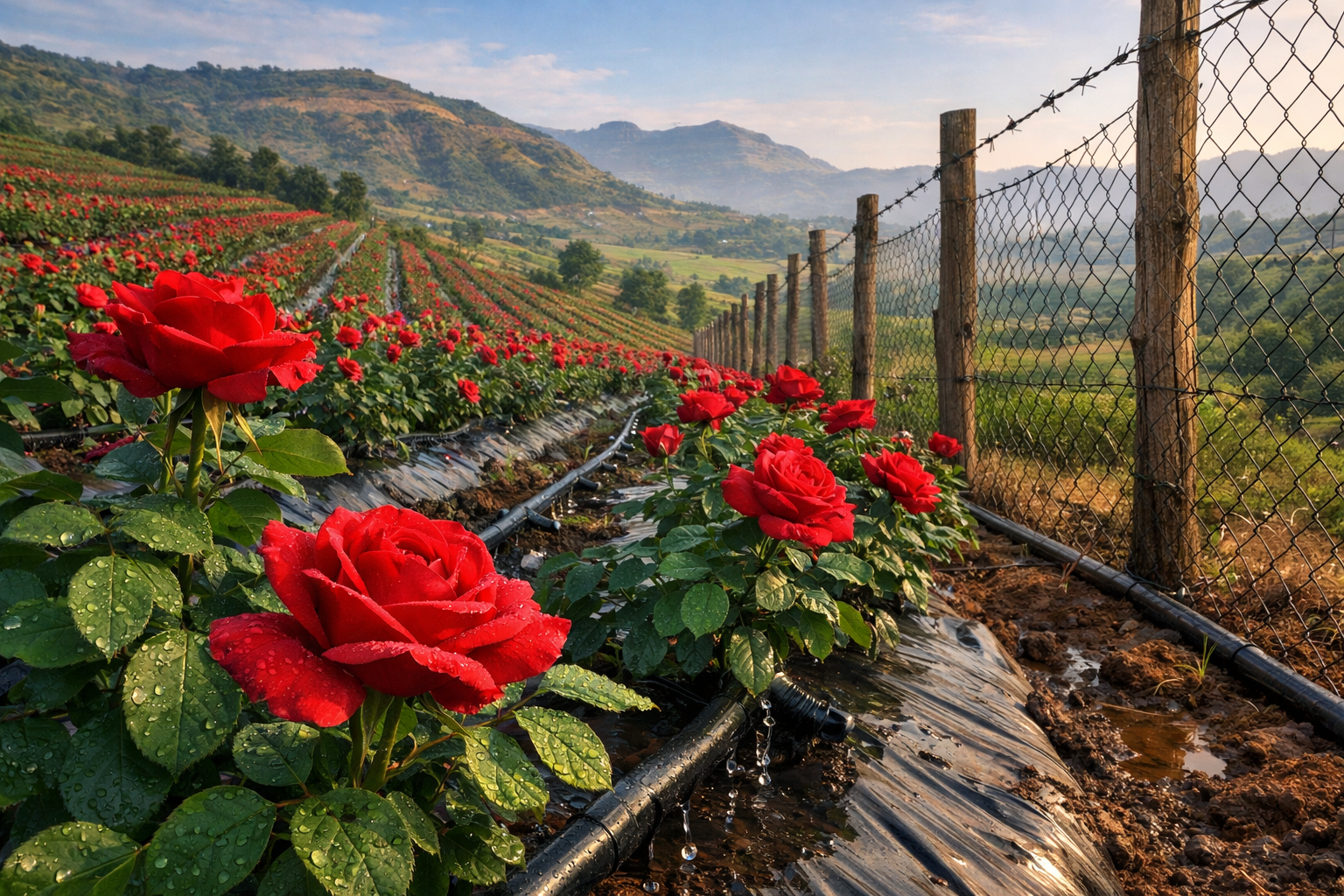
Drip Irrigation: Recommended for commercial farming.
6. Nutrient Management
Basal Fertilizer: Apply balanced NPK fertilizers regularly.
NPK Fertilizers: Helps retain moisture and control weeds.
Organic Inputs: FUse compost, vermicompost, or FYM.
7. Pruning & Plant Care
Initial Training: Develop strong main branches for better structure.
Annual Pruning: Remove dead, weak, and overcrowded branches regularly.
Flower Pinching: Remove early buds to encourage stronger plant growth.
Canopy Control: Maintain proper airflow to reduce disease risk.
8. Pest & Disease
Pests: Aphids, thrips, mites, and leaf rollers.
Diseases: Powdery mildew, black spot, and root rot.
Control: Use neem oil, bio-pesticides, and proper field sanitation.
Monitoring: Regular crop inspection prevents major infestations.
9. Harvesting & Post Harvest
First Harvest: Flowers start 6–8 months after planting depending on variety.
Harvest Time: Early morning harvesting ensures better fragrance and freshness.
Yield: Continuous flower production for several years with proper care.
Storage:Keep harvested flowers in cool and shaded conditions.
Plantation Development Process
Land Preparation
Clearing, leveling, and preparing fertile soil beds.
Pit Digging & Soil
Soil enrichment with compost for healthy rose growth.
Plantation & Spacing
Scientific spacing of rose plants for proper airflow.
Irrigation Setup
Installation of efficient drip irrigation systems.
Crop Management
Regular pruning, nutrition, and pest management.
Harvest & Processing
Harvesting fresh roses for perfume and floral markets.
Plantation Gallery
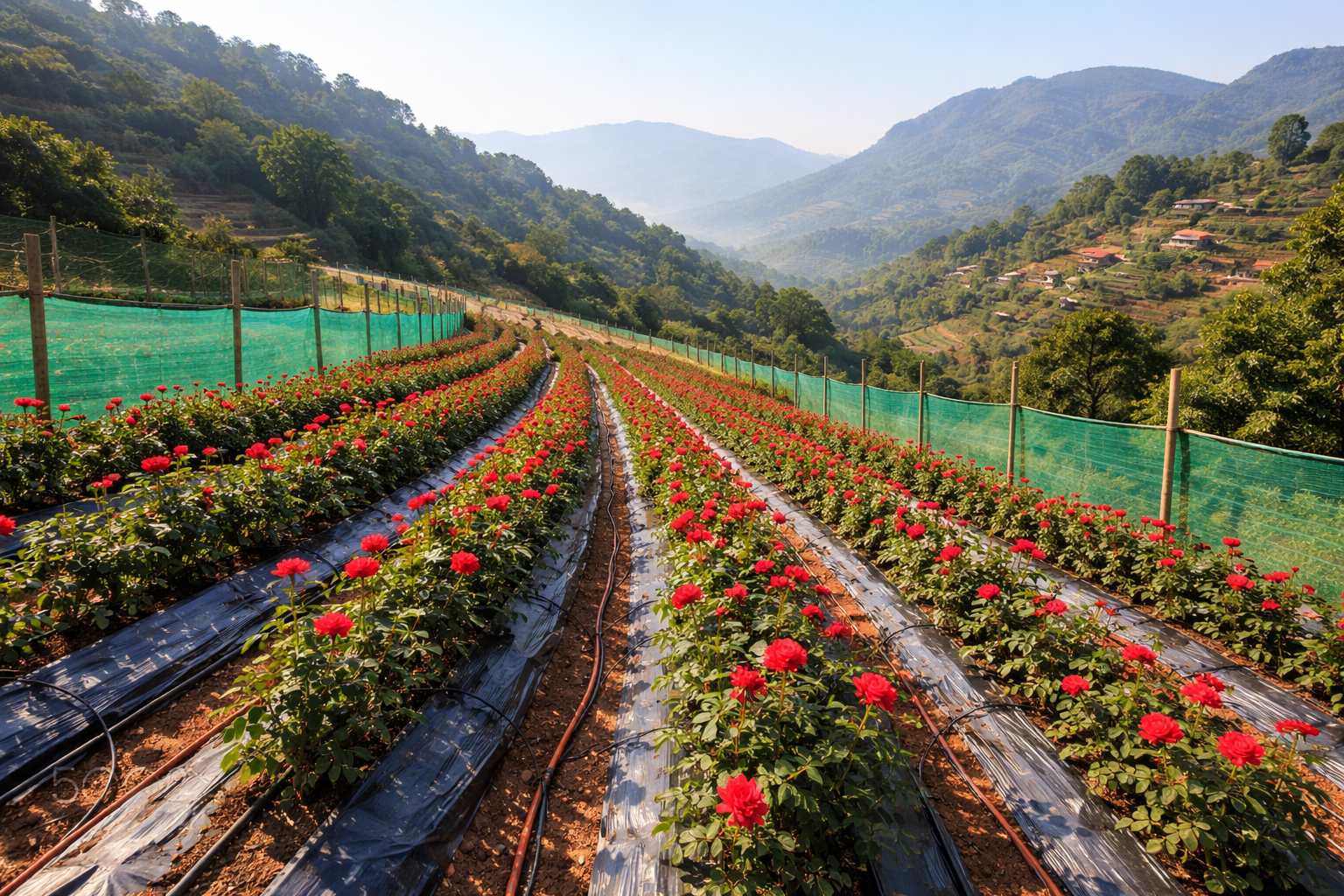
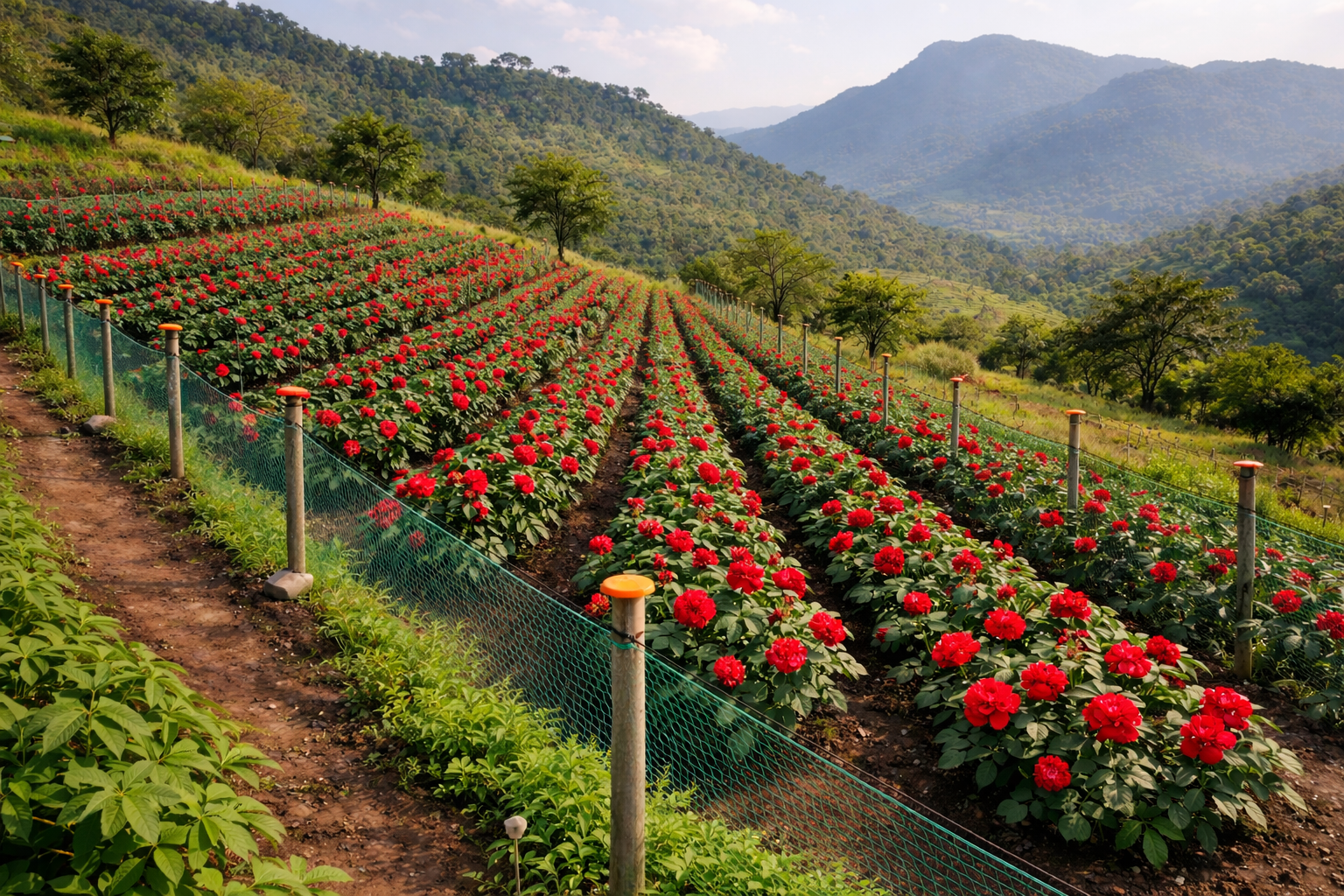
Farm Layout & Infrastructure
Value Potential
Explore Other Plantations
Visit Our FarmLands
Experience the farms personally and understand the managed plantation model firsthand.