Bamboo Plantation
About Bamboo
Bamboo is one of the fastest-growing and most sustainable plants in the world. Known as Green Gold, it is widely used across industries including construction, furniture, paper, textiles, and eco-friendly products. With its rapid growth cycle and ability to regenerate after harvesting, bamboo offers a renewable source of timber without the need for replanting, making it an attractive long-term agroforestry investment.
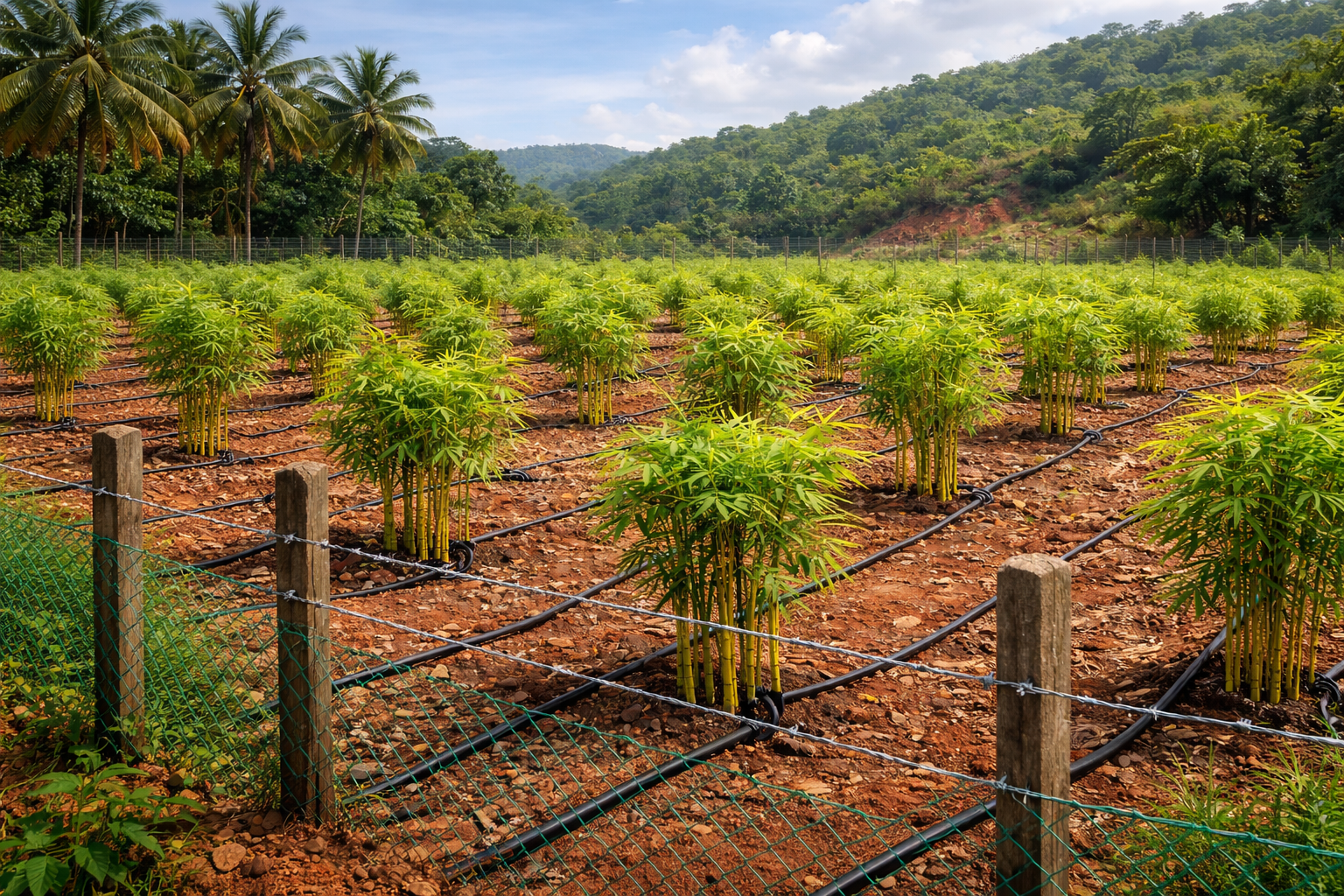
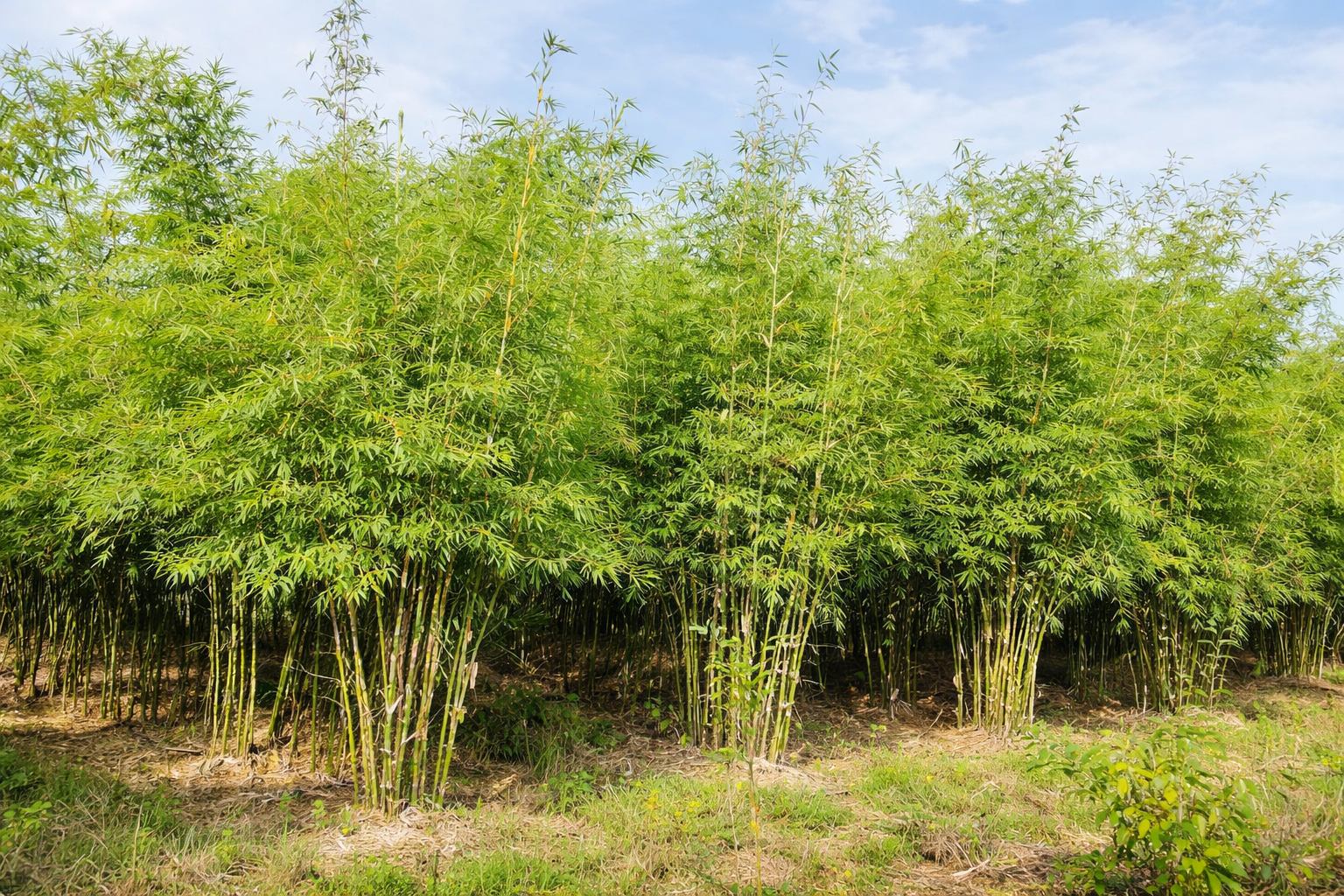
Healthy bamboo clumps growing in well-managed plantation fields.
Rapid growth and strong culm formation within 3–4 years.
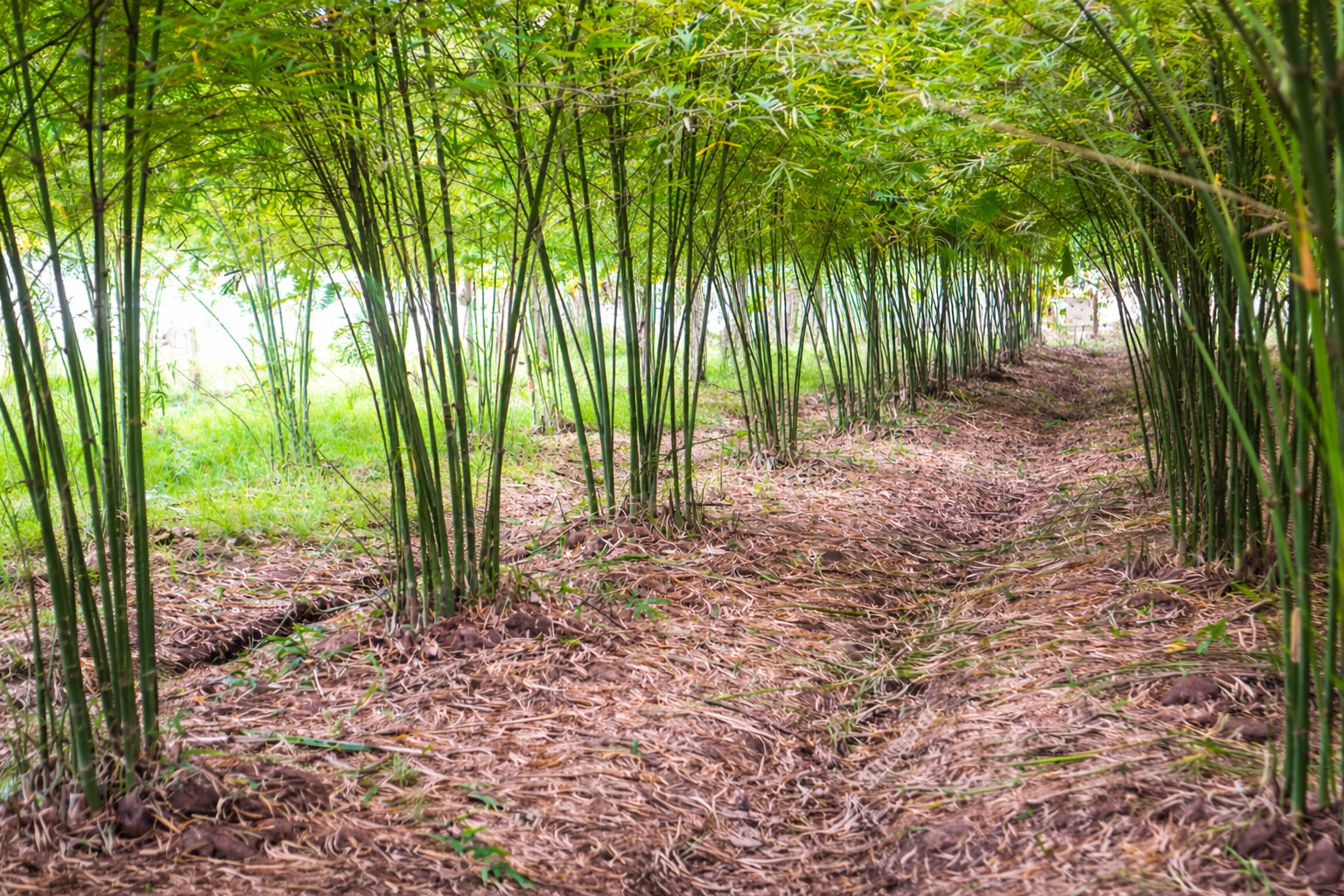
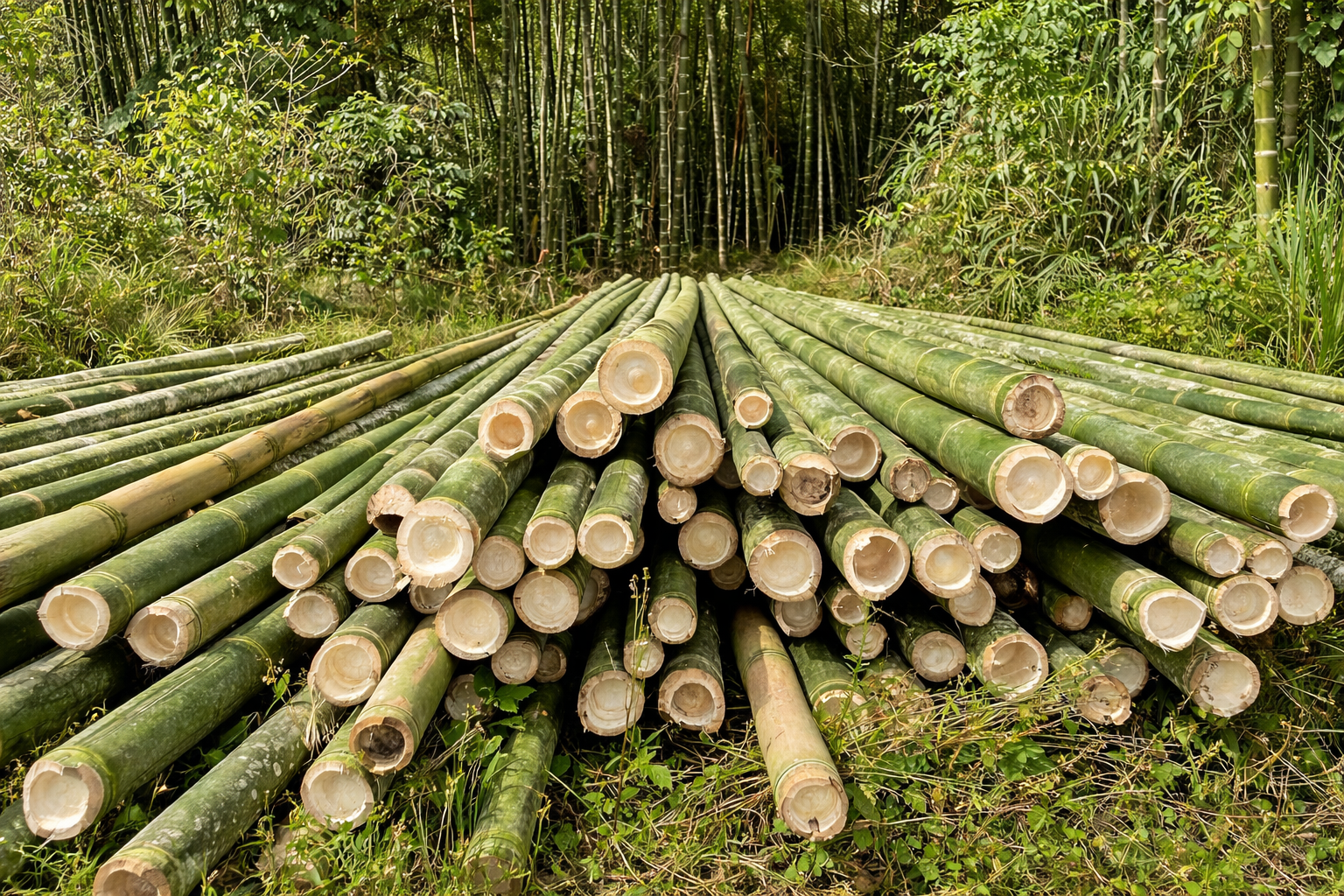
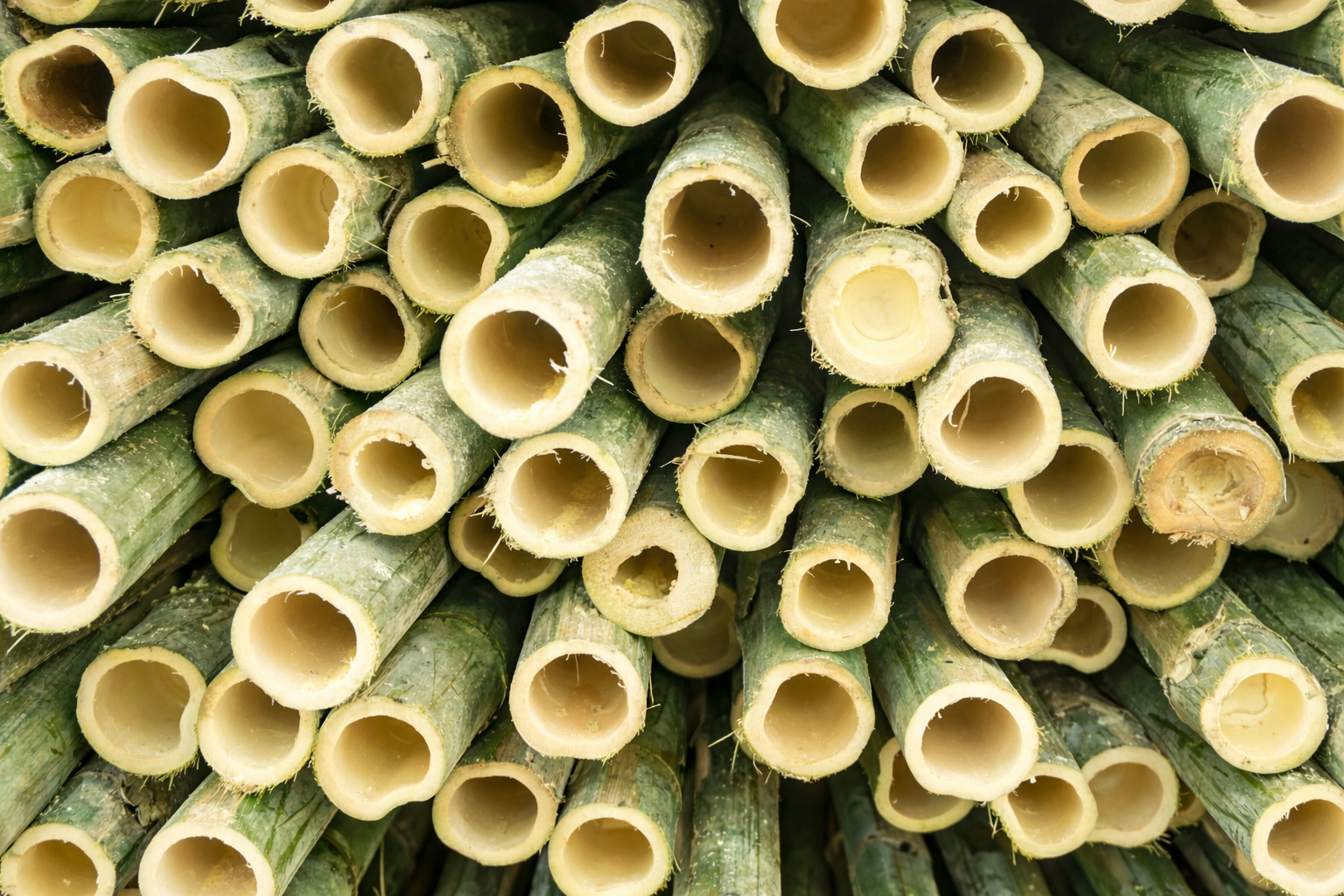
Harvested bamboo used for construction, furniture, and industrial products.
Sundarban Bamboo Farms Requirements
Scientific planning and proper field management are essential for high-yield bamboo cultivation and sustainable culm production.
1. Climate Requirements
Temperature: Ideal range is 20°C to 38°C. Mature bamboo tolerates heat but young plants need protection from frost.
Rainfall: Annual rainfall 1,000 mm to 2,500 mm is suitable for strong growth.
Altitude: Performs well from sea level up to 1,500 meters depending on species.
Humidity: Moderate to high humidity (60–80%) supports rapid culm development.
2. Soil Requirements
Type: Well-drained loamy or sandy-loam soils are best for bamboo.
pH Level: Optimal soil pH between 5.5 to 7.5.
Soil Depth: Minimum 1–1.5 meters deep soil allows strong rhizome spread.
Fertility: Rich organic matter improves shoot and culm production.
3. Land Preparation
Clearing: Remove weeds, bushes, stones, and crop residues.
Ploughing: Deep ploughing improves soil aeration and root penetration.
Pit Preparation: 60cm × 60cm × 60cm pits filled with compost or farmyard manure.
4. Plantation & Spacing
Spacing: Typically 5m × 5m or 6m × 6m spacing depending on species.
Season: Best planting time is early monsoon season.
Selection: Use healthy rhizomes or tissue culture plants for uniform growth.
5. Water Management
Young Trees: Water regularly during the first 1–2 years.
Mature Trees: Irrigate during dry periods to maintain culm production.
Drip Irrigation: Recommended for commercial bamboo plantations.
6. Nutrient Management
Fertilization: Apply NPK fertilizers annually to support growth.
Organic Manures: Use vermicompost, farmyard manure, or green manure.
Foliar Sprays: Organic mulch helps conserve moisture and enrich soil fertility.
7. Pruning & Canopy
Initial Training: Remove weak or overcrowded culms to maintain healthy clumps.
Annual Pruning: Clear dry and dead culms to improve new shoot growth.
Rhizome Control: Maintain clump boundaries to avoid uncontrolled spreading.
8. Pest & Disease
Pests: Bamboo borers, termites, and aphids may affect plantations.
Diseases: Occasional fungal infections or rhizome rot.
Control: Use organic pesticides, neem oil, and proper field sanitation.
9. Harvesting & Post Harvest
First Harvest: Usually begins 3–4 years after planting.
Yield: Mature plantations produce 20–40 culms per clump annually depending on species.
Processing: Bamboo culms are treated, dried, and graded for industrial use.
Storage: Store in dry, shaded areas to prevent cracking and pest damage.
Plantation Development Process
Land Preparation
Clearing, leveling, and fencing the farmland for bamboo cultivation.
Pit Digging & Soil
Testing and enriching soil conditions for optimal bamboo growth.
Plantation & Spacing
Scientific spacing of 200–400 bamboo clumps per acre.
Irrigation Setup
Installation of water-efficient drip irrigation systems.
Crop Management
Clump care, mulching, and regular organic fertilization.
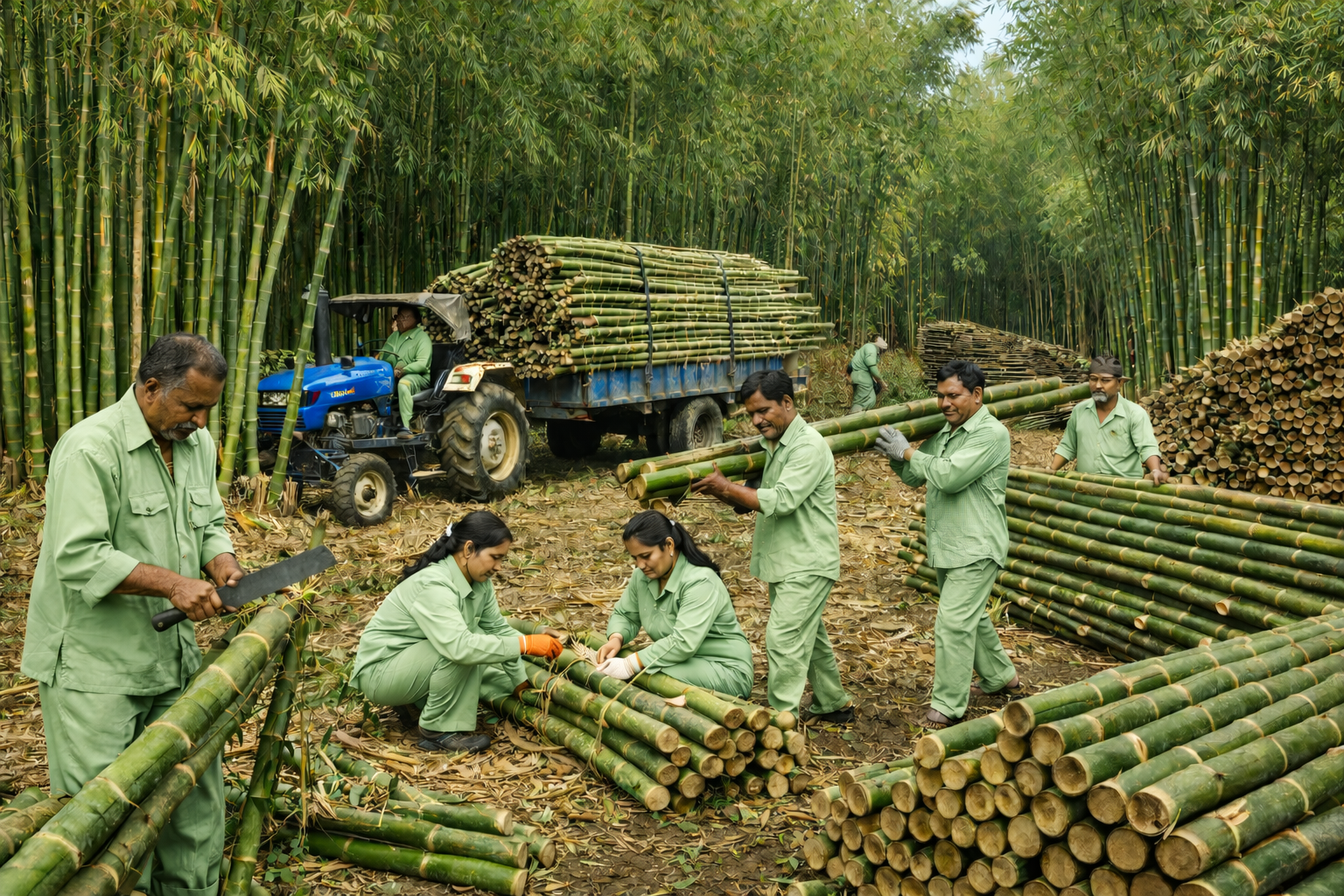
Harvest & Processing
Cutting mature bamboo culms for industrial processing.
Plantation Gallery
Farm Layout & Infrastructure
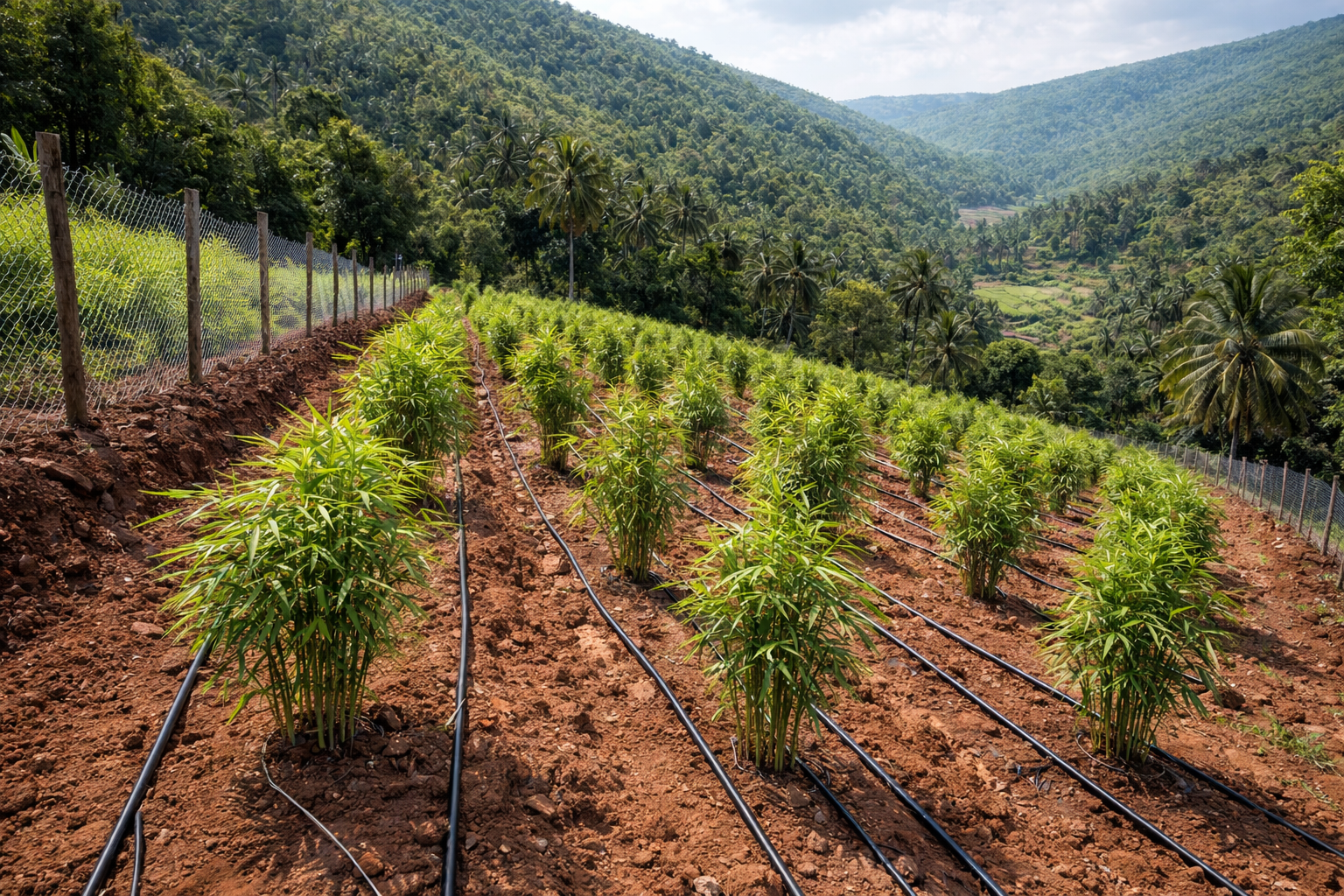
A scientifically planned plantation layout ensures proper tree spacing, healthy growth, and efficient land use. Drip irrigation delivers water directly to roots, minimizing wastage and supporting consistent development. Well-designed access roads allow smooth farm operations, easy maintenance, and efficient harvesting.
Value Potential
Explore Other Plantations
Visit Our FarmLands
Experience the farms personally and understand the managed plantation model firsthand.